Microtext Security Printing on Plastic ID Cards Guide
Table of Contents []
- Microtext Security Printing on Plastic ID Cards: What Plastic Card ID Wants You to Know
- What Microtext Security Printing Actually Is
- Why Plastic ID Cards Benefit More Than Paper
- Designing for Microtext: What Works and What Doesn't
- In-House Printing vs. Pre-Printed Security Cards
- FAQ: Microtext Security Printing on Plastic ID Cards
- Building a Secure Card Program with Plastic Card ID
Microtext Security Printing on Plastic ID Cards: What Plastic Card ID Wants You to Know
Most people have held a secure card and never noticed the most important thing printed on it. Tucked into a border, threaded through a logo, or wrapped invisibly around a photo frame - microtext security printing is doing serious work in plain sight. It is one of the most underrated, most effective, and most practical anti-counterfeiting tools available for plastic ID cards today.
Whether you are running an employee badge program, issuing membership cards, managing event credentials, or operating a loyalty card system, the question of card security deserves a serious answer. A laminated photo is not enough. A signature panel helps, but only goes so far. Microtext, printed directly into the card design at scales invisible to the naked eye, raises the bar for anyone attempting to reproduce your card without authorization.
Plastic Card ID has supplied plastic cards to more than 100,000 businesses across the United States over 25-plus years. That experience shapes everything about how this team thinks about card design, card security, and the balance between cost and protection. This page breaks down exactly what microtext security printing is, how it works on plastic ID cards, and what to consider when deciding whether it belongs in your card program.
| Feature | Standard Card Printing | Microtext Security Printing |
|---|---|---|
| Visible to naked eye | Yes | No (requires magnification) |
| Counterfeit deterrent | Low | High |
| Reproduced by consumer printers | Possible | Extremely difficult |
| Authentication method | Visual inspection | Magnifier or loupe |
| Common applications | General ID, loyalty, gift | Access control, government-adjacent, casino, premium membership |
What Microtext Security Printing Actually Is
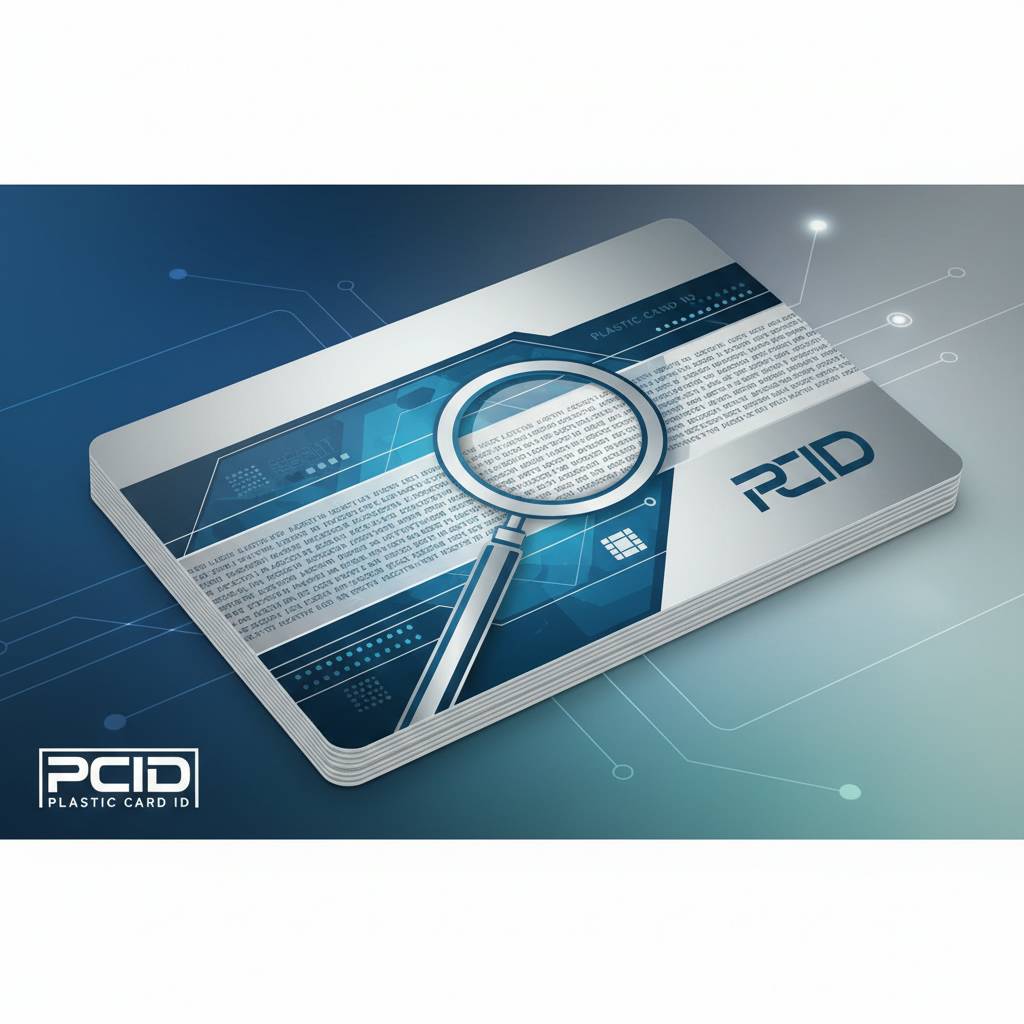 Microtext is exactly what it sounds like: text printed at an extremely small point size, typically below 0.5mm in height, often far smaller. At that scale, the human eye reads it as a line, a border element, or a design texture. Only magnification reveals the actual content. That invisibility to casual inspection is precisely what makes it valuable as a security feature.
On plastic ID cards, microtext is most commonly embedded along card borders, within background patterns, around portrait photos, or integrated into logo elements. The text itself might be your organization name, a serial code, a security phrase, or even a repeating string of characters that seems decorative until examined closely. The key is that a standard desktop card printer cannot faithfully reproduce this detail - the resolution simply is not there, and the attempt produces a blurry smear instead of crisp letterforms.
How Small Is "Micro"?
In the printing industry, microtext typically refers to characters printed at or below 0.2mm in height. For perspective, a standard printed period on this page is roughly 0.3-0.5mm. True microtext on a security card may use characters as small as 0.1mm, rendering them completely illegible to the unaided eye at any reasonable viewing distance.
The resolution requirements for genuine microtext are demanding. Consumer-grade card printers operate in the 300 DPI range. High-security offset or digital printing equipment used in card production can exceed 1200 DPI. That difference is not cosmetic - it is the gap between a blurry attempt and a crisp, verifiable security line.
Microtext vs. Other Security Print Features
It is worth understanding where microtext fits among the broader family of print security features. Guild-level card security often combines multiple methods: UV fluorescent inks, guilloche patterns (the interlocking fine-line rosettes you see on banknotes), microtext, and holographic overlaminates. Each layer targets a different attack vector, and each requires different equipment to replicate.
Microtext is particularly prized because it requires no special viewing equipment beyond a basic loupe or magnifying glass. Verification is fast, inexpensive, and trainable. A security officer, front desk attendant, or facility manager can check a card in seconds with a simple tool. That operational simplicity is a real advantage in high-throughput environments like event venues or corporate campuses.
Where Microtext Lives on a Card
Placement decisions carry strategic weight. Border microtext is the most common format - a thin line around the card perimeter that reads as a solid rule from a distance but spells out a repeating phrase when magnified. Background microtext integrates into a watermark-style design layer. Portrait-surrounding microtext wraps around the photo area, making isolated photo substitution detectable because cutting or lifting the photo destroys the surrounding text.
Advanced implementations embed microtext within the card's overlaminate layer rather than the print layer, adding a second verification challenge. This approach is common on high-security access credentials, casino player cards, and premium membership cards where multiple attack scenarios need to be addressed simultaneously.
Why Plastic ID Cards Benefit More Than Paper
Paper credentials have an inherent weakness: they are easy to scan, print, and replace. A color laser printer and a laminator can produce a passable paper fake in minutes. Plastic CR80 cards - the ISO 7810 standard format that CPE stocks and programs - already present a physical reproduction challenge that paper cannot match. But microtext printing takes that advantage several steps further.
The substrate itself matters. PVC card stock accepts fine printing detail at a fidelity that paper credentials cannot reliably hold. The rigidity and uniformity of a 30 mil card, combined with high-resolution overprinting and lamination, creates an environment where microtext detail is locked in at a molecular level. Humidity changes, flex, and handling that would degrade a paper credential do not compromise a well-produced plastic card's security print layer.
The Reproduction Gap
Here is the core reality: most counterfeit card attempts rely on convenience, not sophistication. A bad actor with a standard card printer and stolen artwork can produce a visually convincing fake. Microtext breaks that equation because the resolution required to reproduce it accurately is not available on consumer equipment. The fake looks right from a distance, but fails immediately under magnification.
This is known in security design as the "reproduction gap" - the difference between what equipment is needed to create an original and what equipment is needed to copy it. Microtext deliberately widens that gap, making casual counterfeiting practically impossible and professional counterfeiting significantly more costly and complex.
Durability of the Security Feature
A security feature that degrades quickly is not a feature - it is a liability. Microtext printed under a high-quality PVC overlaminate on a properly produced plastic card maintains its integrity through thousands of swipes, years of wallet wear, and repeated handling. The text remains crisp, readable under magnification, and consistent with the original.
This durability matters especially for long-life programs: annual membership cards, multi-year employee badges, standing access credentials, or casino player cards that may be reloaded and reused over extended periods. The security feature has to survive the full card lifecycle to provide meaningful protection.
Applications Across Card Types
Microtext is not limited to one category of plastic card. It appears on employee ID badges in sensitive industries, on casino player cards where fraud has real financial stakes, on government-adjacent credentials like contractor access cards, and on premium club membership cards where exclusivity needs to be verifiable. Any card program where the card itself confers access, privilege, or value is a candidate for microtext security printing.
Even loyalty and gift card programs can benefit when high-value balances are involved. A gift card loaded with $500 is a financial instrument. A loyalty card with accrued benefits worth hundreds of dollars in discounts is worth protecting. The incremental cost of adding microtext to a card run is small relative to the fraud exposure it mitigates.
| Card Type | Fraud Risk Level | Microtext Value |
|---|---|---|
| Employee ID / Access Badge | High | Very High |
| Casino Player Card | High | Very High |
| Premium Membership Card | Medium-High | High |
| Event Credential | Medium | Medium |
| Gift Card (high value) | Medium | Medium-High |
Designing for Microtext: What Works and What Doesn't
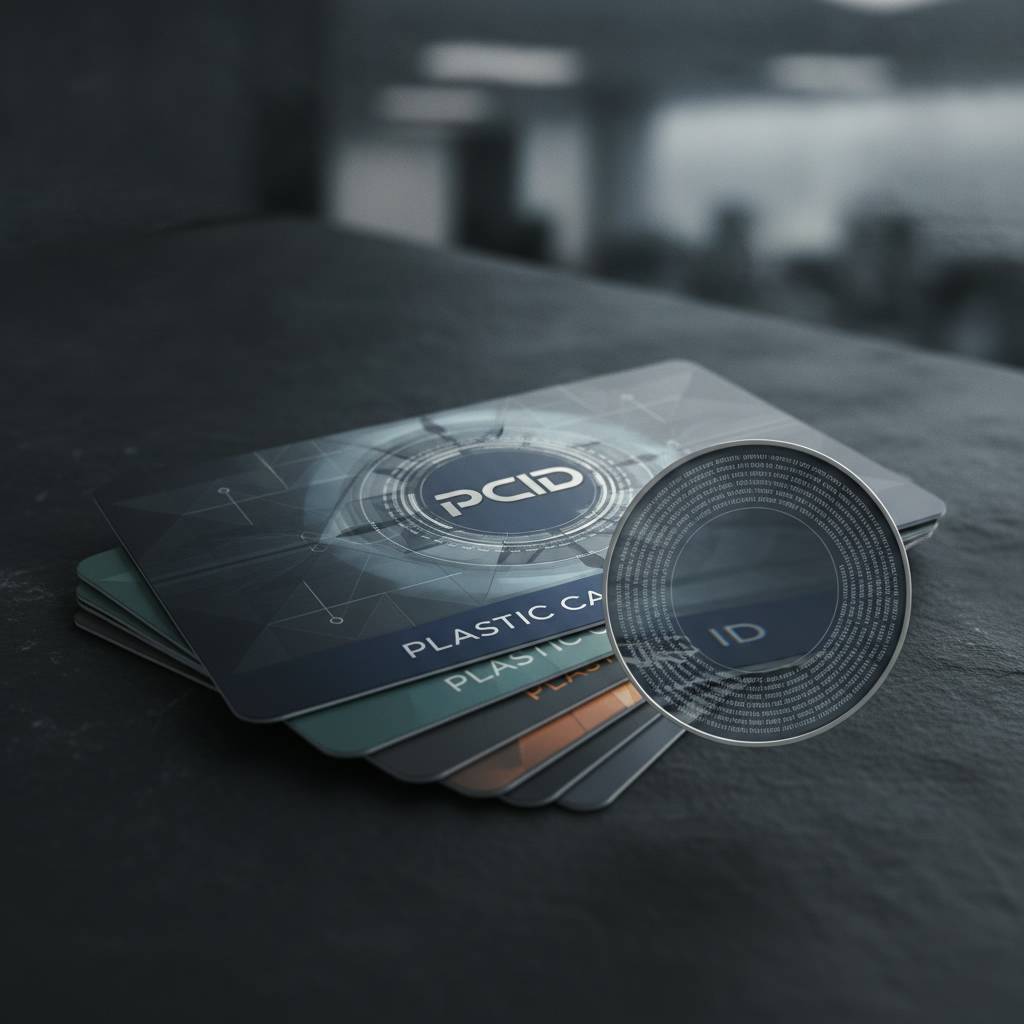 Card design for microtext security printing is a discipline that rewards attention to detail. Not every design approach supports microtext effectively, and a poorly planned integration produces a security feature that neither verifies cleanly nor looks intentional. Working with a supplier that understands both print production and security design is essential for getting this right.
The most effective microtext implementations are those where the feature is invisible to casual viewing but undeniably present under magnification. That means choosing colors, backgrounds, and text strings that are technically sound, not just aesthetically pleasing. A single wrong choice - too low a contrast, too large a point size, too complex a background pattern - can compromise the entire feature.
Color and Contrast Considerations
Microtext requires sufficient contrast between the text and its background to be readable under magnification. Black text on a white background is the most legible option but the least secure against scanning and reproduction. Security-conscious designers often use near-match colors - dark blue on medium blue, or a slightly lighter tint on a flat color - that provide contrast at high resolution but disappear into background texture at screen or photocopy resolution.
This approach creates a feature that a scanner or consumer copier cannot capture because the contrast ratio falls below the threshold those devices register accurately. Under a 10x loupe, however, the text is perfectly readable to a trained verifier. That asymmetry - visible to the right tool, invisible to the wrong one - is the hallmark of well-executed microtext design.
Text Content Choices
What you print in microtext matters as much as how you print it. A repeating organization name is simple, trainable, and verifiable. A unique serial number per card creates individual card authentication capability. A security phrase known only to your verifiers adds a shared-secret layer. Some programs use a combination: a visible serial number encoded in a barcode or magnetic stripe, with the same number embedded in microtext as a cross-verification tool.
For high-security programs, CPE can discuss options for encoding unique per-card microtext strings that tie to database records. This is common in casino environments and contractor access programs where each card must be individually verifiable, not just generically authentic.
Integration with Other Card Security Features
Microtext performs best as part of a layered security approach rather than a standalone measure. Pairing microtext with a holographic overlaminate means a counterfeiter must defeat both a high-resolution print challenge and a physical material challenge simultaneously. Adding a MIFARE DESFire chip or HiCo magnetic stripe creates electronic verification on top of visual verification.
The combination of microtext, laminate security, and electronic encoding produces a card that is genuinely difficult to fake at any practical cost. For organizations protecting physical access, financial value, or exclusive privileges, that multi-layer approach is not paranoid - it is proportionate. Call 800.835.7919 to discuss the right combination of security features for your specific card program requirements.
In-House Printing vs. Pre-Printed Security Cards
One of the first strategic questions for any card program is whether to print cards in-house using a desktop card printer, or to order pre-printed cards from a production facility. For standard card programs, in-house printing with a Zebra, Fargo, or Evolis printer is efficient, flexible, and cost-effective. For security-focused programs incorporating microtext, the calculus is different.
Desktop card printers - even excellent ones - print at resolutions that do not support true microtext production. This is not a criticism of those machines; they are not designed for security document production. They are designed for efficient, high-quality ID card printing in office environments. The resolution ceiling is a physical limitation of the thermal transfer and dye sublimation processes these printers use.
Pre-Printed Base Cards with In-House Variable Data
The practical solution for most organizations is a hybrid model. Pre-printed base cards carry the microtext security layer, produced at a production facility with the resolution and equipment to execute fine security printing. Those base cards are then loaded into an in-house Evolis, Fargo, or Zebra printer for personalization - adding the employee photo, name, department, and any variable data.
This approach preserves the flexibility and speed of in-house printing for the variable elements that change card to card, while ensuring the security elements that define card authenticity are produced at the required quality level. It is the same model used by many financial institutions, government programs, and access control operators worldwide.
Volume, Cost, and Program Scale
Microtext pre-printing is most cost-effective at volume. Setup costs for security print runs are real, and they amortize better across larger quantities. Programs producing 5,000 or more cards annually typically find the per-card cost impact of microtext printing to be modest - often $0.10-$0.50 per card depending on specification complexity. For a program where card fraud represents thousands of dollars in potential exposure, that cost is straightforward to justify.
Smaller programs can still benefit from microtext security printing, particularly when the consequence of a single fraudulent card is severe - a compromised access badge in a secure facility, for example. In those cases, the security investment is evaluated against risk exposure, not purely against volume economics.
Choosing the Right Supplier
- Confirm the supplier has production-grade equipment capable of genuine sub-0.5mm microtext, not marketing claims.
- Request a printed sample and verify with a 10x loupe before committing to a production run.
- Discuss integration with your in-house printer brand (Evolis, Zebra, Fargo) to ensure base card stock compatibility.
- Ask whether microtext strings can be customized per batch or per card for serialized verification.
- Understand the minimum order quantities and per-card pricing tiers that apply to security print specifications.
- Verify that the supplier works exclusively with USA-based programs and understands domestic compliance contexts.
FAQ: Microtext Security Printing on Plastic ID Cards
Questions about microtext security printing come in predictably from organizations exploring card program upgrades. The answers below address the most common and most practically important concerns across program types and industries.
Can We Add Microtext to Existing Card Designs?
Yes, in most cases. Microtext is typically integrated into the background or border elements of a card design, which means it can be added to existing artwork without requiring a full design overhaul. The design team will review your current artwork to identify the best placement options based on available color areas, border widths, and existing graphic elements.
In some cases, minor design adjustments improve the result - for example, slightly widening a border element to accommodate a microtext line, or adjusting a background color to optimize contrast for the security text. These modifications are generally minor and do not change the visual identity of the card meaningfully.
How Do Verifiers Check Microtext in the Field?
Field verification requires only a basic magnifying loupe - a 10x jeweler's loupe is the standard tool and costs roughly $10-$25. Verifiers are trained to place the loupe against the card at the designated microtext location and confirm that the security text is crisp, correctly spelled, and consistent with the expected content. The verification takes five to ten seconds.
Organizations can include verification protocol cards with their loupe kits, showing staff exactly where to look and what correct microtext looks like. This makes the security feature operationally practical even in high-throughput environments like trade show registration desks, building lobbies, or event entry points.
Is Microtext Combined with RFID or Magnetic Stripe Cards?
Absolutely. Some of the most robust card security programs pair microtext with functional card technology. A proximity access card or MIFARE DESFire smart card can carry microtext on its print layer, giving security personnel both an electronic and a visual verification path. If the electronic reader fails or a card reader is bypassed, visual inspection with microtext provides a fallback authentication layer.
HiCo magnetic stripe cards with microtext printing are popular in casino environments, corporate campuses, and hotel key card programs. The combination of encoded data on the stripe and verifiable microtext on the print surface creates redundant authentication that covers both automated and manual inspection scenarios.
Building a Secure Card Program with Plastic Card ID
Security is not a single feature - it is a program. The most effective card security programs layer physical, electronic, and procedural controls into a coherent system that is hard to defeat without extensive resources. Plastic Card ID has spent more than 25 years helping organizations across the United States design and operate card programs at every scale and security level, from basic employee ID cards to sophisticated access control and casino player card systems.
The conversation about microtext security printing is usually part of a broader conversation about what a card program needs to accomplish. Access control programs have different requirements than loyalty programs. Casino cards face different threat models than contractor badges. Event credentials have different lifecycle constraints than annual membership cards. Getting the security specification right means understanding the actual threat, not just applying the most expensive available features.
What to Expect When You Call
When you reach CPE at 800.835.7919, you are talking to a team that has processed over 50 million cards for more than 100,000 customers across the country. The conversation starts with your program requirements - card volume, card type, functional needs, and security concerns - and moves to specific product and specification recommendations based on what you actually need.
There are no one-size-fits-all answers in card program design. A 50-card-per-month loyalty program for a single retail location has entirely different needs than a 50,000-card-per-year access control system for a national employer. Both deserve the right answer for their situation, not the most expensive or the most generic solution available.
Card Products That Support Security Features
Plastic Card ID carries the full range of card stock that security printing programs require. Standard CR80 PVC cards serve as the base for most programs. Clear and frosted card stock supports specialty overlay designs. Smart chip cards with MIFARE DESFire, HiCo magnetic stripe cards, and proximity access cards all support combined electronic and print security architectures. Luxury metal cards in stainless steel, brass, and gold add physical security through the difficulty of the substrate itself.
Supporting products include printer ribbons for Evolis, Zebra, and Fargo card printers, cleaning kits to maintain print quality over time, card carriers, sleeves, and card affixing and mailing services for programs that distribute cards by post. Every element of a complete card program is available from a single trusted source.
Protecting What Your Cards Represent
A card is not just a piece of plastic. It represents access, membership, identity, value, or privilege - sometimes all of those simultaneously. When someone presents a card, they are asserting a claim that your organization must be able to verify. Microtext security printing is one of the clearest, most cost-effective, and most reliable ways to ensure that claim is verifiable and that the card making it is genuinely yours.
Organizations that invest in proper card security protect their programs, their members, their employees, and their own integrity. A fraudulent card is not just a security failure - it is a failure of the trust that your card program represents. Building that trust into the physical card, at the design and production level, is the foundation of a program worth running.
Ready to add microtext security printing to your plastic card program? Contact Plastic Card ID today at 800.835.7919 and speak with a card program specialist who will help you design the right solution for your specific security requirements.
Previous Page