Blank Plastic Cards Made in the USA: Quality You Can Trust
Table of Contents []
- Why Plastic Card ID Is the Trusted Source for Blank Plastic Cards Made in the USA
- The CR80 Standard: What Makes Blank PVC Cards the Workhorse of Card Programs
- Magnetic Stripe Cards: HiCo and LoCo Explained for Buyers
- RFID, Proximity, and Smart Chip Cards: When Blank Cards Get Intelligent
- Specialty Cards That Make Programs Unforgettable
- Card Printers, Ribbons, and Accessories: Building a Complete In-House Program
- Industries That Rely on Blank Plastic Cards Made in the USA
- Get Started with Plastic Card ID Today
Why Plastic Card ID Is the Trusted Source for Blank Plastic Cards Made in the USA
There is a moment every operations manager, marketing coordinator, or small business owner eventually faces: the realization that paper cards - the flimsy punch cards, the laminated membership slips, the inkjet-printed lanyards - are quietly costing them credibility. Switching to blank plastic cards made in the USA is not a luxury upgrade. It is a structural decision that changes how customers, members, and employees perceive your organization from the first handshake.
Plastic Card ID has spent over 25 years building exactly the kind of supply infrastructure that makes that switch seamless. More than 100,000 customers served. More than 50 million cards shipped. Whether you need 50 cards this month or 50,000 next quarter, the catalog, the expertise, and the relationships are already in place to support you.
What separates a strategic card partner from a commodity vendor? Depth. CPE carries blank PVC cards across every standard and specialty format - CR80, clear, frosted, colored stock, pre-punched, slotted - alongside the printers, ribbons, and accessories needed to build a complete in-house card program. That is the kind of end-to-end thinking that keeps programs running without friction.
| Feature | Paper Cards | Blank Plastic CR80 Cards |
|---|---|---|
| Durability | Low | High |
| Wallet Fit (ISO 7810) | Rarely | Always |
| Print-Ready Surface | Limited | Full Color, Both Sides |
| Professional Perception | Minimal | Strong |
| Encoding Options | None | Mag Stripe, RFID, Chip |
| Long-Term Cost | Ongoing Replacement | Lower Per-Card Cost |
The CR80 Standard: What Makes Blank PVC Cards the Workhorse of Card Programs
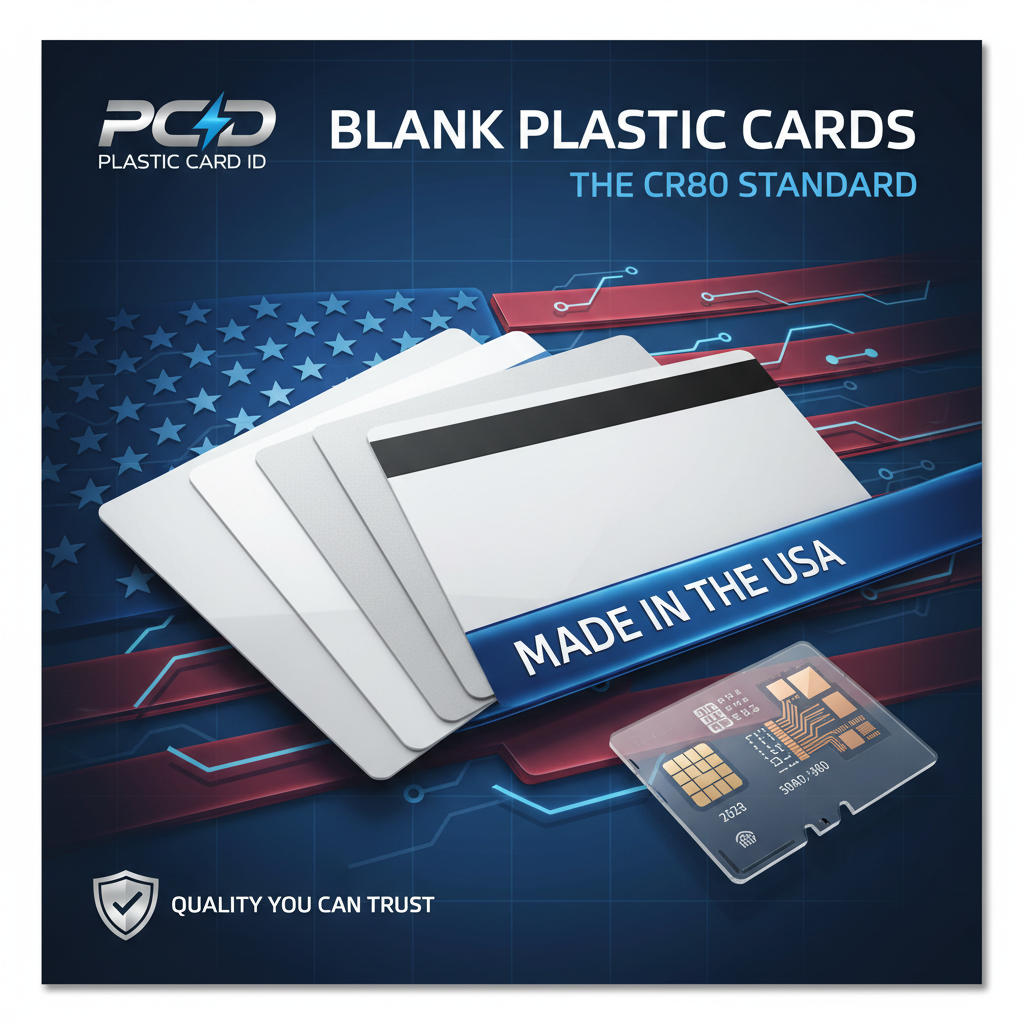 Most people carry a dozen CR80 cards without ever knowing that term. Your driver's license, your gym membership, your hotel key - all CR80. At 3.375 inches by 2.125 inches and 30 mil thick, the CR80 is the ISO 7810 standard that makes a card fit every wallet, badge holder, and card printer slot on the market. Consistency matters at scale, and the CR80 format delivers it reliably.
Blank CR80 PVC cards give your organization complete design control. Nothing is pre-printed, which means every card becomes whatever your program needs it to be: an employee ID badge, a loyalty card for your retail counter, a membership credential for your gym, an event pass for your conference. One stock, infinite applications. That flexibility is a genuine operational asset.
30 Mil Thickness and Why It Signals Quality
Card thickness is something recipients notice subconsciously. A 30 mil card has weight, rigidity, and a tactile quality that communicates permanence. Thin cards get tossed; substantial cards get kept. When a loyalty or membership card stays in someone's wallet for months, it is doing ongoing marketing work you never have to pay for again.
The 30 mil standard also means compatibility with virtually every card printer on the market, including the Evolis, Zebra, and Fargo lines that CPE stocks. You will never encounter a thickness mismatch that jams your printer or degrades print quality.
White Gloss vs. Matte vs. Specialty Finishes
Standard blank PVC cards come in white gloss - the default for vibrant full-color printing with dye-sublimation card printers. But the catalog goes further. Matte surfaces offer a softer look and reduce fingerprint visibility. Frosted and clear cards create visual distinction that standard white simply cannot match, particularly for VIP membership tiers or upscale retail environments.
Colored PVC stock - available in a range of hues - allows organizations to use color-coding as a functional system. Blue for visitors, red for contractors, green for full staff. Encoding security information visually is a simple, effective layer that costs very little extra per card.
Volume Flexibility from 50 Cards to 50,000
Program scale should not dictate supplier options. Plastic Card ID is built to serve both the boutique fitness studio that needs 50 membership cards this month and the regional hospital network that needs 20,000 employee IDs before a compliance deadline. No program is too small to deserve professional-grade materials.
Ordering in higher volumes naturally reduces per-card cost, and the team can walk you through the volume thresholds where pricing shifts meaningfully. Starting a program? Order conservatively. Scaling up? The infrastructure is already in place to support that growth without switching vendors or renegotiating terms.
Magnetic Stripe Cards: HiCo and LoCo Explained for Buyers
A blank card with a magnetic stripe is not a single product - it is a choice between two distinct technologies that serve different use cases. Getting this selection right from the start prevents costly reprinting and encoder replacements down the line. Understanding the difference between High Coercivity and Low Coercivity magnetic stripes is one of the most practical pieces of knowledge any card program manager can have.
HiCo stripes, encoded at 2750 Oersteds, are resistant to accidental erasure from proximity to everyday magnets. That makes them the right choice for access control cards, employee ID badges, and any application where cards are used repeatedly over months or years. LoCo stripes, encoded at 300 Oersteds, are sufficient for short-term applications like event badges or hotel keys where the card lifecycle is intentionally brief.
HiCo Magnetic Stripe Cards: Built for Longevity
When a card is going to be swiped hundreds of times - at a time clock, a door reader, a point-of-sale terminal - HiCo encoding is non-negotiable. The higher magnetic field strength means the encoded data survives the physical and magnetic wear of real-world use. HiCo cards are the professional choice for any permanent card program.
The blank HiCo cards in CPE's catalog are available in standard CR80 sizing with stripe positions compatible with all major card encoders and readers. Whether you are running a time and attendance system, a retail loyalty program, or a building access setup, HiCo is the stripe format that will not let you down after six months of daily use.
LoCo Magnetic Stripe Cards: The Smart Short-Term Option
Not every card program needs to last a year. Conference credentials, hotel key cards for a single stay, temporary contractor badges - these applications have defined end-of-life dates, which makes LoCo encoding a practical and cost-effective choice. Matching stripe technology to program lifecycle is smart procurement.
LoCo cards encode and read faster on certain encoder hardware, which can matter when you are producing hundreds of event credentials under time pressure. They also tend to have a slightly lower per-card cost, which adds up when you are ordering in the thousands for a short-duration event.
Choosing the Right Stripe: A Quick Decision Guide
- Employee ID or access control card used daily for 1-3 years: HiCo, always.
- Retail loyalty card swiped repeatedly at POS terminals: HiCo recommended.
- Hotel key card for a single guest stay: LoCo is appropriate.
- Conference or event badge valid for 1-5 days: LoCo is cost-effective.
- Membership card carried in a wallet near credit cards: HiCo protects against accidental demagnetization.
- Unsure about your use case? Call 800.835.7919 and the team will help you select correctly the first time.
RFID, Proximity, and Smart Chip Cards: When Blank Cards Get Intelligent
 The word "blank" in blank plastic cards refers to the card surface - unprinted, ready for your design. But beneath that surface, some of the most sophisticated card technologies available can already be embedded and waiting. RFID and smart chip cards are blank in appearance but intelligent by design. Understanding what each technology does helps organizations select the right card for access control, loyalty tracking, or secure identity systems.
Proximity cards operate on 125 kHz frequency and are the workhorses of basic access control systems - reliable, widely compatible, and cost-effective for door access and time tracking. RFID smart cards, particularly those using MIFARE DESFire technology, operate at 13.56 MHz and support encrypted data storage, multiple application layers, and contactless read speeds that make them suitable for high-security environments and multi-use card programs like casino player tracking or university campuses.
Proximity Cards for Access Control Programs
If your organization needs to control who enters which doors, when, and how - proximity cards are likely already the technology your reader infrastructure supports. Blank proximity cards snap into that infrastructure immediately. Print your brand on the surface, encode the access data, and your card program is live.
These cards work with the most widely deployed access control readers in commercial buildings across the United States. Their 125 kHz frequency and passive operation (no battery required) make them maintenance-free from a card perspective. The reader does all the work; the card just needs to be present.
MIFARE DESFire and Advanced Contactless Applications
When security requirements go beyond basic door access - when the card needs to store encrypted credentials, support multiple applications simultaneously, or integrate with loyalty and payment-adjacent systems - MIFARE DESFire is the technology that delivers. This is the standard that casino player cards, transit systems, and university IDs depend on worldwide.
DESFire cards support AES 128-bit encryption, making them resistant to cloning and unauthorized reading. For organizations managing sensitive access data or high-value loyalty programs, this is not over-engineering - it is appropriate security hygiene. CPE stocks these cards alongside the compatible encoder and reader hardware to support full program deployment.
Smart Chip Cards for Secure Identity
Contact smart chip cards - the kind with the gold or silver chip visible on the card face - store data on an embedded integrated circuit. They require physical insertion into a reader, which adds a layer of deliberate interaction that contactless cards do not. For high-security identity programs, the contact chip card remains a gold standard.
These cards are used in government ID programs, healthcare worker credentials, and any environment where the card itself is a trusted authentication device rather than just a token. The chip can store significantly more data than a magnetic stripe, and it is far more difficult to duplicate.
Specialty Cards That Make Programs Unforgettable
Standard white PVC cards are workhorses. But some programs call for something that stops a recipient mid-reach and makes them look twice. Clear cards, frosted cards, custom die-cut shapes, and luxury metal cards in stainless steel, brass, and gold - these are the options that transform a functional card into a brand statement.
The decision to use a specialty card format is rarely just aesthetic. Clear cards communicate transparency and modernity; they work beautifully for tech-forward brands or premium membership tiers where distinction is the point. Metal cards communicate weight, permanence, and exclusivity in a way that no printed surface can replicate. When a member receives a brushed stainless steel card in the mail, the program itself gains instant perceived value.
Clear and Frosted PVC Cards
Clear cards require a different design approach - negative space and strategic color placement replace the white background assumption that most designers default to. The result, when done well, is a card that looks like nothing else in a wallet. Frosted cards offer a softer, diffused effect that works particularly well with minimal or monochromatic branding.
Both formats are available in standard CR80 sizing and 30 mil thickness, which means they run through the same printers as standard white PVC cards. The design investment is in artwork preparation, not in new hardware. That makes clear and frosted cards a low-friction upgrade for existing in-house card programs.
Metal Cards: Stainless Steel, Brass, and Gold
Metal card programs are not for every use case - and that is precisely the point. A stainless steel card issued to a top-tier loyalty member, a brass card given to a founding member of a private club, a gold card reserved for VIP event access - these objects communicate scarcity and value in ways that no plastic card ever will.
Metal cards from Plastic Card ID are available in multiple finishes and can be laser-engraved or digitally printed depending on the finish selected. They carry the same CR80 dimensions as standard cards, which means they fit existing badge holders and cardholder accessories without modification.
Custom Die-Cut Shapes and Casino Player Cards
Standard card dimensions are a convention, not a mandate. Custom die-cut shapes - a card shaped like a house for a real estate firm, a rounded-corner card for a spa, a key-shaped card for a hotel - create immediate visual association with the brand they represent. Shape differentiation is one of the most underused tools in card program design.
Casino player cards occupy a unique space in the card program world - they need to be durable enough for daily use in high-traffic environments, sophisticated enough to encode tier-based loyalty data, and branded clearly enough to carry the casino's identity confidently. CPE has the experience and the card stock to support casino-scale player card programs at any volume.
Card Printers, Ribbons, and Accessories: Building a Complete In-House Program
Blank cards are the canvas. The card printer, the ribbon, and the accessories are the system that turns that canvas into a finished credential. Buying cards from one vendor and printers from another creates compatibility risk that Plastic Card ID eliminates by stocking both - along with the ribbons, cleaning kits, card carriers, sleeves, and card affixing and mailing services that complete the picture.
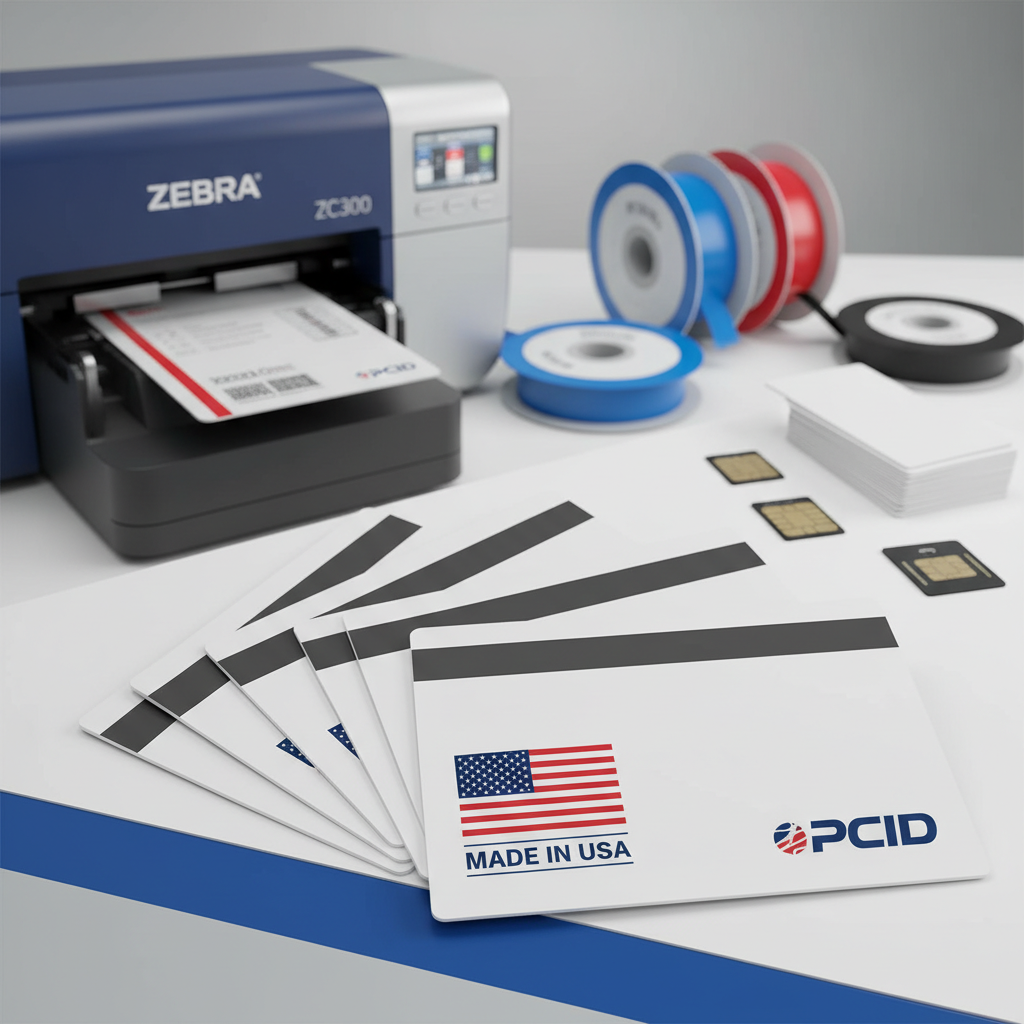
In-house card printing gives organizations speed, flexibility, and control. Need to issue a replacement employee badge today? Print it. Need to add a new member to your loyalty program at the front counter? Print the card while they wait. That immediacy has real operational value that pre-ordered printed cards simply cannot provide.
Evolis, Zebra, and Fargo Card Printers
These three brands represent the gold standard in card printing hardware for business programs. Evolis printers are known for compact footprints and excellent single-card print quality - ideal for front-desk issuance programs. Zebra printers bring industrial reliability and high-volume throughput. Fargo printers excel in security credential applications where overlay laminate and holographic panels matter. Each brand has a specific use case sweet spot, and matching printer to program is critical.
The Plastic Card ID team can help you select the right printer for your volume, your card type, and your budget - and then supply the ongoing ribbon, cleaning kit, and maintenance supplies to keep that printer running at peak output. That is the value of a single-source relationship: fewer vendor calls, faster resupply, and consistent quality across every card you print.
Ribbons, Cleaning Kits, and Card Accessories
A card printer is only as good as the ribbon running through it. Using the wrong ribbon - wrong formulation, wrong panel count, wrong color profile - degrades print quality, wastes cards, and shortens printhead life. Sourcing ribbons from the same supplier as your cards eliminates the compatibility guesswork.
Cleaning kits are unglamorous but essential. Dust, debris, and residue accumulate in card printers faster than most users expect, and regular cleaning is the single most effective thing an operator can do to extend printer life and maintain print quality. Card carriers, sleeves, and badge holders complete the accessory catalog - the finishing touches that make a finished card program look intentional.
Card Affixing and Mailing Services
Not every organization has the internal capacity to affix cards to mailers, stuff envelopes, and run a card distribution campaign at scale. Plastic Card ID offers card affixing and mailing services that take the production burden off your team entirely. You supply the design and the mailing list; the program handles the rest.
This service is particularly valuable for loyalty program launches, membership renewals, and gift card campaigns where the volume is high and the timeline is tight. Outsourcing production and distribution to an experienced partner reduces errors, reduces labor costs, and gets cards in front of recipients faster than any in-house effort could manage.
Industries That Rely on Blank Plastic Cards Made in the USA
The range of organizations that benefit from in-house card programs is genuinely broad. Retail, healthcare, hospitality, education, government, nonprofit, fitness, events - nearly every sector that manages people, access, or loyalty has a use case for blank plastic cards made in the USA. What changes between industries is the encoding technology, the print design, and the volume. The underlying card stock is often the same.
Retailers switching from paper to plastic gift cards consistently report sales increases of 35-50%. That is not a marginal improvement - it is a fundamental shift in how customers perceive and spend on gift cards. Plastic gift cards get purchased as presents, displayed at checkout, and reloaded. Paper gift certificates get lost, damaged, and forgotten. The physical format of a card changes the behavior of the person holding it.
Loyalty and Membership Programs
A loyalty card that lives in a wallet is a recurring brand impression that requires no ad spend. Every time a customer opens their wallet and sees your card, your brand is present. Plastic loyalty cards outperform paper punch cards in retention, spend frequency, and average transaction value - not because of the technology encoded on them, but because of the physical permanence they communicate.
Membership cards for gyms, clubs, associations, and professional organizations carry the same logic further. A plastic membership card signals that the organization is serious, established, and worth belonging to. A paper membership certificate communicates the opposite, even when the underlying value of the membership is identical.
Healthcare, Education, and Government ID Programs
These sectors share a common requirement: cards that are used every day, handled by many people, and expected to remain legible and functional for years. Durability is not optional in high-frequency ID applications. The 30 mil PVC CR80 card survives daily wallet wear, badge holder friction, and the occasional trip through a washing machine in a way that no paper-based credential can.
Healthcare worker IDs, student ID cards, employee access badges, government agency credentials - these are applications where CPE has deep experience and catalog depth. Contact 800.835.7919 to discuss the specific requirements of your organization's ID program and get matched to the right card stock and printer combination.
Hospitality, Events, and Casino Programs
Hotels need key cards that last exactly as long as a guest's stay - reliable, easy to encode at check-in, and cost-effective at volume. Event organizers need credentials that are hard to counterfeit, easy to visually verify, and fast to produce under deadline pressure. Casinos need player cards that survive daily handling, encode tier data reliably, and carry brand identity confidently on the casino floor. Each of these is a distinct program with distinct requirements - and Plastic Card ID has the catalog depth to serve all three without compromise.
The hospitality sector in particular benefits from the volume flexibility that CPE provides. A boutique hotel needs perhaps 500 key cards a month. A major resort property may need 50,000. Both orders are handled with the same attention, the same quality standard, and the same delivery reliability.
Get Started with Plastic Card ID Today
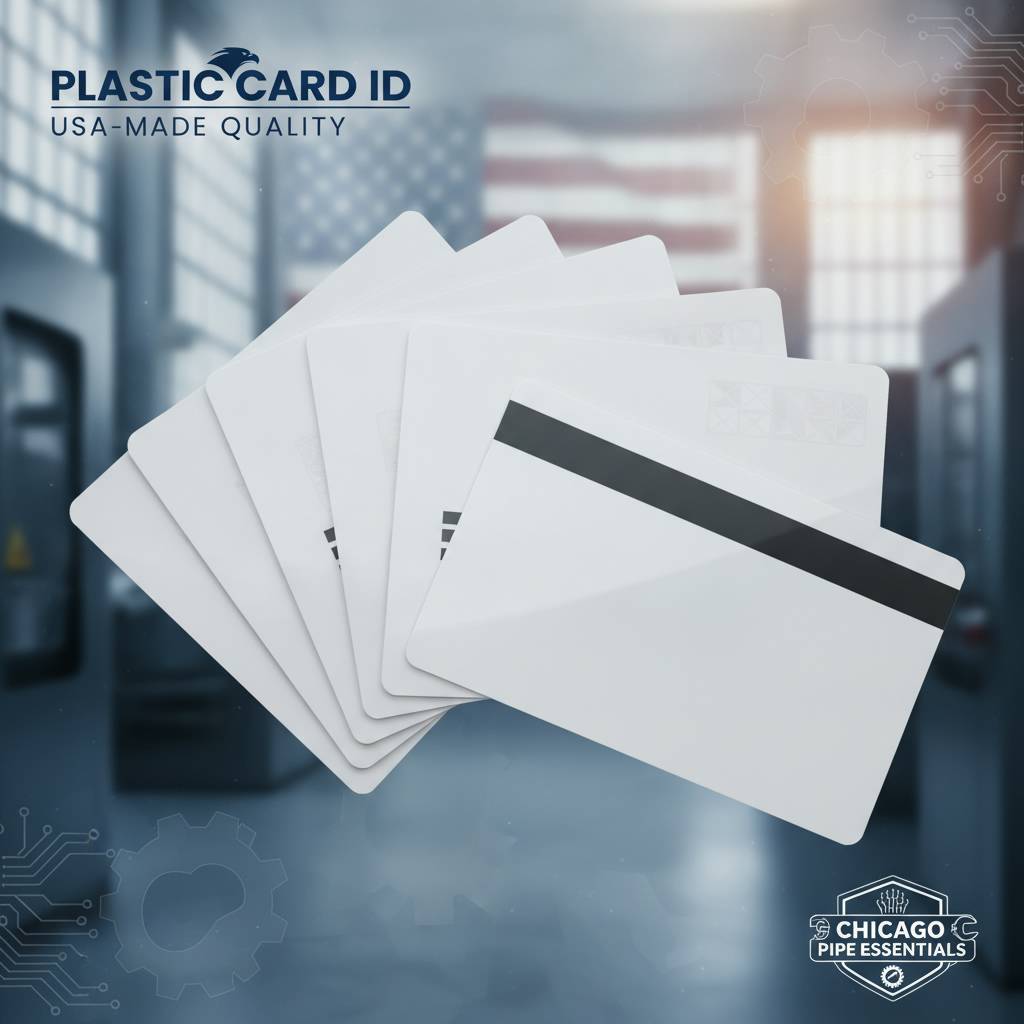 Twenty-five years of supplying blank plastic cards made in the USA to over 100,000 businesses is not an accident. It is the result of consistent quality, deep catalog expertise, and a genuine commitment to helping organizations run card programs that work. Whether you are launching your first loyalty program or scaling an enterprise ID system, the right cards are already in stock and ready to ship.
Do not let paper credentials undermine the professionalism of your organization. The upgrade to plastic is simpler, faster, and more cost-effective than most organizations expect - and the results, in customer perception, card retention, and program performance, are measurable from the first order.
Contact Plastic Card ID now at 800.835.7919 and speak with a card program specialist who can match your organization's needs to the right card stock, encoding technology, and printer solution - from 50 cards a month to tens of thousands.
Previous Page