Encoding Blank Plastic Cards for Secure Access: Full Guide
Table of Contents []
- Encoding Blank Plastic Cards for Secure Access - Plastic Card ID
- Understanding the Mechanics of Card Encoding
- Blank CR80 PVC Cards - The Foundation of In-House Encoding
- Card Printers That Enable In-House Encoding
- Access Control Applications Across Industries
- Value-Added Services That Complete Your Card Program
- Why Work With Plastic Card ID for Your Secure Card Program
Encoding Blank Plastic Cards for Secure Access - Plastic Card ID
What separates a flimsy paper badge from a credential that actually controls who walks through your door? The answer lives inside the card itself - encoded data, magnetic stripes, RFID chips, and smart technology that transforms a humble piece of plastic into a working piece of your security infrastructure. Plastic Card ID has been in the business of making that transformation happen for over 25 years, and the depth of knowledge built up over 50 million cards sold does not happen by accident.
Encoding blank plastic cards for secure access is not just a technical process - it is a strategic decision that shapes how your organization manages identity, restricts entry, tracks attendance, and projects professionalism. Whether you are running a single-door office, a multi-site enterprise, a hotel, or a campus facility, the right encoded card program changes how your operation functions. This page covers everything you need to know to get it right.
| Card Type | Encoding Method | Best Use Case |
|---|---|---|
| Magnetic Stripe (HiCo) | Magnetic encoding, 3 tracks | Employee badges, loyalty, hotel keys |
| Magnetic Stripe (LoCo) | Low-coercivity magnetic | Short-term access, event passes |
| Proximity (125kHz) | RFID contactless read | Building access, time and attendance |
| MIFARE Smart Chip | 13.56MHz contactless | Multi-application, high-security access |
| Blank PVC CR80 | Printer-encoded in-house | Total design control, all programs |
Understanding the Mechanics of Card Encoding
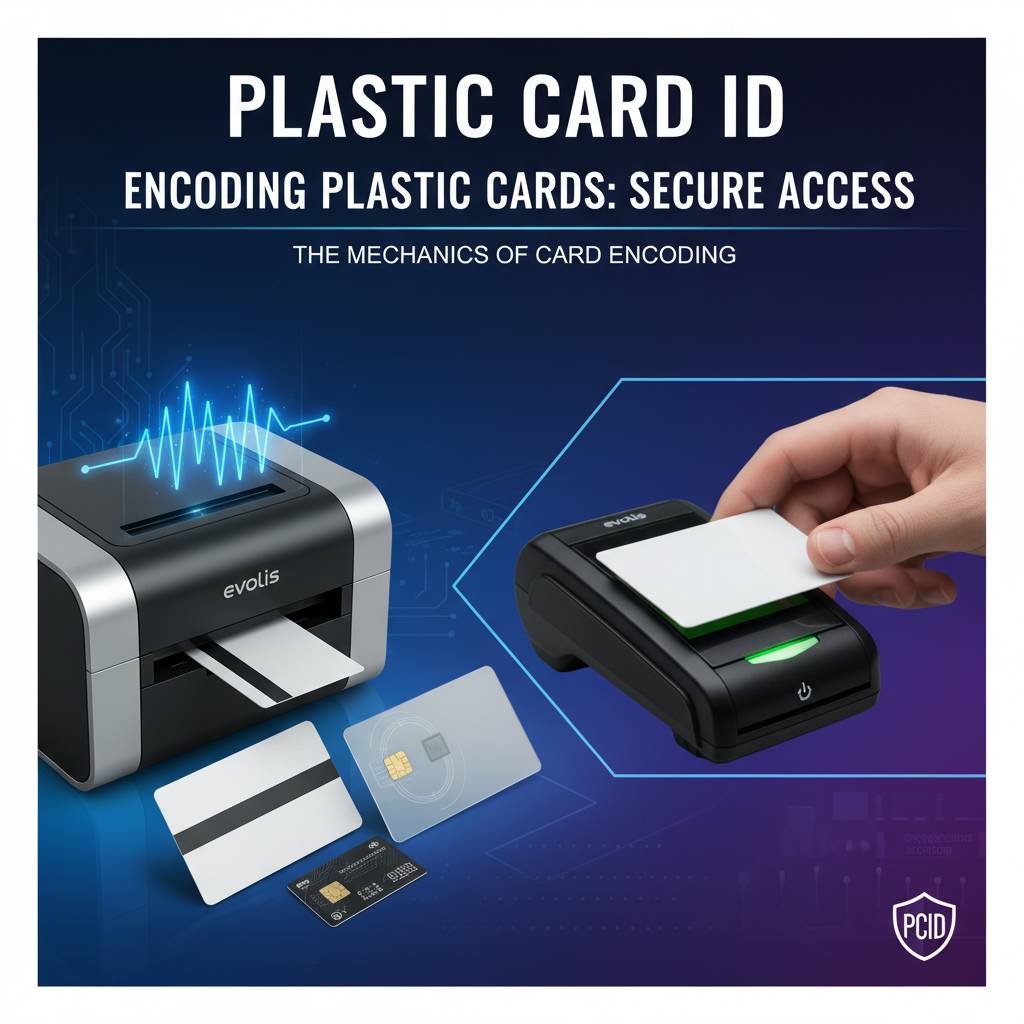 Encoding is the process of writing data onto or into a card so that a reader, scanner, or system can interpret it. This is not printing - it is not visible to the human eye. A magnetically encoded card looks identical to a blank one from across the room, but swipe it through a reader and it unlocks doors, logs attendance, or retrieves a customer profile. That invisible layer of data is where the security lives.
The encoding method you choose determines your system's capabilities, cost, and long-term flexibility. Magnetic stripe, RFID, proximity, and smart chip technologies each have distinct operating ranges, data capacities, and security profiles. Making the right choice upfront avoids costly replacements down the line and ensures your card program scales with your organization rather than against it.
Magnetic Stripe Encoding: HiCo vs. LoCo
High-coercivity (HiCo) magnetic stripe cards require a stronger magnetic field to encode but are significantly more resistant to accidental erasure from proximity to everyday magnets. They are the preferred standard for employee access cards, loyalty programs, and hotel keys that need to survive months or years of daily use. If durability under real-world conditions matters to your program, HiCo is the sensible default.
Low-coercivity (LoCo) cards are easier and slightly cheaper to encode but are more vulnerable to data corruption from magnets. They work well for short-term applications - event passes, visitor badges, temporary credentials - where longevity is not the primary concern. Knowing the difference between HiCo and LoCo can save your organization significant headaches when cards start failing prematurely because the wrong type was ordered.
RFID and Proximity Card Technology
Proximity cards operating at 125kHz are the workhorses of building access worldwide. They communicate with readers wirelessly over short distances - typically up to a few inches - without any physical contact. No swipe, no insertion, no fumbling. The cardholder simply presents the card near the reader and access is either granted or denied based on the stored credential data. For high-traffic entry points, this contactless convenience is a meaningful operational upgrade.
RFID smart cards at 13.56MHz, including MIFARE DESFire and other standards, step up both the functionality and the security profile considerably. These cards can store significantly more data, support encryption, and handle multiple applications on a single card - access control, cashless vending, attendance tracking, and more. Multi-application RFID cards reduce card clutter for employees while giving administrators a centralized platform for managing permissions across the entire facility.
Smart Chip Cards and Advanced Credentials
Contact smart chip cards feature an embedded integrated circuit that communicates through a physical interface when inserted into a compatible reader. These are common in government-issued ID programs, secure enterprise environments, and applications where the highest data integrity standards apply. The chip stores and processes information locally, which adds a layer of security that purely passive technologies simply cannot match.
Contactless smart cards combine the chip's processing power with the convenience of RFID communication. A single card can carry encrypted access credentials, a stored-value balance, user profile data, and audit trail information all at once. For organizations managing complex multi-layer security environments, this kind of card is not a luxury - it is infrastructure. CPE stocks and supplies these advanced card types for USA businesses ready to build serious access control programs.
Blank CR80 PVC Cards - The Foundation of In-House Encoding
Before a card becomes an access credential, it starts as a blank. The CR80 standard - 3.375 by 2.125 inches, 30 mil thick - is the universal format that every card printer and encoding system is built to accommodate. Stocking blank CR80 cards gives organizations the ability to issue credentials on demand, customize designs entirely in-house, and control per-card costs at scale. There is a reason this format has been the global standard for decades.
Blank PVC cards are the most flexible inventory investment your card program can make. A single stock of blank cards can become employee badges on Monday, visitor passes on Tuesday, and temporary access credentials for a contractor team on Wednesday. With the right printer and encoding setup, your organization gains complete autonomy over your card program without relying on long lead times from outside vendors for every batch.
Card Stock Options and Specialty Materials
Standard white PVC blank cards are the most commonly ordered option, and for good reason - they accept dye-sublimation printing beautifully, hold magnetic stripes and chip inlays without issue, and present a clean professional surface for any design. But the catalog at CPE goes considerably further. Clear and frosted plastic cards create striking visual effects when printed or used as overlays. Colored PVC stock lets organizations skip printing a background color entirely, reducing ink usage and adding a distinctive look.
Specialty formats including custom die-cut shapes, oversized cards, and luxury metal options in stainless steel, brass, and gold exist for programs where the card itself is part of the brand statement. Casino player cards, premium membership credentials, VIP access passes - these applications demand a card that feels as exclusive as the program it represents. The physical weight and finish of a metal card communicates something that a standard PVC card simply cannot replicate.
Choosing the Right Card Thickness and Finish
The standard 30 mil (0.030 inch) thickness is compatible with virtually all card printers and most access readers. Thicker options exist for applications requiring greater rigidity or a premium tactile feel - key fob formats and laminated overlay constructions both fall into this territory. Thinner cards, sometimes called proximity card inlays, are designed to be embedded within other products or used in specialized reader applications rather than standalone.
Glossy finishes are standard on most PVC cards and provide vibrant color reproduction. Matte and frosted finishes reduce fingerprint visibility and create a softer, more sophisticated appearance that some membership programs prefer. Matching card finish to your brand identity is a small detail that makes a surprisingly large impression on every person who handles the card. Get this right from the start rather than reprinting an entire batch because the finish looked different than expected.
Volume Purchasing and Program Scaling
One of the clearest operational advantages of working with CPE is the ability to serve programs of radically different sizes. An organization issuing 50 cards per month has genuinely different needs than one issuing 50,000 - and both deserve a supplier who understands those differences rather than forcing a one-size-fits-all solution. Volume pricing makes per-card costs drop meaningfully as quantities rise, which matters when cards are being issued at scale across an enterprise.
Planning ahead on card stock orders allows organizations to take advantage of pricing breaks without overextending on storage. Blank PVC cards have a long shelf life when stored correctly, making modest overstocking a reasonable buffer strategy for programs that experience seasonal spikes. Strategic stocking decisions reduce per-card costs and eliminate the operational disruption of running out mid-program.
Card Printers That Enable In-House Encoding
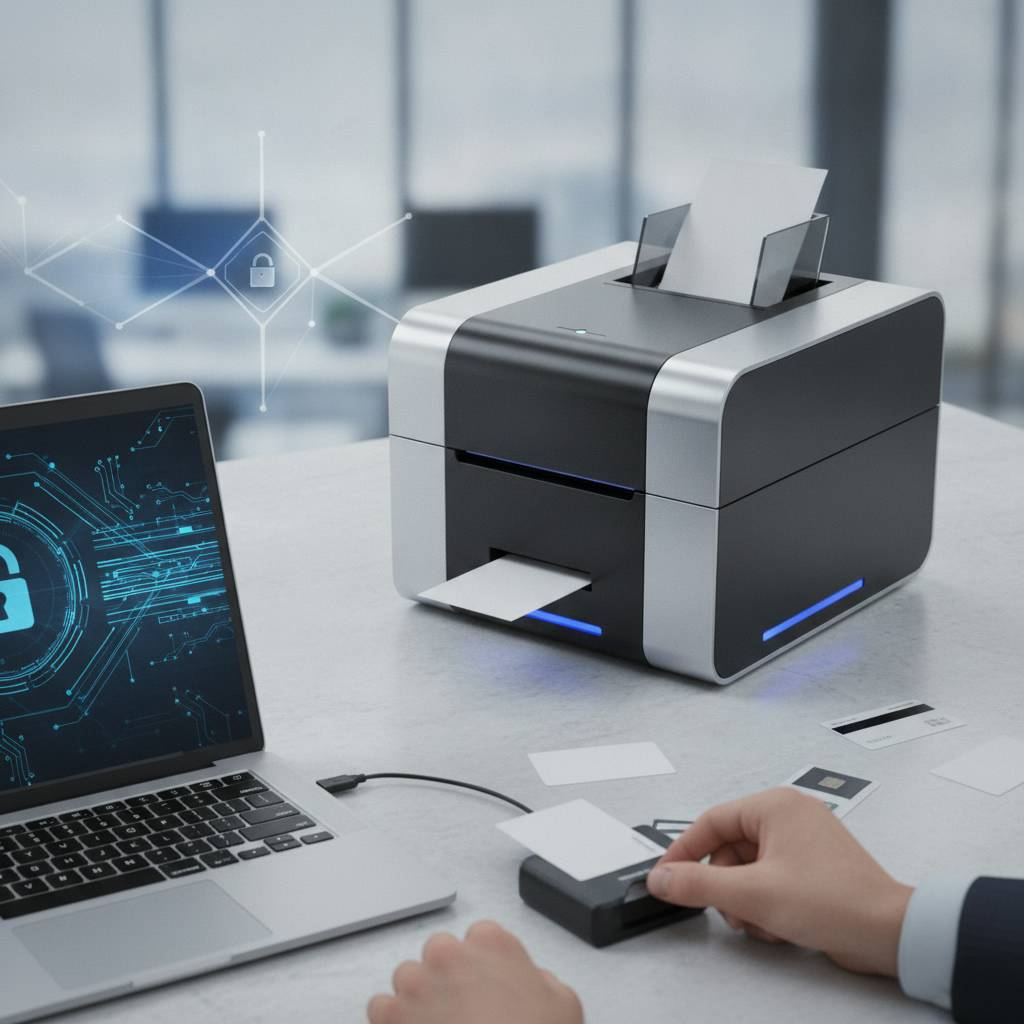 A blank card only becomes an encoded credential when paired with the right printing and encoding hardware. Plastic Card ID carries a full lineup of card printers from three of the most respected names in the industry - Evolis, Zebra, and Fargo - each with distinct strengths suited to different organizational contexts. Selecting the wrong printer for your volume and encoding requirements is a costly mistake that a knowledgeable supplier can help you avoid entirely.
The printer is not simply a machine that puts color on plastic. For access control programs, the printer's encoding module is equally important - it writes the magnetic stripe data, programs the RFID chip, or loads the smart card credential simultaneously with the visual print pass. Having print and encode happen in a single pass is a significant efficiency gain for any program issuing more than a handful of cards per week.
Evolis Card Printers
Evolis printers are widely favored for their compact design, user-friendly operation, and consistent output quality across single-sided and dual-sided configurations. Models like the Evolis Primacy and Zenius series handle everything from basic visual-only printing to full magnetic stripe encoding, smart chip programming, and RFID writing. For small to mid-sized organizations that need reliable performance without a large footprint, Evolis is frequently the right answer.
The Evolis software ecosystem simplifies card design and database integration, which matters greatly for organizations that are linking card credentials to HR systems, membership databases, or access control software. Seamless software integration is what makes an in-house card program actually sustainable over time rather than a manual chore for the staff member assigned to manage it. Call 800.835.7919 to discuss which Evolis model fits your encoding and volume requirements.
Zebra and Fargo Printer Solutions
Zebra card printers are designed for durability and higher-volume throughput, making them a natural fit for enterprise environments, government offices, and large campus programs where cards are being produced in significant quantities on a regular basis. Zebra's ZC and ZXP series include advanced options like lamination modules that add a durable overlay to extend card life in harsh-use environments like manufacturing floors or outdoor facilities.
Fargo printers, now under the HID Global umbrella, bring a reputation for high-security card production that aligns naturally with access control programs requiring encoded credentials. Fargo's HDP (High Definition Printing) process prints beneath a laminate layer, creating a card surface that resists tampering and alteration - an important characteristic when the card is being used as an official ID or secure access credential in a regulated environment.
Printer Supplies and Maintenance
A card printer without the right consumables is just an expensive paperweight. Printer ribbons are the most frequently consumed supply, and the quality of the ribbon directly affects print clarity, color accuracy, and the durability of the printed image on the card surface. CPE stocks OEM-compatible ribbons for all major printer brands, ensuring that organizations do not face supply chain gaps when it is time to reorder.
Cleaning kits and cleaning cards maintain print head quality and prevent the buildup of debris that degrades output over time. A printer that receives routine cleaning produces consistently better cards and experiences fewer mechanical failures - which directly translates to lower total cost of ownership. Preventive maintenance is the single most cost-effective thing you can do to protect your printer investment.
Access Control Applications Across Industries
Encoded plastic cards show up in more places than most people consciously register - and that ubiquity is itself evidence of their effectiveness. From the card that opens the server room door to the badge that clocks a factory worker in and out, encoded credentials are woven into daily operations across virtually every sector of the American economy. Understanding where your organization fits within this landscape clarifies exactly what kind of card program you actually need.
The applications are as varied as the organizations running them, but certain patterns emerge consistently. Hotel key cards, corporate employee badges, university ID cards, healthcare facility credentials, casino player cards - each program has unique data requirements, security thresholds, and physical card specifications. Matching the encoding technology to the actual operational requirement prevents both over-engineering and dangerous under-investment in security.
Corporate and Enterprise Employee Badging
A well-run employee badge program does more than grant door access. It serves as the visible face of your organization's identity management infrastructure - signaling to visitors, vendors, and employees alike that access is controlled and accountability is built in. Magnetic stripe badges remain effective for single-site environments with straightforward access tiers. RFID and smart card programs make more sense when managing multiple locations, multiple clearance levels, or integration with time-attendance and HR platforms.
The printed visual design of the badge matters too. Photo ID fields, department indicators, color-coded zones, and expiration dates are all elements that a properly set up in-house card printing program can include and update on demand. The ability to issue, update, and revoke credentials rapidly is a genuine security advantage that slower card programs simply cannot match when an employee status changes unexpectedly.
Hotel Key Cards and Hospitality Applications
Hotel key cards are among the most widespread uses of encoded magnetic stripe technology in the United States. A LoCo or HiCo magnetic stripe card is encoded at check-in with room access data and deactivated at check-out - simple, fast, and reliable when the right card stock and encoding equipment are in place. The card also doubles as a brand touchpoint, carrying the hotel's visual identity through every guest's stay.
RFID hotel key cards are increasingly common in newer properties, offering the contactless convenience that modern guests expect while supporting integration with in-room control systems, spa access, and on-property spending accounts. Whether a property is running magnetic stripe or RFID, having reliable blank card stock on hand means that front desk staff can issue replacements in seconds rather than inconveniencing guests with delays.
Casino, Events, and Specialized Access Programs
Casino player cards represent one of the more technically sophisticated applications of encoded plastic credentials in the hospitality sector. These cards track play, accumulate points, trigger rewards, and interface with property-wide management systems - all through the encoded data on a standard-format PVC card. The physical card quality matters here because it is handled constantly by players and staff, swiped repeatedly, and serves as a tangible reminder of the property's loyalty program.
Event credential programs - festivals, conferences, secure facilities with temporary staff - need cards that can be issued rapidly, are difficult to counterfeit, and can be deactivated when the event concludes. RFID proximity cards are particularly well suited to this application, enabling fast contactless validation at entry points without the bottleneck of physical scanning. Fast, accurate access control at high-traffic entry points is a safety and logistics issue, not just a convenience feature.
Value-Added Services That Complete Your Card Program
A card program is more than cards and a printer. The ancillary components - how cards are stored, distributed, carried, and protected - shape whether a program runs smoothly or generates constant operational friction. Plastic Card ID stocks the full ecosystem of supplies that make card programs function properly in the real world, not just on paper.
Card carriers and sleeves protect encoded cards during mailing and storage, preventing the surface damage and magnetic interference that degrades card function before the card ever reaches the end user. For organizations distributing cards through the mail - membership organizations, loyalty programs, remote employee onboarding - the way a card arrives at its destination is part of the program's first impression. A well-presented card arriving undamaged in a professional carrier sets the right tone from day one.
Card Affixing and Mailing Services
Not every organization has the internal capacity to handle the physical work of attaching cards to mailers, stuffing envelopes, and coordinating bulk mail distribution. CPE offers card affixing and mailing services that remove this burden from internal staff and ensure that large distribution runs are completed accurately and on schedule. For membership renewals, loyalty card launches, or seasonal employee credential distributions, this service eliminates a significant logistical headache.
The combination of in-stock card inventory, printing and encoding capability, and mailing fulfillment under one roof means that organizations can move from card design approval to membership card in recipient hands without juggling multiple vendors. Single-vendor fulfillment for the entire card lifecycle reduces errors, simplifies invoicing, and compresses timelines compared to coordinating multiple independent suppliers.
Lanyards, Holders, and Card Accessories
An encoded employee badge that spends most of its time at the bottom of a bag is not serving its security function. Badge holders, retractable reels, and lanyards ensure that cards are worn visibly and accessibly during working hours, making it easier to spot non-compliant visitors and streamlining the experience at access readers. These accessories also protect the card surface from the physical wear that comes with constant daily handling.
Choosing the right accessory ecosystem for your badges involves considering the physical environment - manufacturing facilities need different hardware than corporate offices - and the organizational culture around badge compliance. A friction-free carrying solution that employees actually want to use is worth considerably more than a premium badge holder that gets left in a desk drawer. For quantities and pricing on accessories, reaching out to 800.835.7919 is the fastest path to the right solution.
Cleaning Kits and Long-Term Program Maintenance
Card readers accumulate dust and debris over time, degrading read accuracy and increasing card rejection rates. A systematic cleaning protocol using purpose-made cleaning cards keeps readers performing consistently, reduces false denials at access points, and extends the life of the reader hardware itself. Organizations that skip this maintenance step often misdiagnose reader failures as card quality issues when the root cause is simply a dirty read head.
Printer cleaning kits maintain the print head and transport rollers that handle cards through the printing and encoding process. Printhead damage is one of the most common - and most avoidable - forms of card printer failure. A small investment in cleaning supplies prevents the much larger cost of printhead replacement or full printer service. Building cleaning intervals into your card program's standard operating procedure is one of the simplest high-ROI decisions a program manager can make.
Why Work With Plastic Card ID for Your Secure Card Program
Twenty-five years. One hundred thousand customers. Fifty million cards. Those numbers reflect something beyond longevity - they reflect a company that has learned, in real operational detail, what makes card programs succeed and what makes them fail. That institutional knowledge is available to every organization that calls CPE, regardless of whether you are ordering 50 cards or 50,000.
The role Plastic Card ID plays is not simply as a card supplier who ships boxes. It is as a strategic partner who helps you select the right card type, the right encoding technology, the right printer, and the right supporting supplies to build a program that actually performs. That consultative relationship is what separates a reliable long-term vendor from a one-time transaction.
Serving USA Businesses of Every Scale
From solo-office small businesses issuing employee badges for the first time to multi-site enterprises managing tens of thousands of encoded credentials across a distributed workforce, CPE serves the full spectrum of American organizational needs. The program requirements are different at each scale, and the guidance offered scales accordingly. A first-time buyer gets a clear explanation of the options. A high-volume enterprise gets the pricing, logistics, and account support that matches the complexity of their operation.
Serving over 100,000 customers across the United States means exposure to virtually every card program scenario imaginable. That breadth of real-world experience means that questions rarely arrive without a tested answer already in hand. When your program runs into a challenge - a reader compatibility issue, a card design that is not printing as expected, a sudden volume spike - the right conversation partner makes all the difference.
Loyalty, Membership, and Marketing Card Programs
Beyond access control, encoded plastic cards drive measurable business results in customer-facing programs. Retailers who switch from paper gift cards to plastic see sales increases of 35-50% - a documented, consistent pattern that reflects the way customers perceive and use plastic versus paper. Loyalty cards that live in wallets generate repeat visits that paper punch cards simply cannot match. Plastic membership cards signal permanence and organizational seriousness that paper versions undermine.
These performance differences are not marketing claims - they are operational realities observed across thousands of program implementations. If your organization is still running a paper-based loyalty or membership system, the case for upgrading to encoded plastic cards is not just aesthetic. It is a revenue and retention argument grounded in consistent real-world evidence.
Getting Started Is Simpler Than You Think
The most common barrier to launching an encoded card program is not cost or complexity - it is uncertainty about where to begin. How many cards do you need? What encoding technology matches your access system? Which printer handles your expected monthly volume? What supplies do you need to keep on hand? These are answerable questions, and the team at CPE answers them every day for organizations across the country.
Starting with a clear conversation about your specific program requirements is the single most valuable first step. From there, the path to a functioning encoded card program - stocked with the right cards, running on the right printer, supported by the right supplies - is straightforward. The complexity lives in the choices; the right guidance makes those choices obvious rather than overwhelming.
Ready to build or upgrade your encoded plastic card program? Contact Plastic Card ID today at 800.835.7919 - a strategic partner with 25 years of expertise, 100,000 satisfied customers, and everything your secure access card program needs, ready to ship across the USA.
Previous Page