How Proximity Cards Work for Building Security Explained
Table of Contents []
- How Proximity Cards Work for Building Security - Plastic Card ID
- Why Proximity Cards Outperform Keys and PIN Codes
- RFID Smart Cards vs. Standard Proximity: Knowing the Difference
- Choosing the Right Proximity Card for Your Security Program
- Real-World Applications Driving Proximity Card Adoption
- Proximity Cards as Part of a Broader Physical Security Strategy
- Partner with Plastic Card ID for Your Proximity Card Program
How Proximity Cards Work for Building Security - Plastic Card ID
Walk up to a secured door, hold a card near the reader, and hear that satisfying click. No swiping, no inserting, no fumbling with keys. Proximity cards have quietly become one of the most relied-upon tools in modern access control - and most people using them every single day have no idea what is happening inside that small piece of plastic in under a tenth of a second.
This page breaks down exactly how proximity cards work, why they are so effective for building security, and how organizations across the United States are using them to protect people, property, and sensitive spaces. Whether you are evaluating your first access control system or scaling an existing one, understanding the technology makes every purchasing decision sharper.
The Basic Principle: Radio Frequency Identification in Action
Inside every proximity card is a tiny antenna coil and a microchip - no battery, no moving parts. When the card enters the electromagnetic field projected by a reader (typically within a few inches to a few feet), the antenna harvests that energy and powers the chip just long enough to transmit a unique identification number. The reader captures that number, sends it to the access control software, and the system decides: grant access or deny it.
This process - called passive RFID - happens at 125 kHz for most standard proximity cards. It is fast, reliable, and remarkably simple from the user's perspective. The elegance of the technology is that it requires zero maintenance and zero user effort beyond carrying the card. For facility managers dealing with dozens or hundreds of doors, that simplicity scales beautifully.
HID and 125 kHz: The Standard That Shaped an Industry
When people talk about proximity cards in a commercial building security context, they are usually talking about 125 kHz technology - the same foundational standard that HID Global helped popularize decades ago. Cards in this range include Wiegand-format credentials, which have dominated access control installations for years. The Wiegand protocol transmits a facility code and card number, which the panel uses to look up permissions.
This technology is well understood, widely installed, and supported by virtually every major access control hardware manufacturer. If your building already has 125 kHz readers, stocking compatible proximity cards is straightforward and cost-effective. CPE supplies proximity cards compatible with these systems for organizations running programs of any scale.
What Happens in the Reader - Milliseconds That Matter
The reader does more than passively listen. It continuously broadcasts an oscillating electromagnetic field. The moment a proximity card enters range, electromagnetic induction creates a current in the card's coil. That current charges the card's capacitor just enough to activate the chip, which then modulates the field back toward the reader with the encoded credential data.
The reader decodes that modulation, formats the data according to the Wiegand or OSDP protocol, and forwards it to the access control panel - often in under 100 milliseconds. Speed and consistency are what make proximity cards so effective in high-traffic environments like office lobbies, hospital corridors, and university buildings where hundreds of people may badge through in a single hour.
| Card Type | Frequency | Read Range | Security Level | Common Use |
|---|---|---|---|---|
| Standard Proximity | 125 kHz | 2-6 inches | Moderate | Office buildings, gyms |
| Smart Card (MIFARE) | 13.56 MHz | Up to 4 inches | High | Healthcare, finance, gov |
| MIFARE DESFire | 13.56 MHz | Up to 4 inches | Very High | Casinos, secure facilities |
| Long-Range RFID | 125 kHz / UHF | 3-10 feet | Moderate | Parking, vehicle access |
Why Proximity Cards Outperform Keys and PIN Codes
 Keys get copied. PIN codes get shared - or scrawled on sticky notes and stuck to monitors. Neither method creates an auditable trail of who entered where and when. Proximity cards solve all three of these problems simultaneously, which is why commercial, institutional, and government facilities have shifted decisively toward card-based access control over the past two decades.
When an employee is terminated, a key must be physically recovered - or the lock must be rekeyed at significant cost. With proximity cards, the credential is deactivated in software in seconds. No locksmith. No awkward conversation about key return. No security gap during the transition period. The administrative efficiency alone justifies the investment for most organizations.
Audit Trails and Accountability
Every badge transaction is a data point. Access control systems log the card number, the door, the time, and the result - access granted or denied. Over time, that data becomes enormously useful. Security teams can investigate incidents, verify employee presence, identify unusual access patterns, and produce compliance documentation for auditors.
Paper-based sign-in sheets and key logs simply cannot compete with the granularity of electronic access records. For regulated industries - healthcare, finance, education, government contracting - the audit trail alone can determine whether an organization passes or fails a security review.
Scalability Across a Multi-Door, Multi-Site Environment
A single proximity card can be programmed to open specific doors at specific times. An employee in the accounting department might have access to the main entrance, their floor, and the server room - but not the executive suite or the warehouse loading dock. That level of granular control is impossible with physical keys and difficult to enforce with shared PIN codes.
For organizations managing multiple buildings or locations, centralized access control means one card can travel with an employee to different sites, with permissions managed from a single software dashboard. CPE works with businesses running card programs from 50 cards a month up to mass-scale deployments in the tens of thousands.
Cost Over Time: Cards vs. Traditional Hardware
The upfront investment in a proximity card system is real - readers, panels, wiring, and software. But the ongoing cost of proximity cards themselves is quite low, especially when purchased in volume. Compare that to rekeying a 50-door facility after a single lost key, and the math resolves quickly in favor of card-based systems.
- Deactivate lost cards instantly - no hardware changes needed
- Issue temporary credentials for contractors or visitors with defined expiration
- Bulk card pricing reduces per-unit cost significantly at scale
- No locksmith costs when personnel changes occur
- Compatible with existing reader infrastructure in most commercial buildings
RFID Smart Cards vs. Standard Proximity: Knowing the Difference
The terms "proximity card" and "smart card" are often used interchangeably - incorrectly. Standard proximity cards at 125 kHz transmit a fixed identification number with no encryption, no mutual authentication, and no ability to store additional data. They are simple, rugged, and widely compatible. Smart cards operating at 13.56 MHz (like MIFARE Classic, MIFARE DESFire, and MIFARE Plus) add layers of cryptographic security and the ability to store variable data on the card itself.
Choosing the right card technology is one of the most consequential decisions in any access control deployment. Using a standard proximity card for a facility that processes sensitive data is a mismatch. Using a high-security MIFARE DESFire card for a small gym might be overkill. Understanding the distinction helps organizations right-size their security investment.
When Standard 125 kHz Proximity Cards Are the Right Choice
For most small to mid-size commercial facilities - office buildings, fitness centers, warehouses, schools, and religious institutions - standard proximity cards are more than sufficient. They are compatible with the widest range of installed readers, they are durable, and they are economical at volume. The credential is fixed and cannot be altered, which is actually a feature: it makes cloning detectable through access pattern anomalies.
If your access control panel already supports Wiegand-format credentials and your threat model does not include sophisticated adversaries with RFID interception equipment, standard proximity cards deliver excellent security value per dollar. Contact CPE to confirm compatibility with your existing reader infrastructure before placing an order.
When MIFARE and High-Security Smart Cards Are Essential
Casinos, hospitals, government contractors, data centers, and financial institutions operate in environments where the stakes of a credential compromise are high enough to justify more sophisticated technology. MIFARE DESFire EV2 and EV3 cards use AES-128 encryption, mutual authentication, and diversified keys - meaning even if a card is captured and analyzed, the encryption keys cannot be trivially extracted or replicated.
For multi-application environments where one card handles access control, cashless vending, time and attendance, and visitor management simultaneously, smart cards with on-card data storage are the only practical solution. CPE supplies MIFARE and contactless smart cards for exactly these high-demand programs.
Casino Player Cards and Hospitality Applications
Casino player cards are a specialized intersection of proximity technology and loyalty program management. They track play, manage comps, enable cashless gaming at enabled machines, and serve as a personal identifier that the guest carries and values. The best casino cards are also visually impressive - custom-printed, durable, and tactilely satisfying to hold.
Hotel key cards represent another proximity application where aesthetics and security intersect. A well-designed hotel key card reinforces brand identity every time a guest reaches into their pocket. RFID-enabled hotel cards can also control elevator access, gym entry, and minibar settings - all from a single credential the guest holds for the duration of their stay.
Choosing the Right Proximity Card for Your Security Program
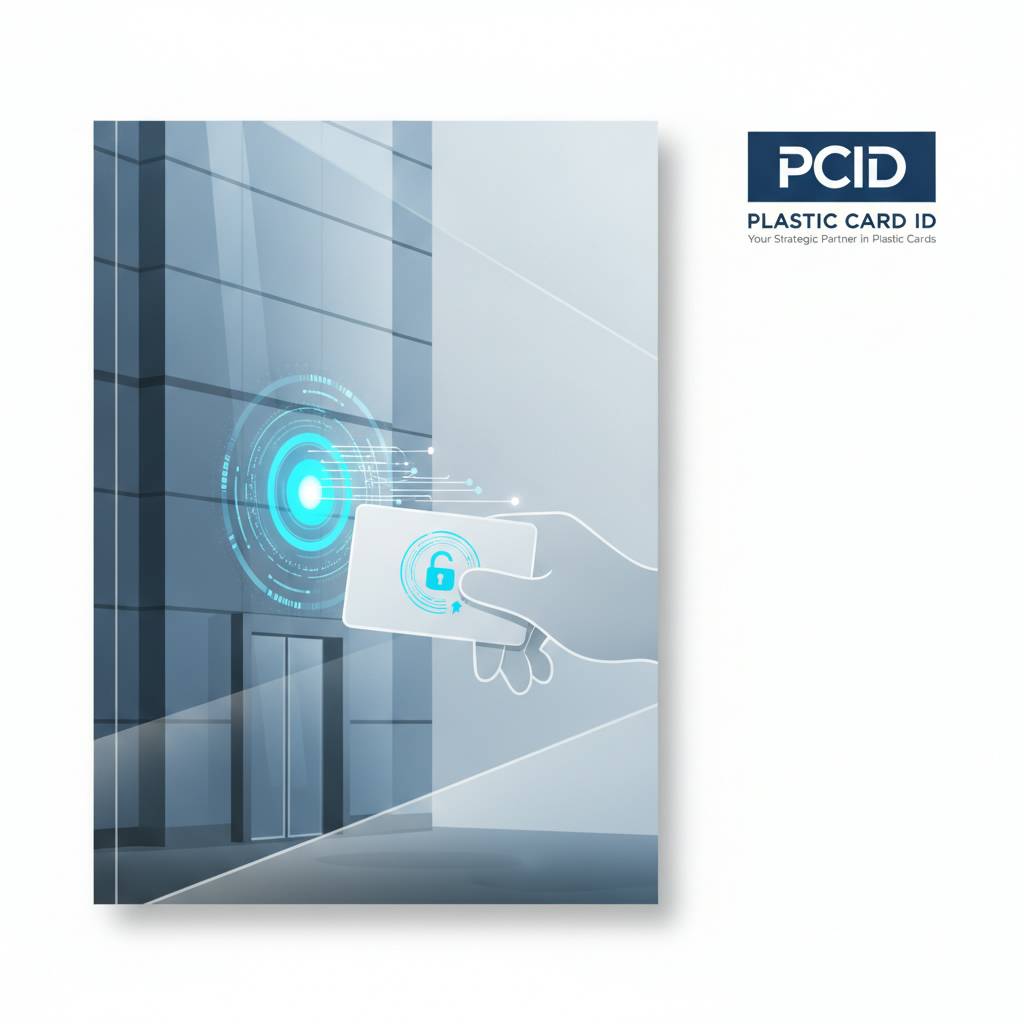 Buying proximity cards without confirming system compatibility is a common and costly mistake. Before ordering, organizations need to identify their reader frequency (125 kHz or 13.56 MHz), their card format (26-bit Wiegand is most common, but 34-bit, 37-bit, and custom formats exist), and whether the system requires a specific facility code embedded in the card's credential.
Working with a supplier that understands access control - not just card printing - makes a meaningful difference in outcomes. CPE has spent over 25 years helping organizations source the right proximity cards for their specific systems, avoiding compatibility mismatches that waste time and budget.
Facility Codes, Card Numbers, and Format Compatibility
The 26-bit Wiegand format, which is the most widely deployed proximity card standard in North America, encodes an 8-bit facility code and a 16-bit card number. The facility code is shared across all cards issued to a given organization, while the card number is unique to each credential. Together, they tell the access control panel exactly who is presenting a card and whether they are authorized.
Custom format cards - 34-bit, 37-bit, corporate 1000 - offer higher cardholder capacity and are common in large enterprise deployments. Ordering cards with the wrong facility code or bit format renders them completely non-functional on your readers, which is why confirming these specifications before placing any order is non-negotiable.
Proximity Card Printers: Printing In-House vs. Ordering Pre-Printed
Organizations with ongoing card issuance needs - onboarding new employees regularly, issuing temporary credentials, running membership programs - benefit from in-house card printing. A dedicated card printer from Evolis, Zebra, or Fargo allows on-demand issuance with custom graphics, and pairs with blank proximity cards to create a fully integrated credentialing workflow.
Organizations with lower volume or no need for custom printing may prefer to order proximity cards pre-encoded to their facility specifications and use them as-is, or apply adhesive labels for visual identification. Both approaches are valid - the right choice depends on issuance volume, staffing, and the level of visual customization required. CPE supports both models with the inventory and expertise to back them up. Call 800.835.7919 to discuss which approach fits your program.
Buyer Tips: What to Confirm Before You Order
- Confirm your reader frequency: 125 kHz (proximity) or 13.56 MHz (smart card)
- Identify your card format: 26-bit Wiegand is most common, but verify with your panel documentation
- Know your facility code - this is typically set by your access control installer
- Decide whether you need blank cards for in-house printing or pre-encoded credentials
- Determine your volume: pricing improves significantly at 500, 1,000, and 5,000 unit quantities
- Consider combo cards if you need both magnetic stripe and RFID functionality on a single card
Real-World Applications Driving Proximity Card Adoption
The range of environments deploying proximity cards has expanded well beyond the corporate office. From small nonprofit organizations protecting after-hours facilities to large multi-tenant commercial buildings managing thousands of active credentials, the technology scales to fit almost any security requirement. What makes proximity cards so adaptable is their standardization - the same CR80 card form factor, the same reader protocols, and the same basic operating principles apply across virtually every deployment.
Physical access control is no longer a luxury reserved for enterprise organizations with dedicated security teams. Small businesses, schools, medical offices, and community organizations are all recognizing that a card-based system is more reliable, more manageable, and more professional than the alternatives.
Corporate and Office Building Access Control
Multi-tenant office buildings are among the highest-volume users of proximity cards in the country. A single 20-story building might have 2,000 active cardholders across dozens of tenant organizations, each with different access permissions for common areas, private floors, parking structures, and amenity spaces. Managing that complexity with physical keys would be operationally impossible.
Proximity cards allow building managers to onboard and offboard tenants and their employees without any physical hardware changes. New tenant moves in on Monday; their cards are active at 8 AM. Former tenant's staff is off-boarded on a Friday afternoon; every credential is deactivated before the weekend. The building never goes unsecured during transitions.
Healthcare, Education, and Government Facilities
Hospitals use proximity cards to control access to pharmacies, operating suites, server rooms, and infant security zones - environments where an unauthorized entry could have catastrophic consequences. Schools use them to lock down classrooms and manage after-hours access to athletic facilities and labs. Government facilities use them to enforce need-to-know access to sensitive information areas.
In all three of these sectors, the audit trail generated by proximity card transactions is not just useful - it is frequently required by regulation, accreditation standards, or contractual obligation. Having that data readily accessible from an access control dashboard is a compliance asset that paper-based systems simply cannot replicate.
Membership Organizations, Gyms, and Club Access
For fitness centers, private clubs, co-working spaces, and membership organizations, proximity cards do double duty. They control physical access to the facility while also functioning as the member's primary identifier within the organization's management software. When a member badges in, the system logs their visit, checks membership status, and can trigger automated communications like renewal reminders.
Members who carry a physical card feel more connected to the organization than those who rely entirely on apps or PIN codes. There is a psychological weight to holding a card that represents membership - it is tangible, it is personal, and it lives in the wallet alongside other credentials the cardholder values. That visibility translates directly into stronger member retention.
Proximity Cards as Part of a Broader Physical Security Strategy
Proximity cards do not operate in isolation. They are one layer in a broader physical security architecture that typically includes video surveillance, visitor management systems, alarm systems, and security personnel. The power of proximity access control is in how it ties these layers together - every card transaction creates a timestamped record that can be correlated with camera footage, visitor logs, and alarm events to reconstruct what happened in any security incident.
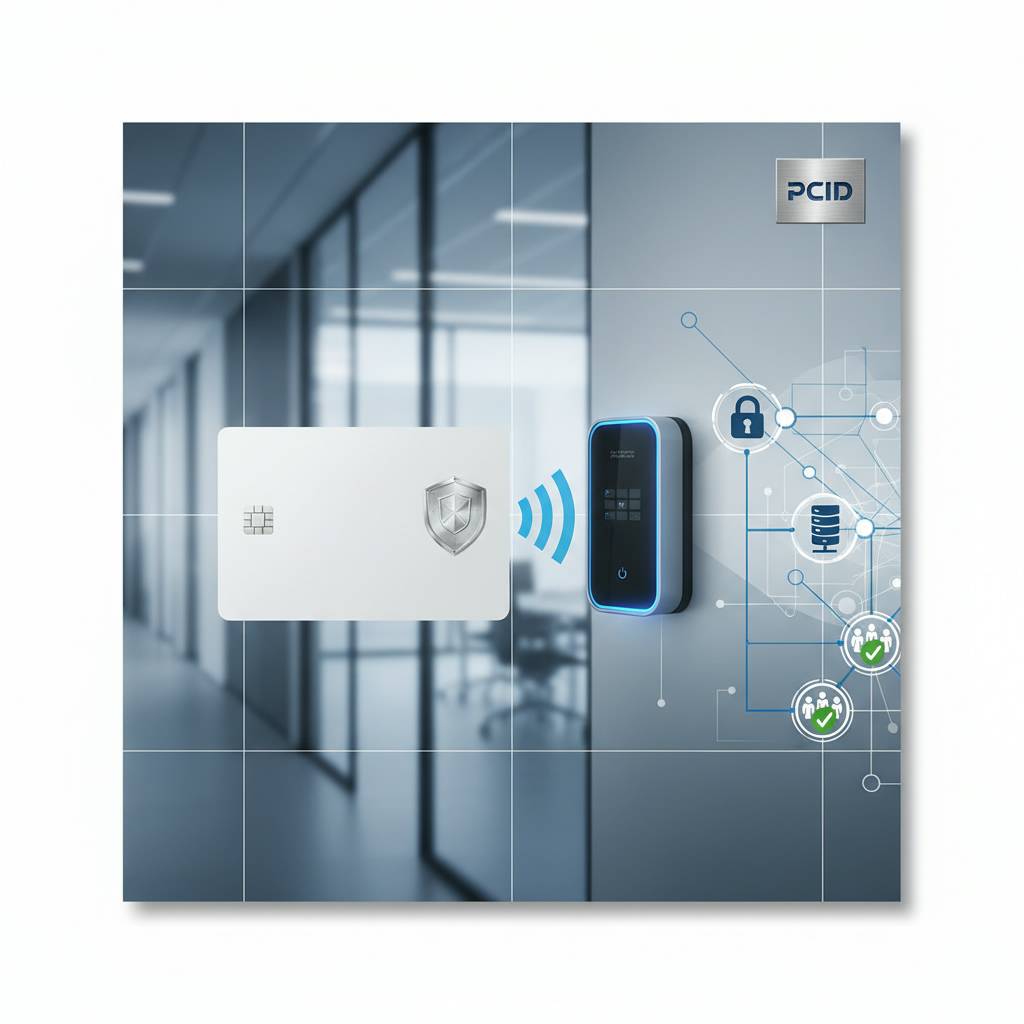
Organizations that treat access control as a standalone system miss the compounding value of integration. When your access control data feeds into a unified security information platform, even low-cost proximity cards become high-value intelligence assets that make your entire security posture more defensible.
Layering Proximity with Visual Identification
An access card that is also a photo ID credential delivers two security functions simultaneously. The card grants electronic access through the reader and provides a visual reference that allows security personnel and colleagues to confirm that the person presenting the card is the person to whom it was issued. This dual-function approach is standard practice in hospitals, government buildings, and corporate campuses where identity verification at the point of access matters as much as the electronic credential.
Printing photo IDs in-house requires a card printer capable of full-color dye-sublimation printing, paired with blank proximity cards that accept print on one or both surfaces. CPE supplies compatible blank proximity cards and the printers to go with them - Evolis, Zebra, and Fargo models that handle both the printing and the encoding in a single pass.
Visitor Credentials and Temporary Access Management
Contractors, vendors, and visitors represent one of the highest-risk access control challenges in any facility. Permanent employees are vetted and accountable. Temporary visitors are neither. Issuing a proximity card - even a single-day credential - creates a traceable, controllable, and recoverable access token that is far superior to propping a door open or issuing a generic code that never gets changed.
Temporary proximity cards can be pre-encoded with time-limited permissions that expire automatically at the end of a contractor's engagement, eliminating the compliance risk of lingering access credentials. When the job is done, the card is collected and the credential is deactivated. If the card is not returned, it is deactivated in software with the same ease as any other lost card.
Planning for Credential Migration and Technology Upgrades
Access control technology evolves. Organizations that installed 125 kHz systems fifteen years ago are now evaluating whether to migrate to 13.56 MHz smart card infrastructure for improved security and multi-application capability. The transition does not have to happen overnight - many facilities run dual-technology readers that accept both card types simultaneously during a phased migration period.
Planning a migration well in advance, with a supplier who can source both legacy and current card formats, avoids the operational disruption of a hard cutover. CPE has navigated enough of these transitions to help organizations plan intelligently - keeping programs functional during upgrades while building toward more capable credential technology.
Partner with Plastic Card ID for Your Proximity Card Program
Getting proximity cards right means getting the technology, the format, the supplier, and the support all aligned. That combination is harder to find than it should be - most card vendors sell product without context, leaving buyers to figure out compatibility on their own. Plastic Card ID operates differently. With over 25 years of experience, more than 100,000 customers served, and over 50 million cards supplied, the depth of knowledge behind every order is real.
Whether you need a few hundred standard proximity cards for a small office building, thousands of MIFARE DESFire credentials for a high-security facility, or a complete card printer setup for in-house issuance, CPE has the inventory, the expertise, and the track record to deliver. No program is too small to deserve professional-grade service, and no program is too large to manage.
A One-Stop Source for Cards, Printers, and Accessories
Beyond proximity cards themselves, CPE stocks the full ecosystem that card programs depend on. Card printers from Evolis, Zebra, and Fargo handle everything from single-sided ID printing to dual-sided color output with RFID encoding. Printer ribbons, cleaning kits, card sleeves, card carriers, and card affixing and mailing services round out a catalog designed to eliminate the need to source from multiple vendors.
One supplier. One relationship. One point of accountability. That is the operational simplicity that organizations managing serious card programs genuinely appreciate - especially when a printer ribbon runs out on a Monday morning and credentials need to be issued before noon.
Volume Pricing and Long-Term Program Support
Proximity card programs are not one-time purchases. Employees turn over. Memberships grow. Access permissions change. Building out a long-term supply relationship with a knowledgeable partner means consistent pricing, reliable stock, and a supplier who understands your program well enough to flag potential issues before they become problems.
CPE serves organizations running programs from 50 cards a month to mass-production deployments in the tens of thousands - and the service level scales with the program. Whether you are ordering your first hundred proximity cards or reordering your fifty-thousandth, the expertise behind that order is the same. That consistency is what makes a supplier a genuine partner rather than just a transaction.
Get Started with the Right Proximity Cards Today
The best time to evaluate your access control credential strategy is before a security incident forces the conversation. Proximity cards are a proven, cost-effective, and scalable solution for building security - and sourcing them from the right partner makes the difference between a program that works seamlessly and one that generates constant friction.
Ready to find the right proximity cards for your building security program? Call 800.835.7919 and speak with a knowledgeable specialist at CPE who can help you confirm compatibility, select the right card format, and price out your program accurately.
Plastic Card ID is standing by to make your access control card program work better - right now, and for years to come. Reach out today at 800.835.7919 and put 25 years of card industry expertise to work for your organization.
Previous Page