Security Features Available on Blank Plastic Cards
Table of Contents []
- Security Features Available on Blank Plastic Cards - What Plastic Card ID Offers Every Buyer
- The Foundation: Understanding CR80 PVC Card Construction
- Magnetic Stripe Technology: HiCo vs. LoCo Security Considerations
- RFID and Proximity Cards: Contactless Security Features
- Smart Chip Cards: The Highest Card-Level Security Available
- Specialty Security Options: Holographics, Die-Cut, and Metal Cards
- Buying Tips: Selecting the Right Security Features for Your Program
- Partner With Plastic Card ID for Your Complete Card Security Solution
Security Features Available on Blank Plastic Cards - What Plastic Card ID Offers Every Buyer
Most people assume "blank" means basic. Strip away the design, and surely what remains is just a plain white rectangle with nothing remarkable about it. That assumption costs organizations real money, real security, and real credibility every year. The truth is considerably more interesting - and more useful.
Blank plastic cards can carry a surprising range of built-in security and functional features before a single design is ever printed. Whether you are running an employee access program, a hotel key system, a loyalty initiative, or a membership organization, understanding what a blank card can do - and what to look for when buying - changes how you approach your entire card program.
Plastic Card ID has supplied over 50 million cards to more than 100,000 customers across the United States. That depth of experience means CPE has seen what works, what gets compromised, and what card programs genuinely need to scale. This page breaks down every meaningful security feature available on blank plastic cards today.
| Card Type | Primary Security Feature | Common Use Case | Encoding Required? |
|---|---|---|---|
| HiCo Magnetic Stripe | High-coercivity data retention | Access control, loyalty | Yes |
| LoCo Magnetic Stripe | Low-coercivity data storage | Hotel keys, short-term use | Yes |
| RFID / Proximity Card | Contactless chip communication | Door access, events | Yes |
| Smart Chip Card | Encrypted chip-based data | Secure ID, healthcare | Yes |
| Standard PVC Blank | CR80 ISO-standard substrate | Employee badges, general ID | No |
| MIFARE DESFire | Advanced encryption standard | Campus, enterprise access | Yes |
The Foundation: Understanding CR80 PVC Card Construction
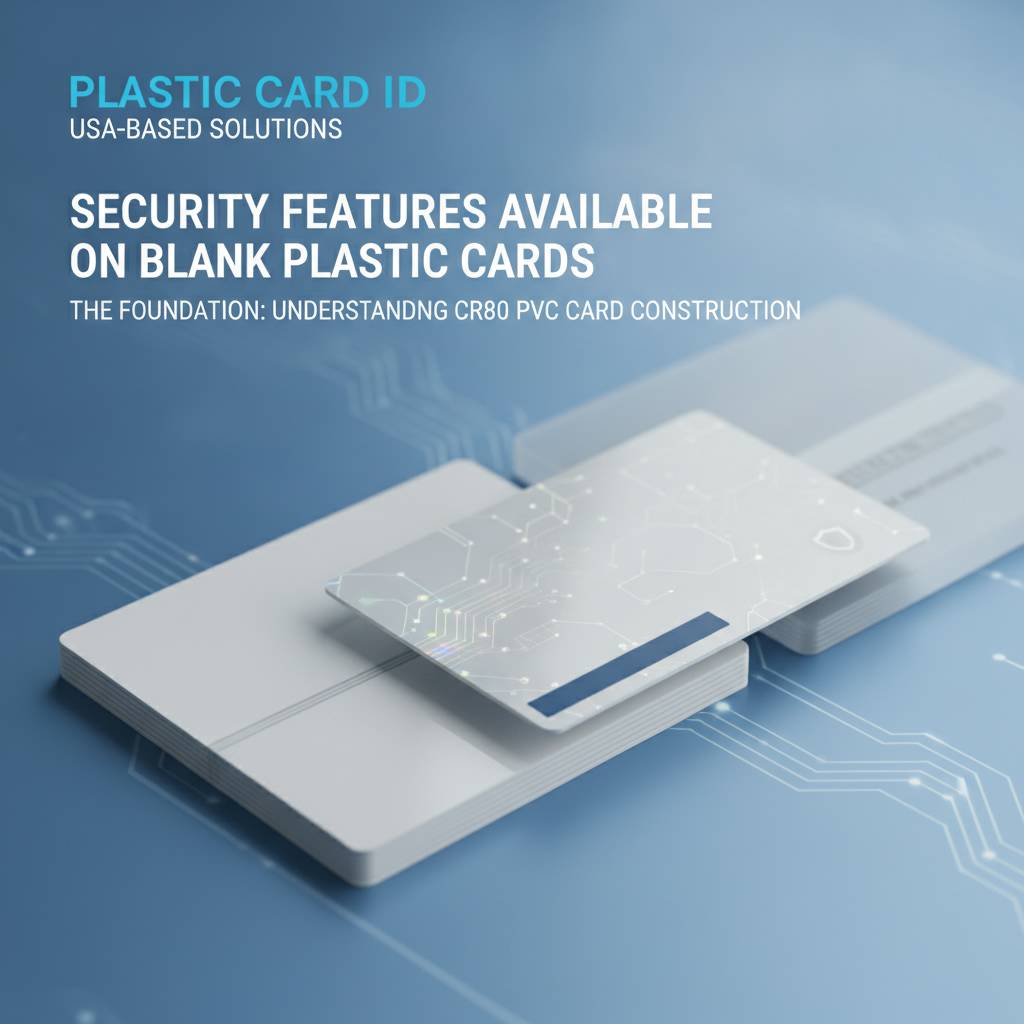 Before getting into the layered world of security features, it helps to understand what a blank plastic card actually is. A standard CR80 card measures 3.375 by 2.125 inches at 30 mil thickness - the same dimensions as a driver's license or standard credit card. This is the ISO 7810 specification, and it matters because compliance with that standard is itself a form of quality assurance.
Not all PVC cards are created equal. The composition of the PVC layers, the quality of the laminate surface, and the consistency of the card's thickness all affect how well a card accepts printing, holds encoding, and survives daily use. Cards that fall outside spec tolerances jam printers, fail mag stripe readers, and delaminate prematurely. Starting with a quality substrate is the first security decision any card program manager makes.
Why Material Quality Affects Security Performance
A card that warps, cracks, or fades quickly becomes a security liability. When employee badges or access credentials look worn and inconsistent, verification becomes unreliable. High-grade PVC construction resists physical wear, maintains color integrity under UV exposure, and holds encoded data longer than low-quality alternatives.
Organizations running long-term card programs - think annual memberships, multi-year employee IDs, or ongoing loyalty programs - benefit directly from consistent material quality. A card that lasts 2-3 years without degrading is a card that stays trusted and functional throughout its lifecycle.
Laminate Overlays and Surface Treatments
Some blank cards include a protective laminate layer pre-applied to the substrate. This overlay serves multiple purposes: it protects printed information from scratching and abrasion, it can carry holographic effects, and it creates a surface that resists tampering. Attempting to peel or alter a laminated card typically results in visible damage - a practical deterrent.
Surface treatments can also affect how a card interacts with printing equipment. Glossy finishes produce vivid photo-quality output; matte finishes offer signature panels and a more understated look. CPE carries both, along with frosted and clear options for programs that want a distinct aesthetic and added difficulty of duplication.
Clear and Frosted Cards as a Passive Security Feature
Transparent and frosted blank cards are not merely a design choice - they serve as a passive visual authentication feature. Clear PVC cards are significantly harder to replicate with standard office equipment. Any attempt to counterfeit them on a regular printer is immediately detectable by the opaque white substrate that consumer equipment deposits.
Frosted cards offer a similar advantage with a premium tactile quality that communicates exclusivity. When an organization issues frosted membership cards or VIP credentials, the card itself signals something deliberate and controlled about the program issuing it.
Magnetic Stripe Technology: HiCo vs. LoCo Security Considerations
The magnetic stripe is one of the most widely used security and data-storage features in the plastic card world, and the distinction between High-Coercivity (HiCo) and Low-Coercivity (LoCo) matters more than most buyers initially realize. Both encode data onto a stripe of magnetic particles, but they behave very differently in real-world environments.
HiCo stripes resist accidental erasure from everyday magnetic fields - the kind generated by elevator motors, magnetic clasps on purses, and proximity to other cards. LoCo stripes are easier to encode and re-encode, which makes them ideal for applications like hotel room keys where the data is intentionally temporary and will be overwritten frequently. Choosing the wrong type for your application is a common and costly mistake.
HiCo Magnetic Stripe for Long-Term Programs
For employee access cards, loyalty programs, and membership credentials that need to remain functional for 12-36 months, HiCo is the right choice. The higher coercivity rating means the encoded data survives contact with everyday magnetic sources. Cards won't randomly demagnetize in wallets sitting next to phone cases or other cards.
HiCo stripes are standard on cards used by retailers who have made the switch from paper punch cards to plastic loyalty programs. The data integrity over time is a core reason why retailers switching to plastic loyalty cards report 35-50% increases in gift card sales - the cards simply stay functional and presentable far longer than paper alternatives.
LoCo Magnetic Stripe for Short-Term and Rewritable Applications
Hotel key cards are the classic LoCo application. The card encodes guest room access for a defined stay, then gets wiped and re-encoded for the next guest. LoCo stripes require less energy to write, which makes encoding equipment less expensive and the process faster at front desks and event check-in stations.
For temporary event credentials, conference access passes, or any application where the card will be issued, used, and reclaimed within days or weeks, LoCo offers a cost-effective and operationally smooth approach. The lower coercivity is not a vulnerability in these contexts - it's a feature.
Multi-Track Stripe Options and Data Capacity
Magnetic stripes come in configurations supporting up to three data tracks, each with different capacity and formatting standards. Track 1 holds alphanumeric data; Track 2 is the most commonly read numeric track; Track 3 is used for read-write applications. Understanding which tracks your card readers use is essential before selecting your blank card specification.
Most loyalty and access programs use Track 2 exclusively, which keeps encoding straightforward and compatible with the widest range of readers. Multi-track setups add data capacity for more complex programs but require compatible encoding hardware. CPE can help buyers match the right stripe configuration to their existing reader infrastructure. Call 800.835.7919 to discuss your specific requirements.
RFID and Proximity Cards: Contactless Security Features
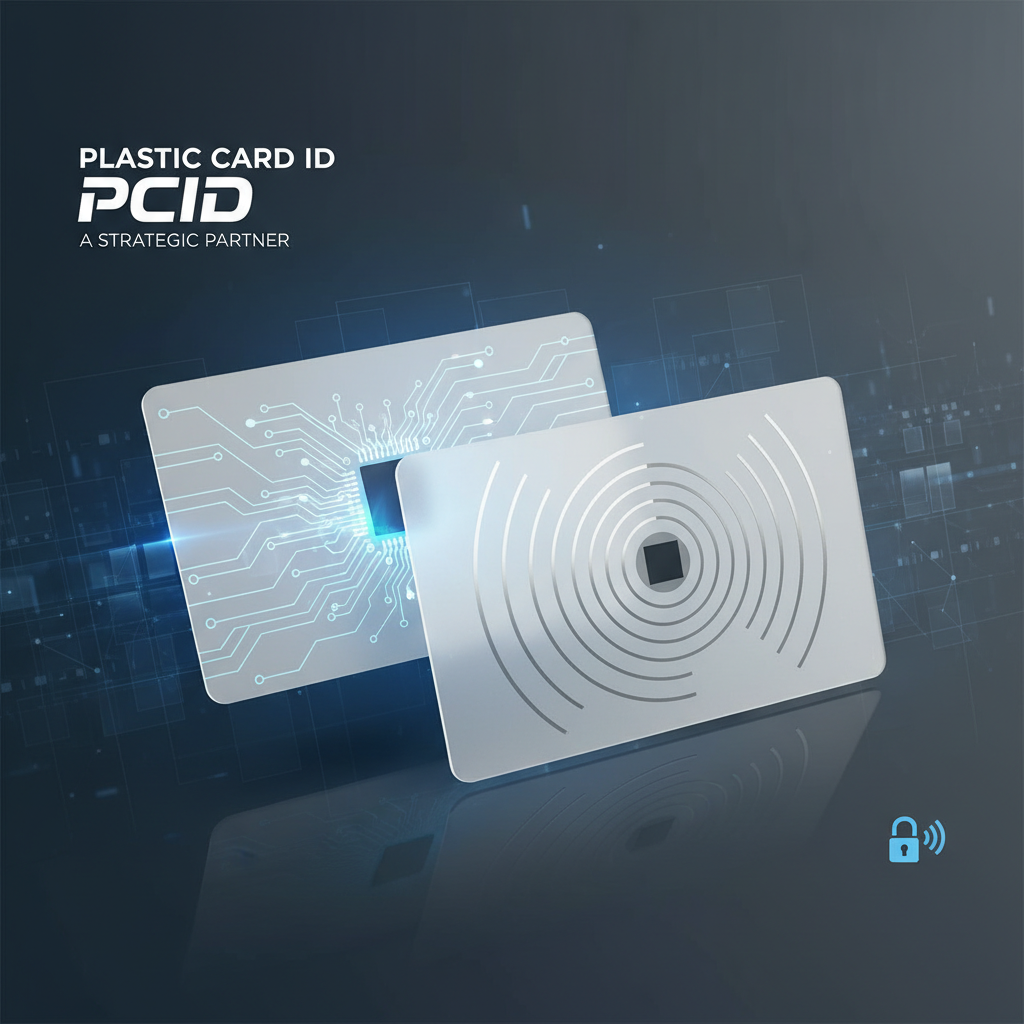 Radio-frequency identification has fundamentally changed how organizations manage access control, time and attendance, and identity verification. Where magnetic stripe cards require physical contact with a reader, RFID and proximity cards communicate wirelessly - meaning faster throughput, less reader wear, and the ability to operate hands-free when a cardholder's hands are full.
The distinction between RFID and proximity cards is often misunderstood. Proximity cards (commonly operating at 125kHz) are older, simpler, and read-only - they broadcast a fixed ID number to a compatible reader. RFID smart cards (commonly operating at 13.56MHz) are more sophisticated, capable of encrypted two-way communication, and far more difficult to clone or intercept.
125kHz Proximity Cards: Reliable and Widely Deployed
HID-compatible 125kHz proximity cards remain among the most common access control credentials in North American buildings. Millions of readers installed in offices, warehouses, schools, and healthcare facilities are configured for this frequency. The installed base of proximity card readers makes 125kHz cards a practical choice for organizations working within existing infrastructure.
From a security standpoint, proximity cards are adequate for most commercial access control applications. They are not immune to cloning with specialized equipment, but that threat model is relevant only to high-security environments. For standard office entry, parking, and time-tracking, 125kHz proximity delivers reliable daily performance.
13.56MHz Smart RFID Cards and Encrypted Communication
Operating at 13.56MHz, smart RFID cards like MIFARE Classic, MIFARE DESFire, and ISO 14443-compatible cards offer significantly stronger security. The communication between card and reader is encrypted, meaning a bad actor with a reader cannot simply capture the card's data and replay it. MIFARE DESFire in particular uses AES encryption, making it one of the most secure contactless credential types available at the card level.
Universities, hospitals, enterprise campuses, and casino operations increasingly rely on 13.56MHz technology. The cards support multiple applications simultaneously - a single card can handle building access, cafeteria payments, library privileges, and time-tracking without any of those functions interfering with another.
Casino Player Cards and High-Stakes Tracking Applications
Casino player cards represent one of the most data-intensive card program types in existence. These cards track visit frequency, game preferences, points accumulation, and tier status - all while needing to authenticate quickly at reader stations throughout a property. The security requirement is twofold: the card must resist cloning, and the data on it must integrate reliably with back-end management systems.
CPE supplies blank casino player cards with appropriate RFID specifications for gaming environments. The cards are designed for high-frequency daily use across a property where reader interactions can number in the thousands per card over the card's lifespan.
| Frequency | Read Range | Security Level | Best For |
|---|---|---|---|
| 125kHz | Up to 4 inches | Standard | Commercial door access |
| 13.56MHz | Up to 4 inches | High (encrypted) | Campus, healthcare, casino |
| MIFARE DESFire | Up to 4 inches | Very High (AES) | Enterprise, government-adjacent |
Smart Chip Cards: The Highest Card-Level Security Available
Smart chip cards embed an integrated circuit directly into the card body. Unlike magnetic stripes that store static data, smart chips can execute logic, store encrypted credentials, and communicate dynamically with readers. This makes them the appropriate choice for programs where data integrity and resistance to duplication are non-negotiable requirements.
Contact smart cards (ISO 7816 compliant) require physical insertion into a reader for the chip to communicate. This direct-contact requirement is itself a security measure - the card must be physically presented and seated properly, preventing any form of remote or passive interception. Smart chip cards are the standard for government ID programs, healthcare credential systems, and enterprise identity management for precisely this reason.
Memory Chip vs. Microprocessor Chip Cards
Not all chip cards are equivalent. Memory chips store data in a fixed structure and have limited security logic - they are useful for transit applications, prepaid programs, and loyalty systems where complexity is unnecessary. Microprocessor chips are full computing environments on a card: they can run applications, enforce authentication protocols, and respond differently based on the system querying them.
For most businesses evaluating smart card programs, the decision comes down to what the back-end system requires. A microprocessor chip is not inherently better if the application only needs a fixed credential stored and retrieved. Matching chip capability to program requirements keeps costs appropriate while delivering the right security level.
Encoding Smart Cards In-House vs. Pre-Encoded
Organizations with Evolis, Zebra, or Fargo card printers equipped with smart card encoding modules can encode and personalize cards on-site. This gives complete operational control - cards are not shipped with data already on them, which means a lost shipment is a blank card, not a security breach. In-house encoding is a best practice for programs with sensitive credentials.
For programs that lack encoding infrastructure or are issuing very large volumes, working with a supplier to receive pre-encoded blanks can be operationally simpler. The tradeoff is that pre-encoded cards contain live credentials during shipment. Secure shipping protocols and card activation systems help manage this risk in large-scale deployments.
Pairing Smart Cards with the Right Card Printer
The card printer is as important as the card itself in a smart card program. Evolis, Zebra, and Fargo all produce models with integrated smart card encoding stations that can read, write, and verify chip data in a single pass through the printer. Selecting a printer without verifying chip compatibility is a common setup mistake that delays program launches and increases per-card costs.
CPE supplies printers, ribbons, cleaning kits, and blank smart card stock as a complete package. Buyers who purchase cards and equipment together from a single source avoid compatibility issues that arise from sourcing components from multiple vendors with different certification histories.
Specialty Security Options: Holographics, Die-Cut, and Metal Cards
Beyond the technical features embedded in a card's substrate, several specialty format options add security through distinctiveness and difficulty of replication. These options are not always necessary, but for programs where credential prestige and visual authentication matter, they represent powerful tools.
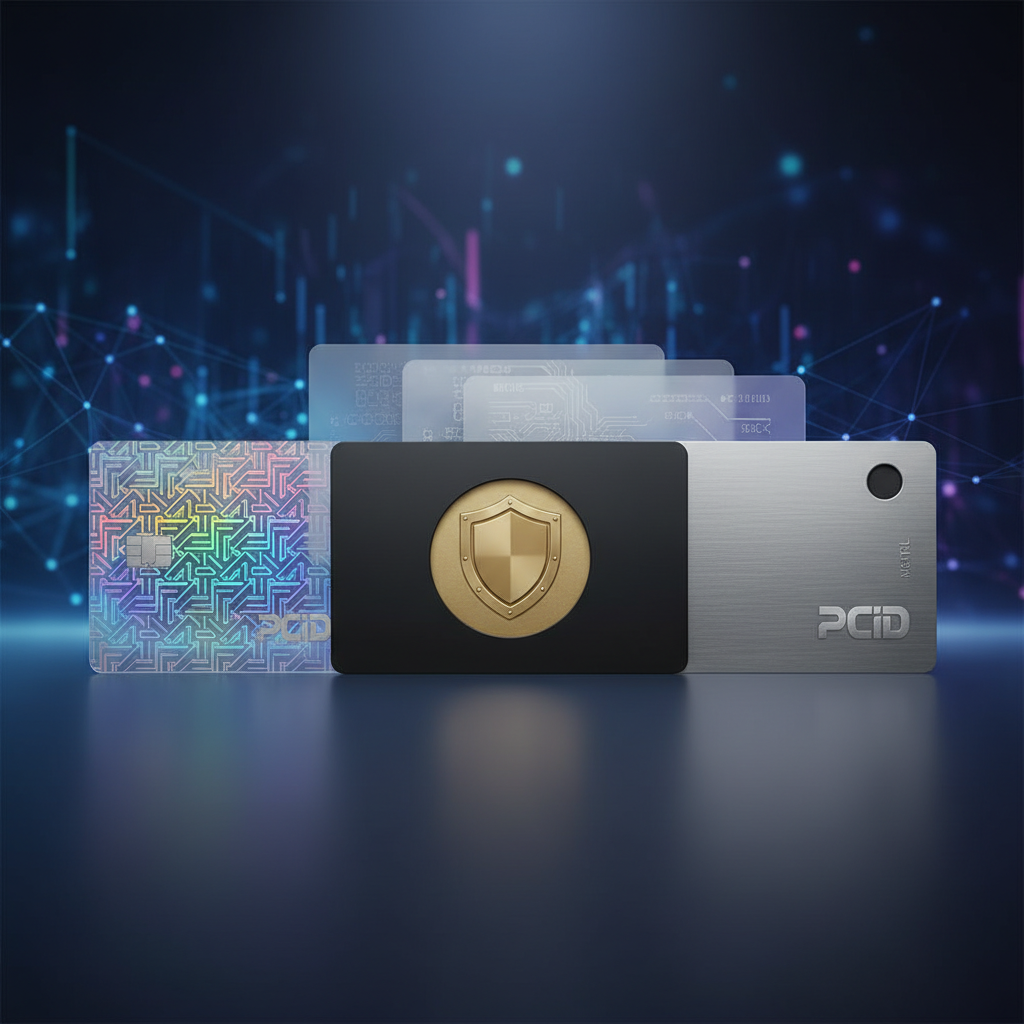
The underlying principle is simple: a card that is difficult and expensive to replicate accurately is inherently more secure than one that is easy to copy. Holographic overlays, non-standard shapes, and metal construction all raise the replication barrier substantially above what standard PVC cards present.
Holographic Overlays and Optical Security Elements
Holographic laminate and overlay options add an optical security element that shifts in appearance under different lighting angles. These overlays are difficult to reproduce without specialized equipment, making them an effective deterrent against casual counterfeiting. Organizations issuing VIP credentials, event passes, or premium membership cards benefit from the combined visual and anti-tamper properties.
When applied over a printed card, holographic overlays also protect the printed surface from physical alteration. Attempting to scrape, alter, or reprint over a holographic laminate destroys the optical pattern, making tampering immediately visible to any inspector.
Custom Die-Cut Shapes and Non-Standard Dimensions
Cards that deviate from the standard CR80 rectangle introduce a practical barrier to counterfeiting: counterfeiters need access to custom die-cutting equipment to produce a matching format. Key fob cards, rounded-corner specialty shapes, and mini-card formats all serve this purpose while also reinforcing brand distinctiveness.
Die-cut cards work within standard card printer systems when designed appropriately, so in-house printing remains possible. The blank die-cut card is purchased pre-cut to the required shape, then printed and encoded exactly as a standard card would be. The format itself becomes part of the credential's identity, making visual verification faster and more reliable.
Luxury Metal Cards: Stainless Steel, Brass, and Gold
For organizations issuing top-tier membership credentials, VIP access cards, or executive identity documents, metal cards in stainless steel, brass, and gold deliver a security-through-prestige approach that plastic simply cannot replicate. The weight, sound, and feel of a metal card are immediately recognizable, and the production process for legitimate metal cards is substantially more controlled than PVC production.
Metal cards signal permanence and exclusivity in a way that communicates directly to the cardholder and to anyone visually inspecting the credential. Casino VIP programs, executive clubs, private membership organizations, and luxury hospitality brands use metal cards not just as a prestige statement, but as a credential format that carries immediate visual authority. These cards are available through CPE for programs that want the highest tier of card presentation.
Buying Tips: Selecting the Right Security Features for Your Program
Understanding what is available is only half the challenge. Matching the right combination of features to a specific program's operational reality, budget, and security requirements requires some structured thinking. The following buyer guidance reflects patterns seen across thousands of card programs over more than 25 years of operation.
- Define your threat model first. A retail loyalty card has different security requirements than a hospital employee access credential. Over-specifying wastes budget; under-specifying creates operational risk.
- Match stripe type to use duration. Programs running cards for 12 months or more should default to HiCo. Short-term or rewritable applications are appropriate for LoCo.
- Inventory your existing readers before buying cards. Ordering 125kHz proximity cards for a 13.56MHz reader system is a recoverable but frustrating mistake. Know your infrastructure first.
- Consider in-house encoding if you issue cards regularly. Card printers from Evolis, Zebra, and Fargo with encoding modules pay for themselves quickly when programs issue 50 or more cards per month.
- Ask about volume price breaks. Buying blank cards in bulk reduces per-card cost significantly, and blank stock stores well. Programs with predictable volume should plan purchases accordingly.
- Think about the full card kit. Card carriers, sleeves, lanyards, and mailers affect how a credential is perceived at the moment of first receipt. The card's security features matter less if the presentation undermines program credibility.
The right starting point for any new card program is a conversation about what the program needs to accomplish, not a catalog search for the lowest price per card. CPE operates as a strategic partner in these decisions, not just a fulfillment source.
Frequently Asked Questions About Blank Card Security Features
Can I add a magnetic stripe to a card I am already printing in-house? No - the magnetic stripe must be embedded in the card during manufacturing. Stripe type is selected when ordering blank card stock. If your current blanks lack a stripe, you need to order new stock with the appropriate stripe specification.
Do RFID cards interfere with each other in a wallet? Multi-card RFID wallets can occasionally cause read conflicts at some readers, though modern readers handle this better than older systems. Card sleeves that block RF signals are an effective and inexpensive solution for cardholders who carry multiple contactless credentials.
Program Scale Considerations: 50 Cards a Month vs. Mass Production
Small programs issuing 50-200 cards per month operate very differently from enterprises printing tens of thousands. For smaller programs, a desktop card printer with a modest blank card stock inventory is typically the right setup. The per-card cost is higher than mass production, but the flexibility to print on demand and issue immediately outweighs the cost premium.
Larger programs benefit from bulk purchasing, dedicated encoding workflows, and potentially pre-personalized card stock for the highest-volume credentials. Scale changes the math on every security feature - what costs an acceptable amount per-card at 500 units may need to be re-evaluated at 50,000. Plastic Card ID works with programs at every scale and can advise on the optimal configuration at any volume level. Contact 800.835.7919 to discuss your program's specific scale and requirements.
Combining Multiple Security Features on a Single Card
Many programs benefit from layering features. A hotel key card might combine LoCo magnetic stripe for room access, RFID for spa or restaurant charging privileges, and a holographic overlay for visual authenticity checks at the front desk. There is no rule that limits a blank card to a single security technology.
The practical constraint is cost and compatibility. Each added feature adds to per-card cost, and the combination must be achievable within your printing and encoding infrastructure. CPE can source cards combining magnetic stripe and RFID, or smart chip and magnetic stripe, depending on program requirements. Layered credentials offer compounding security benefits that single-feature cards cannot match.
Partner With Plastic Card ID for Your Complete Card Security Solution
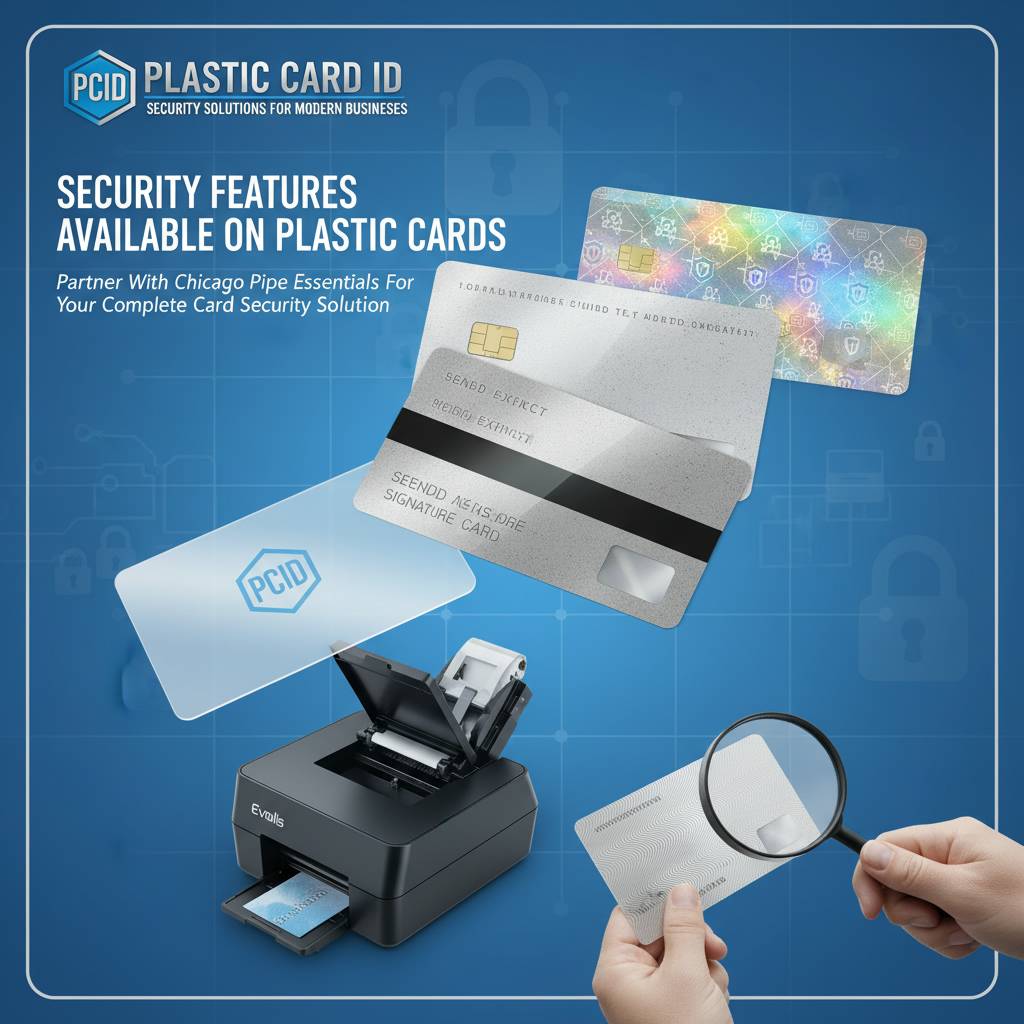 Over 25 years. More than 50 million cards. More than 100,000 customers from coast to coast. That track record represents not just volume, but the depth of experience that comes from helping organizations solve real card program challenges across every industry segment and every program scale.
The security features available on blank plastic cards today are more sophisticated, more accessible, and more affordable than they were even a decade ago. From HiCo magnetic stripes to MIFARE DESFire encryption to holographic overlays and luxury metal construction, there is a credential solution calibrated for every program's requirements. The key is knowing what to ask for - and having a supplier experienced enough to guide the conversation.
Plastic Card ID is ready to help you design, specify, and supply the right blank card stock for your program. Whether you are launching a new initiative or upgrading an existing one, call 800.835.7919 today and speak with a card program specialist who understands what your credentials need to do - and exactly how to make that happen.
Previous Page