Blank Plastic Card Supplier Checklist: Key Considerations
Table of Contents []
- Your Blank Plastic Card Supplier Checklist: What Plastic Card ID Wants You to Know Before You Buy
- Understanding Card Specifications: The Foundation of a Smart Purchase
- Supplier Evaluation Criteria: What Separates a Partner from a Vendor
- Card Printer Compatibility: Why It Belongs on Every Checklist
- Application-Specific Buying Considerations
- Advanced Card Options: When Your Program Grows Beyond Standard Stock
- Your Complete Blank Plastic Card Supplier Checklist
- Partner with Plastic Card ID for Every Card Your Program Needs
Your Blank Plastic Card Supplier Checklist: What Plastic Card ID Wants You to Know Before You Buy
Choosing a blank plastic card supplier isn't glamorous work - but getting it wrong is expensive, frustrating, and surprisingly easy to do. Whether you're launching a new loyalty program, scaling up an employee badge system, or sourcing bulk stock for a card printer you just invested in, the supplier you pick shapes your entire program's reliability. Before you place a single order, there are questions worth asking, specs worth understanding, and red flags worth knowing.
This checklist exists because most buyers - even experienced procurement managers - walk into blank card purchasing with gaps in their knowledge. Card thickness, magnetic stripe coercivity, RFID frequency, minimum order quantities, turnaround times: these aren't bureaucratic details. They're the difference between a program that hums along and one that jams your printer or fails at your card reader.
What follows is a comprehensive, practically oriented guide built around real purchasing decisions. Every section addresses something a buyer genuinely needs to evaluate. Start here, compare carefully, and buy with confidence.
| Card Type | Key Spec | Typical Use Case |
|---|---|---|
| Blank PVC CR80 | 30 mil, ISO 7810 | ID cards, loyalty, membership |
| HiCo Magnetic Stripe | 2750 Oe coercivity | Access control, employee badges |
| LoCo Magnetic Stripe | 300 Oe coercivity | Hotel keys, short-term use |
| RFID / Proximity | 125 kHz or 13.56 MHz | Contactless access, smart programs |
| Clear / Frosted PVC | CR80 standard size | Premium membership, VIP cards |
| Colored Stock Cards | 30 mil, various colors | Department ID, event credentials |
Understanding Card Specifications: The Foundation of a Smart Purchase
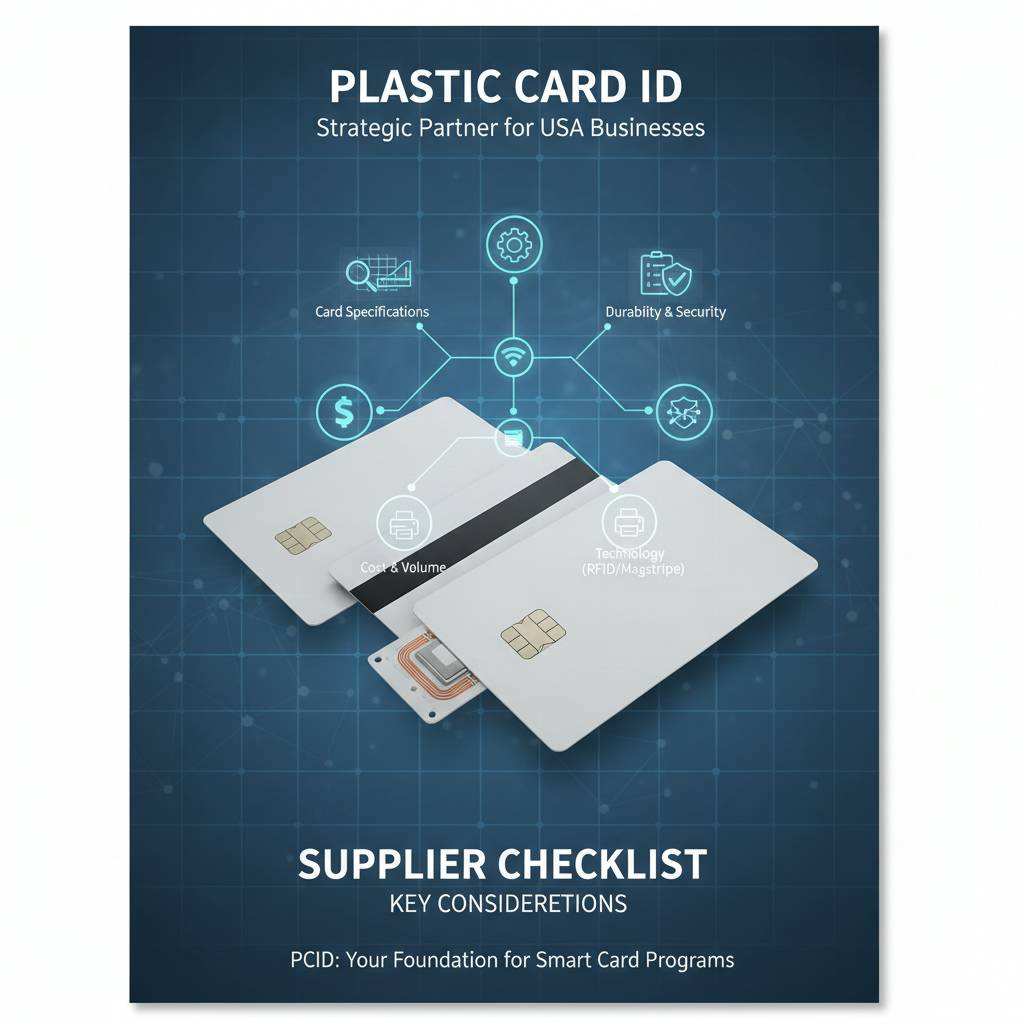 Every intelligent purchasing decision begins with specifications. A blank plastic card looks simple - it is a rectangle of white PVC - but the variables embedded in that rectangle determine whether your card printer loves it, your readers accept it, and your program actually works. Skipping this step is how organizations end up with thousands of cards that are technically usable but practically wrong for their equipment.
The CR80 standard (30 mil thickness, 3.375 x 2.125 inches) is the baseline for virtually every card printer on the market. ISO 7810 compliance isn't a luxury - it's the spec your Evolis, Zebra, or Fargo printer was built around. Deviate from it, and you're gambling with your hardware and your workflow.
Thickness, Size, and ISO Compliance
Thirty mil is the standard. Some suppliers offer 20 mil or even thinner "economy" cards that may seem like a deal until they warp, feed inconsistently, or jam mid-batch. Always confirm ISO 7810 compliance before ordering in volume - your card printer's warranty and performance spec depend on it.
Beyond CR80, some programs require CR79 (slightly smaller, designed for adhesive backing) or CR100 (larger format). Know your application before you buy. A supplier worth working with will ask what printer model you're running before recommending a card stock, not just process the order and move on.
Magnetic Stripe Coercivity: HiCo vs. LoCo
Magnetic stripe cards split into two camps based on coercivity - the resistance of the stripe to magnetic interference. HiCo cards (2750 Oe) are designed for longevity and durability; they hold encoded data reliably through years of daily use and are the right choice for employee badges, access cards, and loyalty cards that live in wallets alongside other magnets.
LoCo cards (300 Oe) are lower cost and appropriate for short-lived applications - hotel room keys, event passes, short-term visitor badges. They're more susceptible to data corruption from everyday magnetic fields, so deploying them in long-term programs is a mistake that shows up over time as escalating card failures and frustrated users.
RFID Frequency and Chip Type
Contactless cards add another layer of specification complexity. The two primary frequencies are 125 kHz (proximity cards, EM4100, HID-compatible formats) and 13.56 MHz (smart cards including MIFARE Classic, MIFARE DESFire, and other ISO 14443A-compliant chips). Matching the card's chip to your reader infrastructure is non-negotiable - the wrong frequency means a card that simply doesn't work at your door or terminal.
MIFARE DESFire cards, used in advanced casino player programs, transit systems, and high-security access control, offer encrypted data sectors and significantly higher data capacity. If your program is scaling into sophisticated territory, understanding this distinction now saves expensive retrofitting later. A knowledgeable supplier will help you identify the right chip for your specific reader system.
Supplier Evaluation Criteria: What Separates a Partner from a Vendor
Not all blank card suppliers operate the same way, and the difference between a transactional vendor and a genuine strategic partner shows up most clearly when something goes wrong - or when your program needs to grow. The checklist below is designed to help you evaluate any supplier, including CPE, against the criteria that actually matter.
Volume flexibility is among the most overlooked criteria. Some suppliers have steep minimum order requirements that price out smaller programs, while others have no upper ceiling and can handle mass production runs in the tens of thousands without lead time surprises. If your volume fluctuates, you need a supplier whose infrastructure accommodates both ends of that range.
Product Breadth and Catalog Depth
A supplier with a narrow catalog forces you into workarounds. If they only carry plain white CR80 cards and your program evolves to need magnetic stripe, RFID, or specialty clear cards, you're starting over with a new vendor. Catalog depth is a proxy for operational maturity - suppliers who have invested in carrying blank PVC, magnetic stripe, RFID, smart chip, clear, frosted, colored stock, and specialty formats have clearly served a wide range of real-world programs.
Complementary products matter too. Ribbons, cleaning kits, card carriers, card sleeves, and affixing and mailing services separate a true one-stop shop from a company that just sells cards. When you need to reorder printer ribbons at 11pm before a big event, you want those available from the same supplier you already trust.
Track Record and Customer Base
Numbers tell a story. A supplier who has served more than 100,000 customers and sold over 50 million cards has encountered and solved a staggering variety of use cases. That experience - compressed into a customer service team, a product selection, and a fulfillment operation - is genuinely valuable. Experience at scale means fewer surprises for you.
Ask whether a supplier works with organizations at your scale. Some specialize in enterprise accounts and give inadequate attention to organizations running 50-500 cards a month. Others are built for small orders and can't reliably handle 20,000-card production runs on a deadline. A supplier whose sweet spot aligns with your volume is the right fit.
Turnaround, Shipping, and Fulfillment Reliability
Your card program operates on a schedule. New employees start on Monday. Events happen on specific dates. Membership renewal campaigns have windows. Shipping reliability isn't a nice-to-have - it's a program requirement. Evaluate a supplier's standard processing times, shipping options, and track record for on-time delivery before you commit.
Suppliers serving USA-based businesses should have domestic fulfillment infrastructure that makes reliable shipping the rule, not the exception. If you're placing an order with a supplier who sources internationally and is vague about lead times, factor that uncertainty into your evaluation. Delays in card supply have downstream consequences across your entire operation.
| Criteria | What to Look For | Red Flag |
|---|---|---|
| Product Range | PVC, mag stripe, RFID, smart chip, specialty | Only one or two card types |
| ISO Compliance | Confirmed CR80/ISO 7810 standard | Vague specs or economy thickness |
| Volume Flexibility | 50 cards to tens of thousands | High minimums only |
| Fulfillment Speed | Domestic shipping, clear lead times | International sourcing, vague timelines |
Card Printer Compatibility: Why It Belongs on Every Checklist
 Blank card programs and card printers are inseparable. The cards you buy must work reliably with the hardware you run - and that means your supplier needs to understand both sides of the equation. A supplier who also carries the printers is in a uniquely strong position to ensure compatibility, because they've tested the combinations and know where the edge cases live.
Evolis, Zebra, and Fargo are the dominant brands in direct-to-card and retransfer printing for business ID and card programs. Each has specific card thickness tolerances, feed mechanism designs, and ribbon chemistry that interact with card stock quality in meaningful ways. Buying cards from a supplier who doesn't understand these printers is a risk that shows up as inconsistent print quality, jammed cards, or premature printhead wear.
Direct-to-Card vs. Retransfer Printing Requirements
Direct-to-card printers apply dye-sublimation ink directly to the card surface. They're cost-effective, fast, and excellent for the vast majority of ID and loyalty card applications. These printers are most sensitive to card surface texture and thickness consistency - premium-grade blank PVC with a smooth, uniform surface produces noticeably better print quality than bargain stock with surface irregularities.
Retransfer printers print onto a film that is then laminated onto the card, producing edge-to-edge print coverage and a more polished finish. These systems are often used for high-security ID cards, casino cards, and premium membership cards. The retransfer process is more forgiving of minor card surface variations, but card thickness still matters for the lamination stage.
Ribbon and Consumable Alignment
Your supplier's ability to provide the right ribbon for your specific printer model matters more than many buyers realize. Using a generic or poorly matched ribbon can cause faded prints, color inconsistency, or printhead damage over time. Sourcing ribbons from the same supplier as your cards creates a single accountability point - if something goes wrong with print quality, there's no finger-pointing between a card supplier and a ribbon supplier.
Cleaning kits are similarly important. Card printers accumulate debris from card surfaces over time, and neglecting regular cleaning is the most common cause of printhead failure and early equipment replacement. A supplier who includes cleaning kits in their catalog understands the full lifecycle of a card printing operation, not just the transactional moment of card delivery.
Printer Brand Support and Expert Guidance
When you call a supplier with a question about whether a particular card stock works with your Zebra ZC300 or Fargo HDP5000, you want a knowledgeable answer - not a shrug or a generic product page recommendation. Technical expertise in card printer compatibility is a differentiator that pays off over and over throughout the life of a card program.
For organizations just entering the card printing space, supplier guidance on which printer model fits their volume, budget, and card type is genuinely valuable. A supplier who can match you with the right Evolis, Zebra, or Fargo model - and then supply the cards and consumables that work with it - compresses your learning curve significantly and reduces the risk of costly mismatches.
Application-Specific Buying Considerations
The phrase "blank plastic card" covers a surprisingly wide range of real-world applications, and the right card for each isn't always obvious. Retailers launching gift card programs, healthcare organizations issuing patient ID cards, clubs rolling out membership cards, and facilities managers deploying access control all buy from the same broad category - but their requirements diverge sharply once you get into the details.
Retailers who have made the switch from paper gift certificates to plastic gift cards have documented sales increases of 35-50%. That's not a marginal difference - it's a material business result driven by the durability, giftability, and perceived value of a physical plastic card. The card itself is a marketing asset, not just a transaction vehicle.
Loyalty Programs and Retail Card Programs
Loyalty cards that live in a customer's wallet generate measurably more repeat engagement than paper punch cards that get lost, damaged, or left at home. The physical presence of a branded plastic card in a wallet is a repeated brand impression every time the wallet is opened. For retail programs, this persistent visibility translates into higher redemption rates and stronger customer retention.
Blank cards give retailers complete design control at a lower per-card cost, allowing in-house printing with a desktop card printer. This model works particularly well for programs that need variable data - card numbers, barcodes, or customer names printed individually - which is standard in loyalty program management.
Employee ID and Access Control Programs
Employee identification programs require cards that project professionalism and hold up to daily use over months or years. HiCo magnetic stripe cards are the standard for combined ID and access programs because their encoded data remains reliable through the wear and magnetic exposure of regular use. For facilities with contactless door readers, RFID or proximity cards replace or supplement the magnetic stripe.
Security programs sometimes layer multiple technologies - a card might carry both a magnetic stripe for legacy readers and an RFID chip for newer contactless access points. Planning for technology coexistence at the card specification stage avoids costly card replacement cycles when a facility upgrades its reader infrastructure.
Membership and Club Cards
- Plastic membership cards signal permanence and legitimacy that paper cards simply cannot match - members treat them differently and retain them longer.
- Clear and frosted PVC options create a premium look appropriate for VIP tiers, luxury brands, or exclusive club programs.
- Colored stock cards allow visual differentiation between membership levels without the cost of full custom printing on every card.
- Magnetic stripes on membership cards enable point-of-sale integration, allowing member account lookup and transaction tracking directly at checkout.
- Card carriers and sleeves, sourced from the same supplier, complete the member welcome package and protect the card during mailing.
Advanced Card Options: When Your Program Grows Beyond Standard Stock
Most blank card programs start with standard white CR80 PVC cards and grow from there. At some point - driven by security requirements, brand differentiation, or technological advancement - programs outgrow standard stock and need something more. Knowing what's available, and when it's appropriate, is part of making smart long-term sourcing decisions.
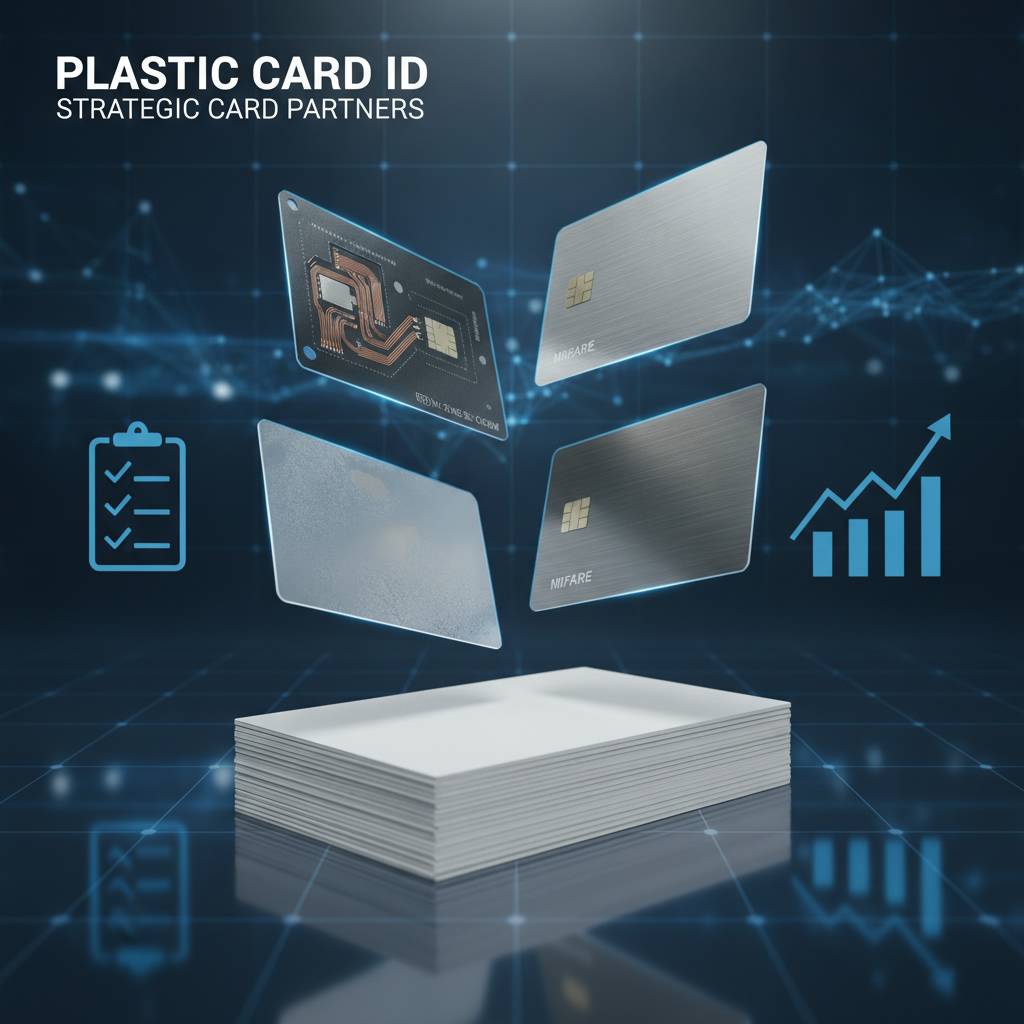
Specialty card formats exist for a reason. Casino player cards need to survive in environments with high card volume and sophisticated loyalty program tracking. Hotel key cards need to be cost-effective for frequent replacement. High-security corporate access programs need encrypted smart chip technology. Luxury brands issuing VIP cards need materials that match their positioning. None of these requirements are well-served by the same standard white PVC card.
Smart Chip and MIFARE DESFire Applications
MIFARE DESFire EV2 and EV3 cards represent the current standard for high-security contactless applications. Operating at 13.56 MHz, they offer AES-128 encryption, multiple independently secured data applications, and significantly higher data capacity than proximity cards. Casino player programs, transit systems, university campuses, and high-security corporate environments have broadly adopted DESFire as the contactless standard of choice.
For organizations currently running proximity-based access control and evaluating an upgrade path, DESFire-compatible readers and cards offer a meaningful security improvement without a full infrastructure replacement. A supplier with genuine smart card expertise can help map your current system to an upgrade path that protects your existing hardware investment while advancing your security posture.
Clear, Frosted, and Custom Die-Cut Cards
Clear and frosted PVC cards introduce a visual element that standard white cards can't replicate. When printed, a clear card allows background design elements to show through the card body - creating layered visual effects that are striking at point of presentation. Frosted cards offer a matte translucent surface that photographs beautifully and carries a distinctly premium tactile quality.
Custom die-cut shapes move beyond the CR80 rectangle entirely. Key tags, loyalty fobs, mini cards, and custom geometric shapes allow brands to create card program elements that are inherently memorable. Novelty of format drives retention - a uniquely shaped loyalty card is less likely to be discarded than a standard rectangular card in a crowded wallet.
Luxury Metal Cards
Stainless steel, brass, and gold metal cards represent the premium end of the card spectrum. Issued as VIP credentials, exclusive membership cards, high-value gift cards, or prestige loyalty program rewards, metal cards carry a physical weight and quality that creates an immediate impression of status. Recipients keep them - which is precisely the point.
Metal cards are not appropriate for every program, but for brands where the card itself is part of the value proposition - luxury retail, high-end hospitality, exclusive clubs, executive programs - the card format communicates something that printing alone cannot. They are available through CPE for USA-based businesses with programs that demand this level of premium presentation.
Your Complete Blank Plastic Card Supplier Checklist
Consolidating everything above into a working checklist gives you a practical tool for supplier evaluation. Use it whether you're auditing an existing supplier relationship, sourcing for the first time, or comparing multiple vendors side by side. Informed buyers get better outcomes - better card quality, better pricing, fewer operational surprises, and suppliers who treat them as long-term partners rather than one-time transactions.
To reach a team that has helped over 100,000 customers build card programs of every scale and type, call 800.835.7919. The conversation will be direct, knowledgeable, and focused on finding the right solution for your specific program - not just the next order in the queue.
Pre-Purchase Specification Checklist
- Confirm card format: CR80 (30 mil) for standard printers, or other format as required by your application.
- Verify ISO 7810 compliance for all cards intended for use in card printers.
- Specify magnetic stripe type if needed: HiCo for long-term use, LoCo for short-term applications.
- Identify RFID frequency requirement: 125 kHz proximity or 13.56 MHz smart card, and confirm chip compatibility with your reader hardware.
- Determine surface requirements: standard white, colored stock, clear, frosted, or specialty finish.
- Confirm printer model and verify card stock compatibility before ordering in volume.
Supplier Qualification Checklist
- Does the supplier carry the full range of card types your program requires now and may require in the future?
- Can they accommodate your volume at both minimum and maximum order levels without minimum order penalties or capacity constraints?
- Do they supply complementary products: ribbons, cleaning kits, card carriers, sleeves, and mailing services?
- Can they provide knowledgeable answers about card-printer compatibility for your specific printer model?
- Do they have a documented track record of serving USA-based businesses at your scale and in your application category?
- Are their lead times, shipping options, and fulfillment reliability clearly defined and demonstrated?
Long-Term Partnership Criteria
A supplier relationship that compounds in value over time is worth significantly more than the cheapest per-card price at first order. The right partner remembers what you run, anticipates your needs, and grows their capabilities alongside your program. That's not a transaction - it's infrastructure for your card program's long-term success.
Look for suppliers who are genuinely invested in understanding your organization's goals, not just processing your purchase order. The questions they ask you - about your printer, your program type, your volume trajectory, your reader infrastructure - reveal how much they actually know and care about delivering a solution that works, not just a shipment that arrives.
Partner with Plastic Card ID for Every Card Your Program Needs
 Twenty-five years of experience, over 100,000 customers served, and more than 50 million cards sold - these aren't marketing numbers. They represent an enormous body of practical knowledge about what works, what fails, and what separates a card program that delivers results from one that creates operational headaches. Plastic Card ID brings that knowledge to every order, every conversation, and every program it supports.
From a starter supply of blank white CR80 cards and a desktop card printer to advanced RFID smart card programs, casino player cards, hotel key cards, and luxury metal cards for prestige applications, CPE carries the product range and expertise to serve your program at any scale and complexity level. All exclusively for USA-based businesses. All backed by a team that treats your card program as seriously as you do.
Call Plastic Card ID today at 800.835.7919 - and bring your checklist. The right cards, the right supplier, and the right partnership are one conversation away.
Previous Page