Blank Plastic Cards for Membership Programs
Table of Contents []
- Why Plastic Card ID Is the Trusted Source for Blank Plastic Cards for Membership Programs
- What Blank Plastic Cards Actually Do for Membership Programs
- Choosing the Right Blank Card for Your Membership Program
- Card Printers and In-House Printing Solutions
- Real-World Applications: Who Uses Blank Membership Cards
- Frequently Asked Questions About Blank Plastic Cards for Membership Programs
- Get Your Membership Card Program Running with Plastic Card ID
Why Plastic Card ID Is the Trusted Source for Blank Plastic Cards for Membership Programs
Picture this: a new member walks into your gym, your club, or your retail store and receives a crisp, professional plastic membership card instead of a paper punch card or a handwritten slip. The difference in perceived value is immediate. That card goes into a wallet. It stays there. It comes back. That is the quiet, powerful logic behind investing in blank plastic cards for membership programs - and it is exactly where Plastic Card ID has spent decades building expertise.
With over 100,000 customers served and more than 50 million cards sold across the United States, Plastic Card ID is not simply a supplier filling orders. They are a strategic partner who understands what card programs need to actually work: the right card stock, the right encoding, the right printing solution, and a reliable fulfillment pipeline that scales with your organization. Whether you are launching a 50-card pilot program or ordering tens of thousands at a clip, Plastic Card ID has done it before - and then some.
| Card Type | Best Use Case | Key Feature |
|---|---|---|
| Blank PVC CR80 Cards | In-house membership printing | ISO 7810 standard, 30 mil thickness |
| Magnetic Stripe Cards (HiCo/LoCo) | Loyalty and access programs | Swipe-encoded data storage |
| RFID / Proximity Cards | Contactless access control | Tap-and-go technology |
| Smart Chip Cards | Secure member identification | Embedded IC chip |
| Clear / Frosted Cards | Premium membership branding | Distinctive visual appeal |
| Custom Die-Cut Cards | Specialty and luxury programs | Unique shape differentiation |
What Blank Plastic Cards Actually Do for Membership Programs
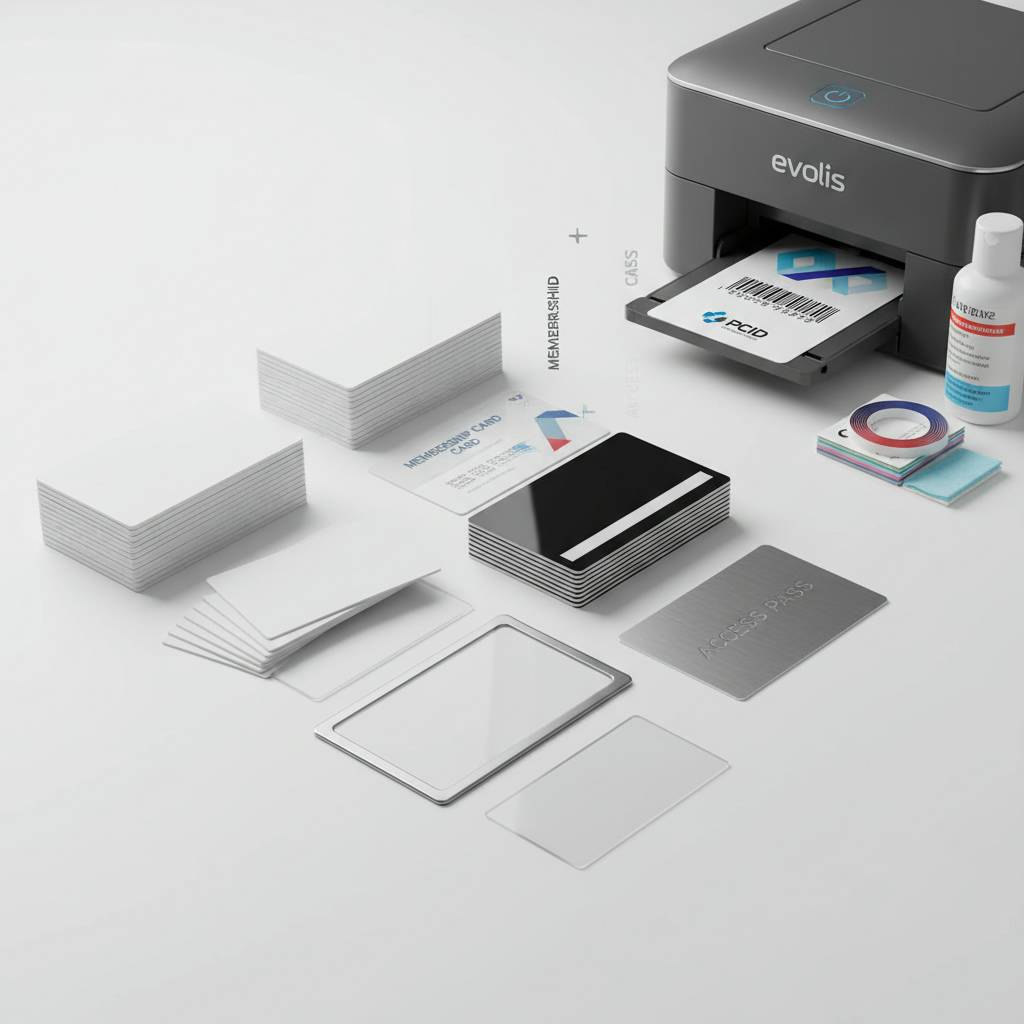 The word "blank" can be misleading. A blank plastic card is not an unfinished product - it is a canvas with full potential. Organizations that manage their own card programs in-house use blank CR80 cards precisely because they retain complete design control, print on demand, and keep per-card costs manageable at scale. The card is blank until your printer and your program make it something meaningful.
Membership programs that shift from paper-based systems to plastic cards consistently report measurable improvements in member retention and engagement. Plastic signals permanence. It signals that your organization is serious, that the membership is real, that the relationship matters. Paper punches get lost, torn, or forgotten at the bottom of a bag. A plastic card lives in a wallet slot - and every time that wallet opens, your brand is seen.
The CR80 Standard: Why It Matters
Every blank PVC card sold by CPE in the standard lineup conforms to the CR80 format: 3.375 x 2.125 inches, 30 mil thickness. This is the same footprint as a standard credit card, which means it fits every wallet slot, every card holder, every scanner slot on the planet designed for standard cards. That compatibility is not an accident - it is the ISO 7810 standard that the entire industry runs on.
When your membership cards match the standard credit card size exactly, you eliminate friction at every point of use. Members do not need special holders. Staff do not need special readers. The infrastructure that already exists in commerce - readers, wallets, badge holders - works immediately with your cards. Compatibility equals adoption, and adoption equals program success.
Blank vs. Pre-Printed: Making the Right Choice
Pre-printed cards offer speed for large batches of identical cards, but blank cards give membership programs something more valuable: flexibility. Need to add a member name? Print it on demand. Changed your logo? Update the template and print the next batch. Expanding to a new tier of membership? Create a new design without ordering a new production run from scratch.
For organizations running ongoing programs - gyms, country clubs, libraries, professional associations, retail loyalty programs - blank cards paired with an in-house printer represent the most cost-efficient and responsive model available. You control the timing, the design, the quantity, and the personalization. That is a significant operational advantage over outsourced batch printing every time something changes.
How Quantity Scales Your Cost Per Card
One of the most compelling arguments for blank plastic membership cards is the economics of scale. Entry-level quantities bring the per-card cost down substantially compared to custom-printed runs. As your order volume increases - moving from starter packs into bulk quantities - the per-card cost drops further, often dramatically. Programs processing hundreds of new members monthly benefit considerably from this structure.
The savings compound when you factor in in-house printing. Instead of paying a third party to print and ship each batch, your staff prints exactly what is needed, exactly when it is needed. The combination of bulk blank card pricing and in-house printing can reduce total card program costs by 40-60% compared to fully outsourced production - real money that goes back into the program itself.
Choosing the Right Blank Card for Your Membership Program
Not all blank plastic cards are created equal, and the right choice depends entirely on what your membership program needs to do. A gym loyalty card that gets swiped at a reader needs a magnetic stripe. A building access membership card needs RFID technology. A premium wine club card needs visual distinction. Plastic Card ID stocks the full range so that you are never forced into a one-size-fits-all solution.
Understanding your program's functional requirements before ordering is the single most important step in card selection. Do members need to tap a reader at the door? Do you track visit frequency via swipe data? Do you want the card to double as an ID badge? Each answer points toward a specific card technology, and getting that right from the start saves significant rework and cost later.
Magnetic Stripe Cards: HiCo vs. LoCo for Membership Use
Magnetic stripe cards divide into two main categories based on the strength of the magnetic encoding. High-coercivity (HiCo) cards use a stronger magnetic field and are far more resistant to accidental demagnetization from everyday exposure - other cards, magnets, electronic devices. For membership programs where cards will be used regularly over months or years, HiCo is almost always the better choice.
Low-coercivity (LoCo) cards are less resistant to demagnetization and are better suited for short-term use cases like hotel key cards or event credentials with a defined expiry. For a gym membership or a retail loyalty card that a member carries for years, HiCo magnetic stripe cards deliver the durability and reliability that long-term programs demand. Plastic Card ID carries both, so you can match the technology to the actual timeline of your program.
RFID and Proximity Cards for Modern Membership Access
Contactless technology has become a standard expectation in access control and membership management. RFID proximity cards allow members to tap or wave their card near a reader - no swipe, no insertion required. This reduces card wear, speeds up entry, and delivers a seamless experience that members notice and appreciate. For fitness centers, coworking spaces, parking facilities, and clubs with physical access points, proximity cards are increasingly the baseline expectation.
Advanced RFID options including MIFARE DESFire chips provide an elevated tier of data security for programs that handle sensitive member data or manage multi-location access privileges. Smart chip technology embedded in a standard CR80 card body brings serious credential security to membership programs that need it without requiring members to carry anything unusual or unfamiliar.
Clear, Frosted, and Specialty Cards for Premium Programs
Visual differentiation matters. A clear or frosted plastic card communicates premium positioning before a word is read or a chip is scanned. Country clubs, private membership organizations, luxury retail loyalty programs, and exclusive event series increasingly use specialty card stock to signal the exclusivity of the membership itself. The card becomes part of the brand experience.
For programs at the very top of the premium tier, CPE also supplies luxury metal cards in stainless steel, brass, and gold - options that create an unmistakable impression at the point of issuance and remain with members as physical artifacts of belonging. These are not mass-market items; they are deliberate statements of value, and organizations that deploy them consistently report stronger member pride and retention metrics.
Card Printers and In-House Printing Solutions
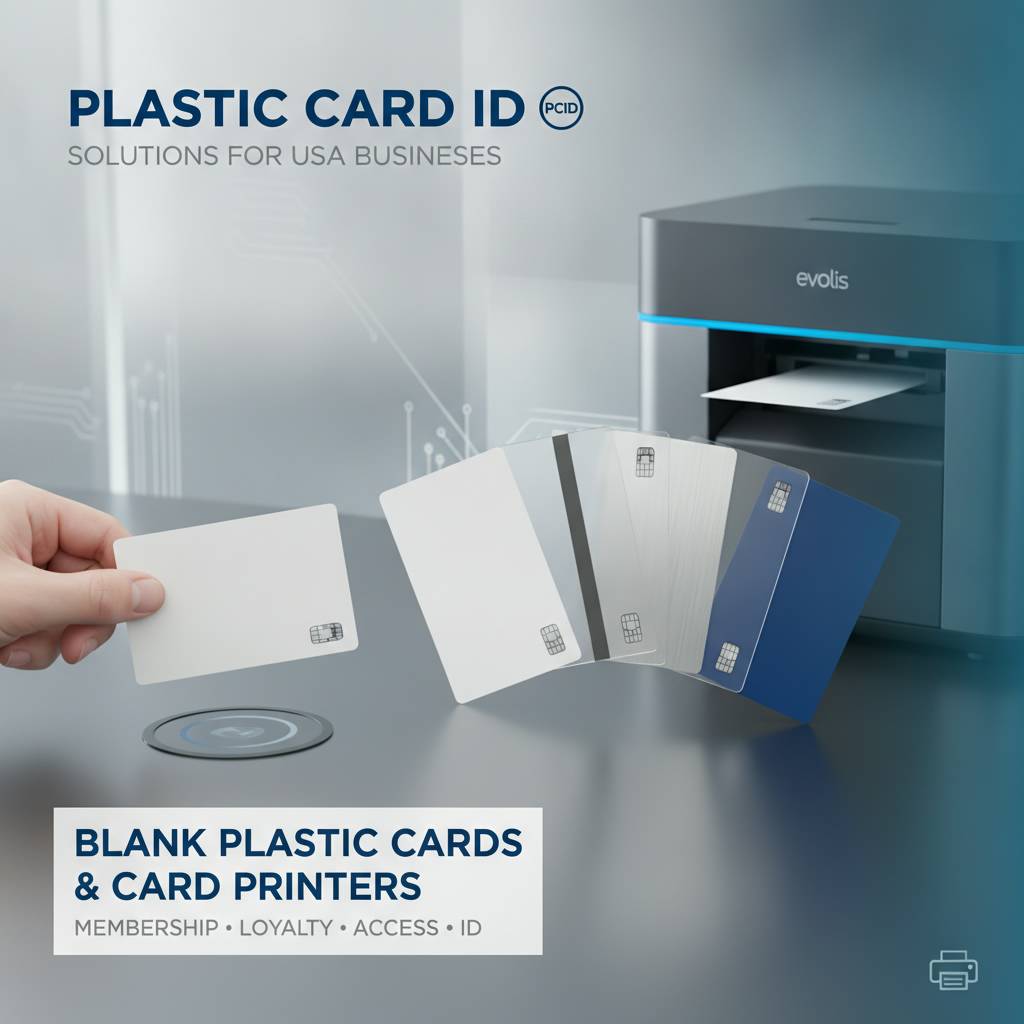 Blank plastic cards are only half the in-house equation. To print on them, organizations need a reliable card printer - and Plastic Card ID stocks a full lineup from three of the industry's most respected manufacturers: Evolis, Zebra, and Fargo. Matching the right printer to your program volume, output quality requirements, and encoding needs is a conversation that Plastic Card ID has had tens of thousands of times.
Entry-level desktop card printers handle lower-volume programs - think under 500 cards per month - with clean, professional output and simple operation. Mid-range models add encoding capabilities, dual-sided printing, and higher throughput. Enterprise-grade printers handle continuous high-volume production with advanced security features including holographic overlaminates and smart card encoding. The right printer for your program is the one that matches your current volume and grows with you.
Printer Ribbons, Supplies, and Ongoing Support
A card printer without a consistent supply chain is a liability. Plastic Card ID carries printer ribbons, cleaning kits, and maintenance supplies for every printer in their lineup - which means you are never forced to hunt down compatible supplies from third-party sources or risk using incorrect consumables that damage your equipment. The one-stop model is not a marketing phrase; it is a practical operational advantage.
Ribbon type selection matters more than most buyers initially realize. YMCKO ribbons produce full-color prints with a clear overcoat layer for basic protection. YMCKOK ribbons add a second black panel for sharper text on the card back. Monochrome ribbons are cost-effective for single-color printing at high volume. Choosing the right ribbon type can significantly extend both print quality and ribbon yield, directly affecting your per-card cost in ongoing operations. Call 800.835.7919 to get matched with the right supplies for your printer model.
Card Carriers, Sleeves, and Mailing Services
For membership programs that issue cards by mail - a common model for insurance groups, professional associations, subscription services, and remote membership organizations - Plastic Card ID provides card carriers, protective sleeves, and card affixing and mailing services. These are not afterthoughts; they are the last mile of the card program, and a card that arrives damaged or poorly presented undermines the impression the program is designed to create.
Card carriers serve both a protective and a communicative function. They protect the card in transit and provide a formatted space for personalized messaging, instructions, activation information, and brand reinforcement. A well-designed card carrier elevates the unboxing moment for the new member - which is, after all, one of the most important moments in any membership relationship. Plastic Card ID handles the details so your program arrives perfectly.
Real-World Applications: Who Uses Blank Membership Cards
The diversity of organizations running card programs on blank plastic stock is genuinely striking. It spans industries, scales, and purposes - but the common thread is that each of these organizations chose plastic over paper because they understood the practical and psychological value difference. Plastic Card ID has supplied programs across virtually every sector of U.S. business and nonprofit activity.
Understanding how similar organizations deploy their card programs is one of the most useful things a buyer can do before committing to a card type or printer configuration. The applications below represent real program models that have proven out in the field - programs where plastic cards created measurable improvements in member engagement, retention, and organizational credibility.
Fitness Centers and Health Clubs
Gyms and health clubs are among the highest-volume ongoing users of blank membership cards in the country. Members check in daily or near-daily, which means cards face regular physical use - swiped, tapped, handled, and pocketed hundreds of times over the life of the membership. HiCo magnetic stripe or RFID cards on durable PVC stock are the standard choice, balancing read reliability with longevity.
For multi-location fitness chains, RFID cards with centralized reader infrastructure allow a single card to work seamlessly across all locations - a member experience improvement that directly supports retention. The card becomes a physical representation of the membership's full scope, and members who carry it understand its value every time they tap in. Fitness programs that issue professional plastic cards consistently outperform those that rely on digital-only check-in alone.
Retail Loyalty Programs and Gift Card Programs
Retailers switching from paper punch cards to plastic loyalty cards see sales lift of 35-50% - a figure consistent enough across program types to be treated as a baseline expectation rather than an optimistic projection. The reasons are behavioral: a plastic card in a wallet triggers recall, signals value, and creates a physical commitment to the program that paper simply does not replicate.
Blank PVC cards used in retail loyalty programs are typically printed in-house with the member's name, account number, and barcode - all produced on demand as new members enroll. The flexibility to personalize at the point of issuance, without batch lead times or outsourcing costs, makes blank cards and an in-house printer the preferred model for retail programs at any scale. CPE can help structure the right solution for your retail card program from day one.
Professional Associations, Libraries, and Nonprofits
Professional associations, library systems, civic organizations, and nonprofits often run membership programs on tighter per-card budgets - which makes the economics of blank card plus in-house printer particularly attractive. A library issuing patron cards, a professional association issuing member credentials, or a nonprofit issuing volunteer ID cards all benefit from the same model: buy blank stock in quantity, print on demand, control costs.
- Libraries use barcode-encoded PVC cards for patron checkout systems integrated with library management software
- Professional associations issue CR80 membership cards that double as conference credentials and access tokens at events
- Nonprofits use printed plastic volunteer IDs and donor recognition cards that signal organizational legitimacy
- Civic organizations issue membership cards that serve as both proof of membership and access credentials for member-only events
- Educational institutions run student ID programs on blank CR80 stock with photo printing and barcode encoding for campus access and library use
Each of these use cases is a long-term program - not a one-time order - which is exactly the kind of relationship Plastic Card ID is built to support. The goal is not a single transaction; it is a program partnership that keeps working smoothly year after year.
Frequently Asked Questions About Blank Plastic Cards for Membership Programs
Over 25 years and more than 100,000 customers, Plastic Card ID has heard every question a membership program buyer can ask. The questions below represent the most common points of consideration for organizations evaluating blank card programs for the first time or looking to upgrade an existing system.
What Is the Minimum Order Quantity for Blank Cards?
Minimum order quantities vary by card type, but Plastic Card ID is structured to serve programs of all sizes - from a small nonprofit ordering a few hundred cards to a national retail chain ordering hundreds of thousands. Blank PVC CR80 cards in standard white stock are available at quantities that work for even modest programs, with per-card pricing that improves significantly as volume increases.
Organizations just starting a card program often benefit from ordering a starter quantity to test their printer setup and design workflow before committing to a larger stock order. Starting smart is better than starting big - and Plastic Card ID can help you figure out the right initial quantity based on your projected monthly issuance rate and storage capacity.
Can I Encode Cards Before Printing on Them?
Yes - and this is actually a common workflow for programs that separate encoding from personalization. Cards with magnetic stripes or RFID chips can be encoded at the time of printing using a printer equipped with the appropriate encoding module, or they can arrive pre-encoded with generic data that is then overwritten at the time of member enrollment. Your workflow determines which approach makes more sense operationally.
For programs using HiCo magnetic stripe cards, encoding and printing simultaneously through a single-pass printer is the most efficient approach and the most common configuration for active membership programs. Plastic Card ID carries printers from Evolis, Zebra, and Fargo with integrated encoding modules - call 800.835.7919 to discuss which configuration fits your program's technical requirements.
How Long Do Blank PVC Cards Last in Active Use?
Standard 30 mil PVC CR80 cards are engineered for durability in regular-use environments. Under typical membership program conditions - daily handling, wallet storage, occasional swiping or tapping - a well-manufactured PVC card will remain functional and presentable for 3-5 years. Magnetic stripe cards in HiCo configuration resist demagnetization reliably over that period with normal use.
Print durability depends significantly on the overcoat applied during printing. Cards printed with a clear UV overcoat layer resist fading, scratching, and moisture far better than cards printed without one. For membership programs where longevity matters - annual or multi-year memberships, employee IDs, access control credentials - always specify a clear overcoat in your printing setup. The overcoat is the difference between a card that looks new after two years and one that looks worn after six months.
Get Your Membership Card Program Running with Plastic Card ID
A membership program is only as strong as the card that represents it. Plastic Card ID has spent over 25 years making sure that card is worth carrying - stocking every card type, every encoding technology, every printer, and every supply needed to run a successful program without friction or guesswork. From the first blank card to the thousandth printed credential, the infrastructure is in place and ready.
The path forward is straightforward. Identify your program's functional needs - access, loyalty, ID, or a combination. Choose the card type that meets those needs. Pair it with the right printer and supplies. Let Plastic Card ID handle the rest. Organizations across every sector of U.S. business have built successful, scalable card programs exactly this way - and the results speak for themselves in member retention, program credibility, and long-term cost efficiency.
Ready to Start or Scale Your Card Program?
Call Plastic Card ID today at 800.835.7919 to speak directly with a card program specialist who has seen every use case, solved every configuration challenge, and helped thousands of organizations find the right blank plastic card solution for their specific membership program needs. There is no commitment required to have the conversation - just answers, expertise, and a partner who is invested in your program's success.
Whether you are replacing paper punch cards with professional plastic loyalty cards, launching a new membership tier with premium clear stock, or building out a full access control system with RFID credentials, Plastic Card ID is the single source that makes it happen - completely, reliably, and at scale. Call 800.835.7919 now and take the next step toward a card program your members will actually value.
Previous Page