UV Ink Printing on Plastic Cards Explained Simply
Table of Contents []
- What Plastic Card ID Wants You to Know About UV Ink Printing on Plastic Cards
- The Science Behind UV Ink Printing on Plastic Cards
- Who Uses UV Ink Printing and Why It Makes Business Sense
- UV Ink vs. Other Card Security Features: A Practical Comparison
- Setting Up UV Ink Printing In-House: What You Need
- Frequently Asked Questions About UV Ink Printing on Plastic Cards
- Partner With Plastic Card ID for Your UV Ink Card Program
What Plastic Card ID Wants You to Know About UV Ink Printing on Plastic Cards
Most card programs focus on what people can see. But some of the most powerful security and branding features on a plastic card are the ones you cannot see under ordinary light. UV ink printing - also called ultraviolet or fluorescent ink printing - adds an invisible or subtly visible layer to plastic cards that only reveals itself under a blacklight or UV lamp. It is a technology that has quietly become one of the most requested features in professional card programs across the United States.
Whether you are managing employee ID badges, loyalty cards, membership credentials, event passes, or access control cards, UV printing adds a dimension of authenticity that standard full-color printing simply cannot replicate. CPE has worked with organizations at every scale - from small nonprofits issuing 50 cards a month to enterprises printing tens of thousands - and the question about UV ink comes up constantly. This page exists to answer it thoroughly.
| Feature | Standard Printing | UV Ink Printing |
|---|---|---|
| Visible in normal light | Yes | Invisible or faint |
| Visible under UV/blacklight | No | Yes, glows brightly |
| Security application | Limited | High |
| Card types supported | All | PVC, composite, smart cards |
| Typical use cases | Branding, ID, loyalty | Security, verification, anti-counterfeit |
The Science Behind UV Ink Printing on Plastic Cards
 UV ink contains fluorescent compounds that absorb ultraviolet radiation and re-emit it as visible light. Under a standard light source, these inks appear either completely transparent or as a very faint, almost ghostly tint on the card surface. The moment a UV lamp or blacklight is introduced, those same inks glow - vividly and unmistakably. It is an elegant security mechanism that is both simple to verify and surprisingly difficult to replicate without the right equipment.
This technology is not new - it has been used in currency, passports, and government documents for decades. What has changed is accessibility. Card printers from manufacturers like Evolis, Zebra, and Fargo now support UV ink ribbons as part of their standard ribbon configurations, meaning organizations with in-house card programs can integrate UV printing without outsourcing to a specialty printer. The barrier to entry has dropped significantly, and the results are professional-grade.
How UV Ink Is Applied to PVC Cards
The process mirrors standard dye-sublimation or direct-to-card printing, with one critical difference: the ribbon used contains a UV fluorescent panel in addition to the standard YMCK (yellow, magenta, cyan, black) color panels. This UV panel - sometimes labeled "F" for fluorescent - deposits the invisible ink layer in a single pass through the printer. No separate lamination step is required for basic UV application, though overlay panels can lock the image in place for added durability.
The card substrate matters here. Standard CR80 PVC cards at 30 mil thickness - the ISO 7810 standard that every major card program uses - accept UV inks cleanly and consistently. Composite PVC-polyester cards, which are more durable and heat-resistant, also perform well. Where UV printing gets more complex is on specialty substrates like clear or frosted cards, where the transparency of the material can affect how the UV layer reads under blacklight. CPE can walk you through substrate selection for exactly this reason.
UV Ribbon Panels and Printer Compatibility
Not every card printer supports UV fluorescent printing out of the box. Printers capable of UV output typically require a ribbon configuration that includes the UV panel - such as YMCFK or YMCKF ribbons, where F denotes the fluorescent UV panel. Evolis Primacy 2, Zebra ZC300 and ZC500 series, and Fargo HDP series printers are among the models that support UV ribbon configurations. Pairing the right ribbon to the right printer model is not optional; it is essential for clean, consistent UV output.
Mismatched ribbons and printer models are one of the most common sources of UV printing failures, and they are entirely preventable. CPE stocks ribbons specifically matched to the printer models it sells, which means you are never guessing at compatibility. When you call 800.835.7919, the team can confirm exactly which ribbon configuration your printer supports and whether UV capability is part of that setup.
What UV Ink Looks Like on a Finished Card
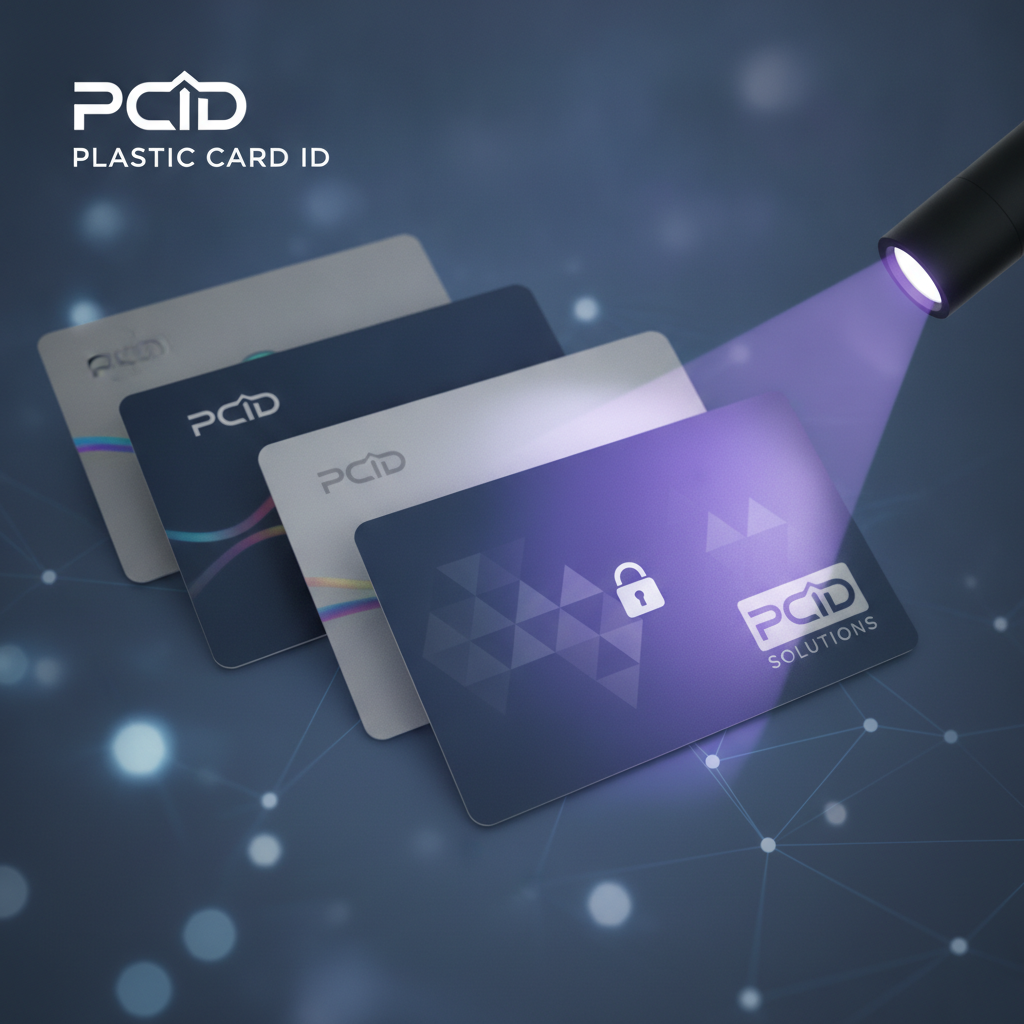
In normal daylight or indoor office lighting, a UV-printed element on a card is essentially invisible. A logo, serial number, watermark, signature panel ghost, or security pattern can be printed in UV ink and the card will look completely standard to the naked eye. This invisibility is actually a feature - it means the card looks clean and professional while carrying a hidden layer of verifiable authenticity.
Under a UV lamp, those same elements glow in bright blue, green, or yellow-green, depending on the specific fluorescent ink formulation. Security staff can verify a card's authenticity in under a second with a handheld UV wand. For event management, nightclub entry, casino floor access, or high-security facility badging, that single-second verification is operationally significant. It eliminates debate, reduces line bottlenecks, and keeps access control tight without slowing down the experience for legitimate cardholders.
Who Uses UV Ink Printing and Why It Makes Business Sense
The appeal of UV printing cuts across industries in ways that might surprise you. Yes, casinos use it on player cards and floor passes to prevent counterfeiting. But so do universities issuing student IDs, hotels managing staff access badges, healthcare organizations tracking employee credentials, and entertainment venues managing VIP memberships. Any organization issuing cards that carry real-world access, monetary value, or identity weight has a reason to consider UV printing.
The business case is not just about security theater. It is about reducing fraud-related losses, protecting your program's integrity, and signaling to cardholders that your organization takes security seriously. A card with a UV security feature communicates professional commitment - and that perception has downstream effects on how your brand is received.
Retail and Loyalty Card Programs
Retailers who have shifted from paper punch cards to plastic loyalty cards report sales increases in the range of 35-50%. That is a meaningful number, and it reflects a psychological reality: plastic feels permanent, valuable, and worth keeping. Adding UV printing to a loyalty card takes that perception further. A loyalty card with a hidden brand mark or UV watermark feels like it belongs in a wallet, not in a junk drawer.
For retail gift cards specifically, UV ink can encode a hidden security mark that cashiers or point-of-sale staff can verify instantly. This matters in retail environments where gift card fraud - including counterfeit cards or tampered magnetic stripes - costs businesses real money every year. UV printing is not a silver bullet, but it raises the cost and complexity of counterfeiting dramatically, which is often enough of a deterrent.
Event and Venue Credentialing
Event organizers issuing multi-day passes, VIP credentials, or staff badges deal with one persistent challenge: card sharing and counterfeiting. A UV security mark solves both problems elegantly. Staff at entry points use a UV wand to verify the invisible mark in a second - no scanner required, no internet connection needed, no software to crash at the worst moment. The verification is immediate, physical, and reliable.
Casino player cards and hotel key cards are other strong use cases. Casino floors issue hundreds or thousands of player cards daily, and the integrity of those cards has direct implications for reward program accuracy and regulatory compliance. Hotel properties issuing staff access badges benefit from UV-secured cards that cannot be easily duplicated using consumer-grade card printers.
Government and Healthcare ID Programs
Employee and contractor ID programs in regulated environments - healthcare facilities, government agencies, educational institutions - carry identity weight that requires a higher standard of card security. UV printing adds a verification layer that complements photo ID, barcodes, magnetic stripes, and smart chip encoding. These features are not mutually exclusive; they stack. A card can carry a full-color photo, a magnetic stripe for access control, a smart chip for network login, and a UV watermark for physical verification - all on a single CR80 card.
That multi-layer approach is the gold standard in high-security ID programs, and it is achievable with the right printer, ribbons, and card stock. CPE supplies all three, along with the expertise to help you configure a card program that meets your specific security requirements without overcomplicating the workflow for whoever is doing the printing.
UV Ink vs. Other Card Security Features: A Practical Comparison
 UV printing does not exist in isolation. It is one of several security tools available to card program managers, and understanding where it fits relative to other options helps you make a smarter decision about your program. Magnetic stripes, smart chips, holograms, and barcodes all have distinct strengths - and combining them thoughtfully is how you build a card that is both functional and secure.
UV Ink vs. Holograms
Holograms have long been the visible security feature of choice for high-value cards - credit cards, driver's licenses, and official government IDs all use them. They are visually impressive and immediately recognizable as a security element, which is both a strength and a limitation. Because holograms are visible, they invite closer scrutiny - and sophisticated counterfeiters have learned to replicate them convincingly. UV ink, by contrast, is invisible and therefore harder to target unless the counterfeiter knows to look for it.
The two features are complementary rather than competitive. A card with both a holographic overlay and UV-printed security marks is significantly harder to replicate than one with either feature alone. For organizations with elevated security requirements, the combination is worth the modest additional cost per card.
UV Ink vs. Smart Chip Encoding
Smart chip cards - including MIFARE DESFire and other RFID-based contactless technologies - carry encrypted data that cannot be duplicated without sophisticated equipment and cryptographic keys. They represent the highest tier of card security for access control and data-carrying applications. UV ink printing, by contrast, is a physical verification feature rather than a digital one.
The distinction matters in practice. Smart chip verification requires a reader, a power source, and functioning infrastructure. UV verification requires only a handheld UV lamp. In a power outage, network failure, or field deployment scenario, UV verification still works perfectly. These two technologies solve different problems, and forward-thinking card programs often use both.
UV Ink vs. Barcode and QR Code Printing
Barcodes and QR codes are readable, scannable, and easy to generate - which also makes them easier to photograph, screenshot, and replicate. A stolen or photographed barcode can be reproduced on a piece of paper and potentially used fraudulently. UV-printed elements cannot be replicated this way; they require the original fluorescent ink to glow under blacklight, and standard printers do not carry that ink.
For organizations using barcodes or QR codes as part of their card program - which is very common in event management and loyalty programs - adding a UV layer is a low-cost way to significantly raise the bar against simple counterfeiting attempts. The combination of a scannable code and an invisible UV verification mark is both practical and smart security design.
Setting Up UV Ink Printing In-House: What You Need
One of the most common questions CPE receives is whether UV printing requires a separate printer or specialized equipment beyond what most card programs already use. The good news is that for most applications, UV printing capability is a matter of using the right ribbon in an already-capable printer. The infrastructure investment is often smaller than people expect.
Choosing the Right Card Printer for UV Output
Printers in the Evolis Primacy 2 line, Zebra ZC series, and Fargo HDP series all support UV ribbon configurations. If your current printer does not support UV output and you are considering an upgrade, these are the product lines worth evaluating. The key specification to look for is support for a six-panel ribbon that includes a fluorescent UV panel. Entry-level printers often support only four or five panel ribbons, which excludes UV capability.
Printer pricing for UV-capable models typically runs in the range of $1,200-$4,500 depending on throughput, lamination capability, and encoding options. That range covers single-sided desktop models up through high-volume dual-sided printers with built-in lamination and RFID encoding. Buying the right printer for your actual volume and feature requirements - rather than the cheapest available model - is one of the most important decisions in setting up a card program.
Ribbons, Supplies, and Ongoing Costs
UV-capable ribbons cost more than standard YMCK ribbons, reflecting the additional fluorescent panel. The per-card cost impact is real but modest - typically in the range of a few additional cents per card when ribbon cost is amortized across the print run. For card programs issuing hundreds or thousands of cards, this is a negligible premium relative to the security value delivered.
Beyond ribbons, UV printing programs benefit from regular printer cleaning kits to prevent contamination of the UV panel - a dirty UV panel produces inconsistent or missing UV elements, which can undermine the security feature entirely. Cleaning kit costs are minimal, and CPE includes cleaning kit recommendations with every printer sale. Call 800.835.7919 for a full supply list matched to your specific printer model.
Card Stock Selection for UV Programs
Standard CR80 PVC cards at 30 mil thickness are the default choice for UV printing programs, and they work reliably. However, card stock quality varies between suppliers, and low-grade PVC can cause inconsistent ink absorption that makes UV elements appear faint or patchy. High-quality card stock is not an area to cut corners when UV printing is part of your security strategy.
Composite PVC-polyester cards are worth considering for programs that also use card printers with lamination modules, or for cards that will see heavy daily use in access control environments. The composite material is more resistant to cracking and warping, and it accepts UV inks comparably to standard PVC. For specialty applications - clear cards, frosted cards, or custom die-cut shapes - consult with CPE before committing to a UV printing workflow, as some specialty substrates require adjusted print settings.
Frequently Asked Questions About UV Ink Printing on Plastic Cards
After 25 years in the card business and over 100,000 customers served, the questions that come up around UV printing tend to follow predictable patterns. Here are the ones that matter most, answered directly.

Common UV Printing Questions Answered
- Can UV ink fade over time? UV fluorescent inks do degrade with extended exposure to sunlight and UV radiation, which is ironic given that they are UV-activated. Storing cards away from direct sunlight and using overlay laminate panels significantly extends the life of UV-printed elements.
- Is UV printing the same as UV curing? No. UV curing is an industrial process that uses ultraviolet light to harden inks or coatings. UV ink printing refers to the use of fluorescent inks that glow under UV light. They are completely different technologies.
- Can I add UV printing to cards I already have? UV printing is applied during the card printing process; it cannot be added retroactively to pre-printed cards without reprinting them entirely.
- Do UV elements survive lamination? Yes. UV-printed elements applied before a clear laminate overlay retain their fluorescent properties through the lamination process. In fact, lamination protects the UV layer from premature degradation.
- What colors does UV ink glow? The most common UV fluorescent colors are blue, green, and yellow-green. The specific color depends on the fluorescent compound in the ink and the ribbon formulation used by your printer manufacturer.
- Does UV printing work on colored card stock? It can, but the results vary. Dark-colored card stock can absorb UV light rather than reflecting it, which may reduce the visibility of UV elements under a blacklight. Testing on your specific card stock before committing to a full print run is always recommended.
Ordering UV-Ready Cards and Supplies Through CPE
The ordering process for UV-compatible cards and supplies is straightforward. Start with the printer model you are using or planning to purchase - that determines which ribbon configurations are available to you. From there, card stock selection follows the substrate recommendations above. If you are encoding magnetic stripes, RFID chips, or smart chips on the same card, those specifications are factored in at the order stage as well.
CPE carries blank PVC cards in standard CR80 format, composite cards, colored stock, and specialty options including clear and frosted cards. Magnetic stripe cards are available in both HiCo and LoCo configurations. RFID and proximity cards - including MIFARE DESFire and other contactless smart card formats - are also in catalog, giving you a single source for every component of a complex card program.
Volume Pricing and Program Scaling
UV printing programs scale well. The per-card cost of UV ribbon decreases as volume increases, and the card stock cost per unit drops at volume thresholds that most established programs hit quickly. Organizations running 50 cards a month can still implement UV printing effectively - the premium at low volumes is proportionally higher but the security benefit is identical. Scaling from 50 cards to 5,000 cards a month does not require changing your security infrastructure, only your supply volume.
For organizations considering UV printing as part of a new or expanding card program, CPE offers program consultation to help you map out supply needs, printer selection, and total cost of ownership before you commit to equipment purchases. That strategic partnership approach - rather than a transactional one - is how they have retained customers across 25 years and over 50 million cards sold.
Partner With Plastic Card ID for Your UV Ink Card Program
UV ink printing on plastic cards is not a gimmick or an optional luxury. For organizations where card integrity matters - and the list of those organizations is longer than most people realize - it is a meaningful security upgrade that delivers real-world fraud prevention at a surprisingly modest cost per card. The technology is proven, the equipment is accessible, and the expertise to help you implement it correctly is available right now.
From blank CR80 PVC cards and UV-capable ribbons to complete printer systems from Evolis, Zebra, and Fargo, CPE maintains the inventory, the knowledge, and the long-term relationships to support card programs at any scale across the United States. Whether you are starting from scratch or upgrading an existing program to include UV security features, the conversation starts with a single call.
Contact Plastic Card ID today at 800.835.7919 and let their team help you build a UV-secured card program that works as hard as your organization does.