What Is a CR80 Card? Size Uses and Standards
Table of Contents []
- What Is a CR80 Card? Your Complete Guide from Plastic Card ID
- The CR80 Defined: Size, Standard, and Substance
- What Can a Blank CR80 Card Become?
- CR80 Card Technologies: Beyond the Blank Surface
- Specialty CR80 Card Options for Advanced Programs
- Building a Complete In-House Card Program
- Frequently Asked Questions About CR80 Cards
- Partner with Plastic Card ID for Your CR80 Card Program
What Is a CR80 Card? Your Complete Guide from Plastic Card ID
Pull a card out of your wallet right now. Chances are almost certain it measures exactly 3.375 inches by 2.125 inches and sits at a thickness of 30 mil. That precise, universal format has a name: the CR80. It is the global standard for plastic cards, and understanding it unlocks a surprisingly powerful world of business tools that most organizations are barely scratching the surface of.
Whether you are building an employee badge system from scratch, launching a loyalty program for your retail store, or managing access credentials for a multi-site organization, the CR80 card is almost certainly the format you need. CPE has been supplying these cards to businesses across the United States for over 25 years, and the questions we hear most often start right here: what exactly is a CR80 card, and why does it matter?
| Specification | CR80 Standard Value |
|---|---|
| Width | 3.375 inches (85.6mm) |
| Height | 2.125 inches (53.98mm) |
| Thickness | 30 mil (0.030 inches) |
| ISO Standard | ISO 7810 ID-1 |
| Material | PVC (Polyvinyl Chloride) |
| Common Uses | ID, loyalty, access, gift, membership |
The CR80 Defined: Size, Standard, and Substance
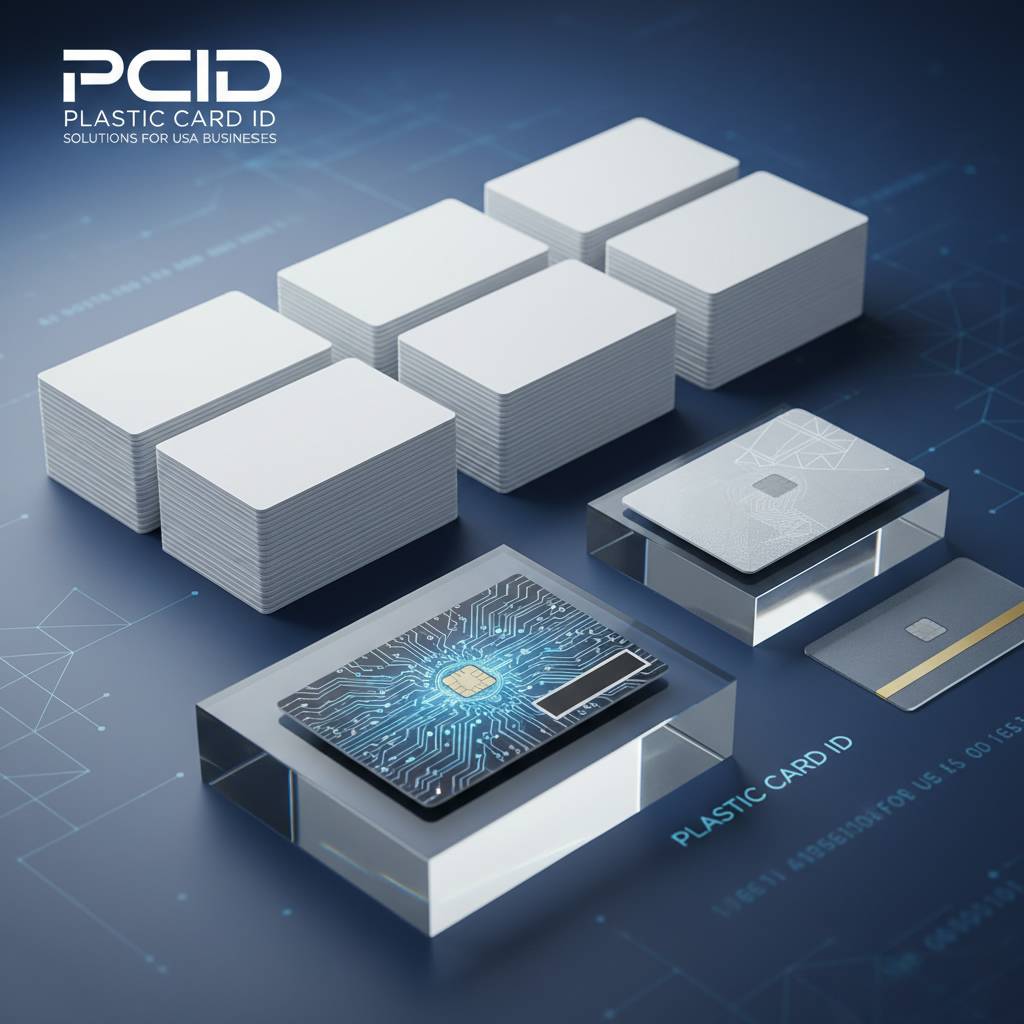 The term "CR80" combines two pieces of shorthand. "CR" stands for Credit Card, and "80" refers to the card's position within the ISO 7810 sizing hierarchy. Formally classified as ISO 7810 ID-1, this standard was established to ensure that cards issued by different organizations, in different countries, for completely different purposes, would all fit the same wallets, the same cardholders, and the same readers. It worked remarkably well.
What makes the standard so useful for businesses is its universality. When you print an employee ID badge on a CR80 card, it fits every standard badge holder on the market. When you issue a loyalty card, your customer drops it right into the slot in their wallet next to everything else. Consistency creates adoption, and adoption drives results. That is not a trivial thing when you are trying to build a card program that actually gets used.
Dimensions and Thickness Explained
At 3.375 by 2.125 inches and 30 mil thick, the CR80 card feels substantial in the hand without being bulky. The 30 mil thickness is a deliberate engineering choice. It is rigid enough to survive daily handling, flexible enough not to crack under normal stress, and thin enough to stack efficiently and feed cleanly through card printers. Cheaper, thinner cards exist, but they bend, warp, and jam printers at rates that become genuinely frustrating over time.
The PVC material used in standard CR80 cards contributes directly to that durability. PVC plastic cards resist moisture, everyday abrasion, and the kind of casual punishment that destroys paper alternatives within weeks. For any program where cards need to last a year or more in active use, the material choice matters as much as the dimensions.
ISO 7810 and Why It Matters Practically
ISO 7810 is the international standard that defines physical characteristics for identification cards. The ID-1 format, which is what CR80 refers to, is the most widely used tier. This standardization means that card printers, laminators, magnetic stripe readers, RFID readers, and card carriers are all engineered around these exact dimensions. Buying off-standard cards introduces compatibility headaches that cost more in downtime than any per-card savings justify.
When CPE supplies CR80 cards, every card in every order meets this standard precisely. Dimensional consistency across thousands of cards is not something to leave to chance, particularly when those cards need to feed reliably through automated printing equipment or slot into access control readers without friction or failure.
How CR80 Compares to Other Card Sizes
Several other card formats exist within the ISO 7810 family. The CR79 is slightly smaller and designed specifically for overlay lamination onto a pre-printed base card. The CR100 is larger, often used for key tags or oversized membership cards. The CR50 is a smaller card sometimes used for keyfobs and mini loyalty tags. Each has legitimate applications, but none approaches the versatility or universal compatibility of the CR80.
For most businesses designing their first card program, CR80 is the correct starting point. It requires no special justification and fits every standard piece of infrastructure. Specialty formats make sense when specific functional requirements demand them, but the CR80 handles the vast majority of use cases without compromise.
What Can a Blank CR80 Card Become?
A blank CR80 card is, in the most literal sense, a platform. It is a durable, standards-compliant surface waiting to be transformed into a tool. The transformation happens through printing, encoding, and the layering of technologies like magnetic stripes, RFID chips, or smart card circuitry. What emerges from that process depends entirely on what the organization needs, and the range of possibilities is broader than most people initially realize.
The flexibility of the blank CR80 card is precisely what makes in-house card programs so economically attractive. Rather than ordering fully customized cards every time a new employee joins or a loyalty program rebrands, organizations can maintain a stock of blank cards and print exactly what they need, when they need it, with complete design control.
Employee ID and Access Credentials
Employee identification cards are one of the most common applications for blank CR80 cards. Organizations print full-color photo IDs with names, departments, titles, and barcodes or magnetic stripes for time tracking and access control. The card functions simultaneously as a visual identification credential and an electronic access token, which is a combination that paper alternatives simply cannot replicate.
The ability to print these cards in-house, on demand, is operationally significant. New employees can receive professional-looking, fully functional badges on their first day rather than waiting for an external print run. Security changes, role updates, and access level adjustments can all be reflected on new cards without delay or external vendor dependency.
Loyalty, Gift, and Membership Cards
Retailers and service businesses discovered something important years ago: plastic cards in wallets dramatically outperform paper alternatives in actual program engagement. Research consistently shows that retailers switching from paper punch cards or paper gift certificates to plastic cards see sales increases in the range of 35-50%. The card stays in the wallet. It gets seen. It gets used.
A blank CR80 card printed with loyalty program branding and encoded with a magnetic stripe or barcode becomes a fully functional loyalty card. The same card stock, printed differently and loaded with a gift card value on a redemption system, becomes a gift card. The infrastructure investment in a quality card printer pays for itself in program performance gains over time.
Event Credentials and Temporary Access
Events, conferences, trade shows, and temporary facilities all require credentialing solutions that are fast to produce, easy to verify visually, and durable enough to survive the event duration. CR80 cards meet all three requirements. They can be printed day-of with attendee information, encoded with access levels for different zones, and worn in badge holders that any event supply vendor stocks.
The reusability question comes up frequently in event contexts. Blank card stock costs significantly less per card than fully pre-printed event credentials ordered from an outside vendor, and in-house printing gives organizers the ability to update information, fix errors, and handle last-minute additions without waiting on a print queue.
CR80 Card Technologies: Beyond the Blank Surface
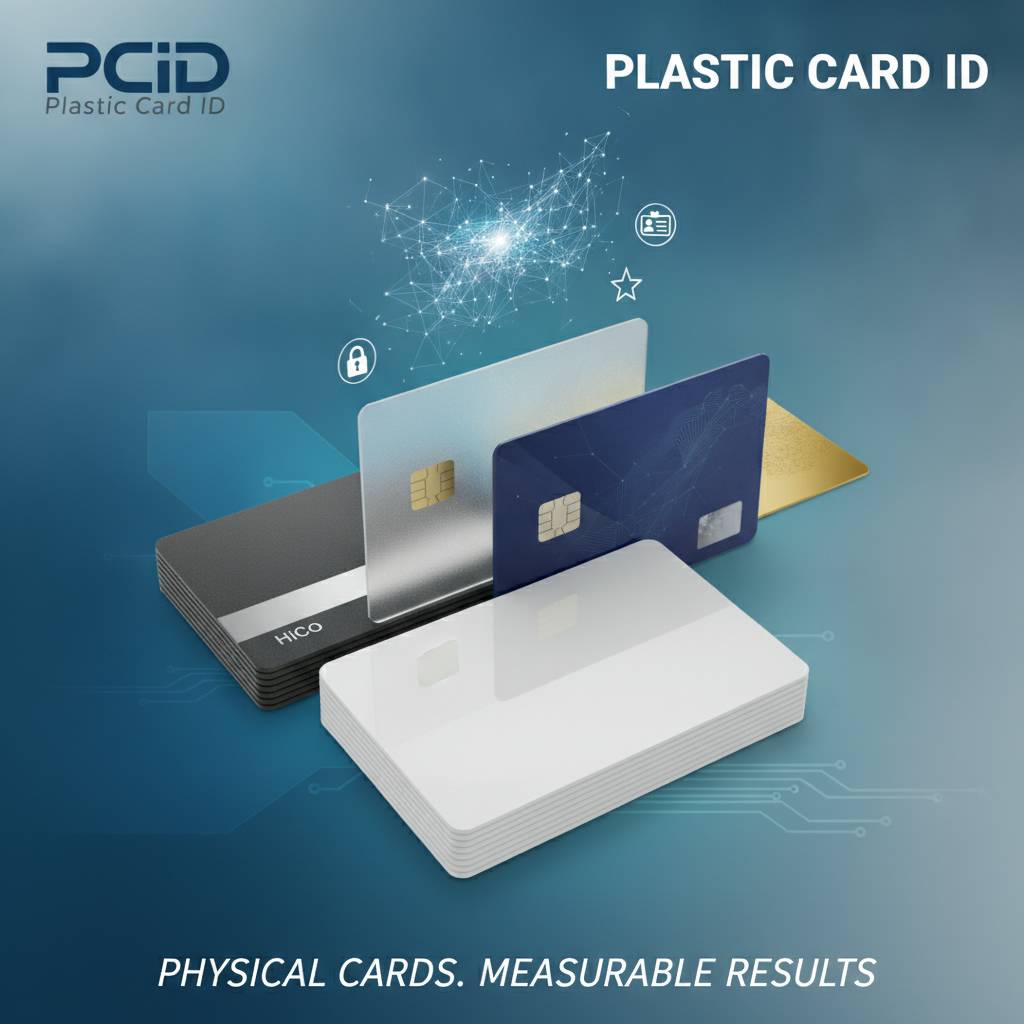 Understanding what a CR80 card is requires understanding what it can carry. The physical card is the substrate, but the functional value often comes from technologies embedded within or applied to that substrate. Each technology serves different operational needs, and selecting the right combination determines what the card can actually do within a system.
The good news for organizations building card programs is that most of these technologies are available on standard CR80 cards without any change to the physical dimensions. A single card can simultaneously carry a printed photo, a magnetic stripe, and an RFID chip, making it function as a visual ID, a swipe-based access credential, and a contactless token all in one.
Magnetic Stripe Cards: HiCo vs. LoCo
Magnetic stripe cards come in two primary variants: High Coercivity (HiCo) and Low Coercivity (LoCo). HiCo stripes use a stronger magnetic field that is harder to accidentally erase and better suited for cards in long-term, frequent use. LoCo stripes use a weaker magnetic field that is easier to encode and re-encode, making them suitable for hotel key cards and other short-duration applications.
For employee badges, loyalty cards, and membership programs where the card is intended to last a year or more, HiCo is almost always the right choice. HiCo stripes survive the kind of everyday wallet proximity to phones and magnetic clasps that would compromise a LoCo stripe within weeks. CPE stocks both variants and can advise on which best suits a given program's needs.
Call Plastic Card ID at 800.835.7919 to discuss which magnetic stripe format is right for your specific card program.
RFID and Proximity Cards
RFID cards communicate wirelessly with readers without requiring physical contact or even removal from a wallet or badge holder. Proximity cards, which operate at 125 kHz, are the most common format for basic access control systems and are found in office buildings, parking facilities, and secure areas across the country. They are simple, reliable, and compatible with an enormous installed base of readers.
For applications requiring greater security and data capacity, higher-frequency RFID smart cards operating at 13.56 MHz offer considerably more functionality. Technologies like MIFARE DESFire enable encrypted, multi-application use cases including logical access, cashless vending, transit payments, and casino player tracking. These cards look identical to a standard CR80 from the outside while carrying significantly more capability inside.
Smart Chip Cards and Contactless Technology
Smart chip cards embed an integrated circuit directly into the card body. Contact smart cards require insertion into a reader, while contactless smart cards communicate via radio frequency. Dual-interface cards do both. The chip allows for secure storage and processing of data that a magnetic stripe simply cannot match in terms of security depth or data capacity.
Hospitality, healthcare, education, and enterprise security are among the sectors where smart card adoption has grown most rapidly. When the credential itself needs to be as secure as the door it opens, smart chip technology is the appropriate solution, and it all lives within the familiar CR80 form factor that fits every standard card system already in place.
Specialty CR80 Card Options for Advanced Programs
Standard white PVC covers most use cases, but the CR80 form factor supports a range of specialty options that serve specific branding, functional, or prestige needs. These are not exotic exceptions but rather a practical toolkit for programs where standard cards are not quite the right fit.
Clear and Frosted Cards
Clear and frosted CR80 cards offer visual distinctiveness that white stock cannot achieve. A fully transparent card with printing creates a striking layered effect, particularly when used for premium membership programs or branded loyalty initiatives where the card itself is part of the brand experience. Frosted cards offer a softer diffused appearance that photographs beautifully and feels distinctly premium in hand.
Visual differentiation matters when a card is meant to signal status or exclusivity. A clear card in a customer's wallet does not look like every other white loyalty card, which means it gets noticed and remembered in a way that standard stock rarely achieves.
Colored Stock and Custom Die-Cut Shapes
Pre-colored PVC card stock is available in a range of options that can complement or replace printed backgrounds, reducing ink consumption and providing consistent color that printing alone cannot always match. For programs issuing large volumes of cards where color-coding by department, access level, or program tier is operationally useful, colored stock is a genuinely practical choice beyond being merely aesthetic.
Custom die-cut shapes depart from the standard CR80 rectangle entirely, creating cards in rounded corners, key-tag formats, or fully custom silhouettes. While these require custom tooling and typically higher minimum order quantities, the branding impact for retail gift card programs and premium membership cards can be substantial.
Luxury Metal Cards
Metal cards have moved from novelty to genuine product category. Available in stainless steel, brass, and gold finishes, luxury metal cards carry an unmistakable physical presence that communicates premium positioning before a single word is read. VIP membership programs, high-value client relationships, and exclusive club credentials are natural fits. A metal card does not get tossed in a drawer. It gets kept, handled, and shown to others.
Metal cards require specific handling considerations including compatible card carriers and presentation packaging, but the retention and impression rates among recipients make the investment straightforward to justify for the right programs. CPE can walk through the full range of options for organizations exploring this tier of card product.
Building a Complete In-House Card Program
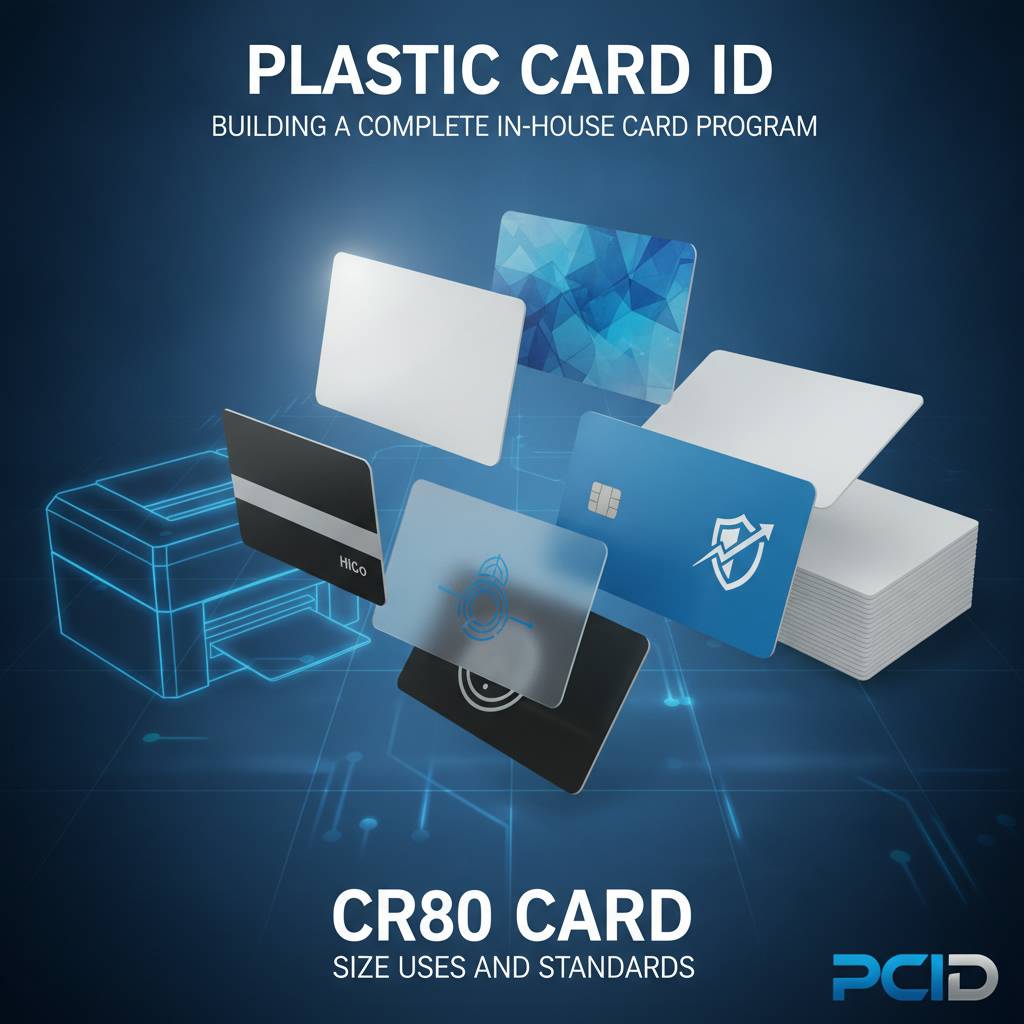
Knowing what a CR80 card is represents only the beginning of building a card program that actually delivers results. The hardware, consumables, and workflow decisions that surround the card stock determine whether an in-house program runs smoothly or becomes a persistent operational headache. Getting the full stack right from the start is worth considerably more than optimizing any single component in isolation.
Choosing the Right Card Printer
Card printers from Evolis, Zebra, and Fargo represent the professional tier of in-house card printing. Each brand offers models ranging from single-sided desktop printers suitable for low-volume applications to dual-sided, high-capacity systems capable of printing thousands of cards per day with inline encoding. Matching the printer to the program's volume requirements and technology needs prevents both under-investment and over-specification.
Print quality, encoding accuracy, and ribbon yield are the operational metrics that matter most in day-to-day program management. Retransfer printers, which print onto a film that is then applied to the card surface, deliver edge-to-edge print quality on specialty cards including clear and frosted stock. Direct-to-card printers are faster and more economical for standard white PVC. The choice depends on both the card type and the quality expectations of the program.
Ribbons, Cleaning Kits, and Consumables
A card program is only as reliable as its consumable supply chain. Printer ribbons are consumable items that directly affect print quality and cost per card. Using manufacturer-specified ribbons with the correct printer is not optional advice; it is a functional requirement. Off-specification ribbons cause print defects, void printer warranties, and frequently cost more in wasted cards than any per-ribbon savings justify.
Cleaning kits maintain print head condition and card feed mechanism performance over time. A neglected printer accumulates dust and debris that degrade print quality and accelerate mechanical wear. A cleaning routine that takes five minutes every few hundred cards extends printer life and maintains quality standards at a cost that is essentially negligible.
Card Carriers, Sleeves, and Mailing Solutions
- Card carriers protect freshly printed cards during mailing and initial distribution, preventing surface scratches and edge damage before the card reaches the end user.
- Card sleeves provide ongoing protection for cards in active use, particularly for high-value cards like hotel keys and premium membership credentials.
- Badge holders, lanyards, and clip attachments are standard accessories for employee and event credential programs where cards need to be displayed rather than stored in a wallet.
- Card affixing services allow organizations to attach cards to mailers, statements, or welcome packages as part of outbound fulfillment workflows.
- Mailing services for card programs eliminate the internal logistics burden for organizations distributing cards to large or geographically dispersed recipient populations.
CPE supplies the full range of these accessories and services, functioning as a single-source partner for everything a card program requires from blank stock through finished, mailed credential.
Frequently Asked Questions About CR80 Cards
Over 25 years and more than 100,000 customers, certain questions about CR80 cards come up with enough regularity that they deserve direct, thorough answers. What follows covers the most common points of confusion and decision-making difficulty for organizations new to in-house card programs.
What Is the Minimum Order Quantity for CR80 Cards?
Minimum order quantities vary by card type and configuration, but CPE supplies organizations of all sizes, from those running programs of 50 cards a month to enterprises ordering in the tens of thousands. Blank white PVC CR80 cards are available at quantities that make sense for small programs, with per-card cost decreasing as volume increases. The economics of in-house printing become progressively more favorable as program scale grows.
There is no program too small and no volume too large. The operational and branding benefits of plastic cards apply equally whether an organization is issuing fifty membership cards or fifty thousand loyalty cards, and the card supply solution should scale accordingly without forcing unnecessary minimum commitments.
Can I Print CR80 Cards Without Professional Equipment?
Standard office printers are not designed for PVC card stock and will not produce acceptable results. CR80 card printing requires a dedicated card printer that feeds cards from a hopper, applies dye-sublimation or direct-thermal printing technology, and optionally encodes magnetic stripes or chips in a single pass. The investment in a quality card printer is the primary threshold for in-house program viability.
For organizations not ready to invest in printing equipment, working with a card supplier that offers pre-printed or custom-printed card options can bridge the gap. As program volume grows and the economics of in-house printing become compelling, adding a card printer becomes a natural next step rather than an initial requirement.
How Long Do CR80 PVC Cards Last in Active Use?
A properly produced CR80 PVC card in normal use conditions will typically last three to five years before showing significant wear. Cards carried in wallets experience more friction than cards used primarily in badge holders, but the base material is substantially more durable than paper alternatives in any use environment. Lamination overlays applied during the printing process further extend card life by protecting the printed surface from abrasion.
For programs where card longevity is a priority, selecting the right printer ribbon and applying a protective laminate overlay addresses the primary failure modes. Cards that are issued with confidence in their durability are program assets; cards that fade, crack, or peel are liabilities that undermine the credibility of the entire program.
Partner with Plastic Card ID for Your CR80 Card Program
 The CR80 card is a deceptively simple object that carries enormous operational, branding, and functional potential. Getting it right means selecting the correct card stock, the right technology configuration, compatible printing equipment, and a supply partner who understands how all of those pieces work together in real programs at real scale. That is exactly what Plastic Card ID has been doing for businesses across the United States for more than 25 years.
From blank white PVC to RFID-enabled smart cards, from small initial orders to mass production runs, from card stock through printers to ribbons to mailing solutions, CPE is structured to support card programs of every scale and complexity. More than 50 million cards and 100,000 customers later, the approach remains the same: be a strategic partner, not just a box shipper.
Ready to build or upgrade your card program? Contact Plastic Card ID today at 800.835.7919 and speak with a specialist who will help you choose the right CR80 card configuration, printer, and consumables for exactly what your program requires.
Previous Page