Blank Plastic Cards for Library Cards: Durable Options
Table of Contents []
- Blank Plastic Cards for Library Cards - Plastic Card ID
- Why Libraries Choose Blank Plastic Cards Over Pre-Printed Alternatives
- Building a Library Card Program: From Blank Stock to Issued Card
- Card Specifications That Library Administrators Should Know
- Common Questions About Blank Library Cards
- Why Plastic Card ID Is the Right Partner for Your Library Card Program
Blank Plastic Cards for Library Cards - Plastic Card ID
Libraries are quietly running some of the most sophisticated card programs in America. Thousands of patrons. Rotating memberships. Branches that need to talk to each other. And right at the center of all of it? A small, sturdy rectangle of plastic that unlocks borrowing privileges, database access, interlibrary loans, and digital resources. Getting that card right matters more than most administrators realize.
Plastic Card ID has been supplying blank plastic cards to organizations across the United States for over 25 years, serving more than 100,000 customers and delivering in excess of 50 million cards. Libraries represent one of the most consistent and loyal segments of that customer base - and for good reason. Blank CR80 plastic cards give library programs total control over design, printing, encoding, and cost. Whether a small rural branch issues 50 cards a month or a large urban system processes thousands, the right card stock is the foundation everything else is built on.
| Card Type | Best Use for Libraries | Key Feature |
|---|---|---|
| Blank PVC CR80 Cards | Standard patron library cards | ISO standard size, full print surface |
| Magnetic Stripe Cards (HiCo) | Checkout systems and patron IDs | High coercivity, data-resistant stripe |
| Barcode-Ready Blank Cards | ILS-integrated patron tracking | Print-in-house with any card printer |
| RFID Smart Cards | Contactless access and digital resources | MIFARE compatible, contactless tap |
| Proximity Access Cards | Staff and restricted area access | 125kHz proximity technology |
Why Libraries Choose Blank Plastic Cards Over Pre-Printed Alternatives
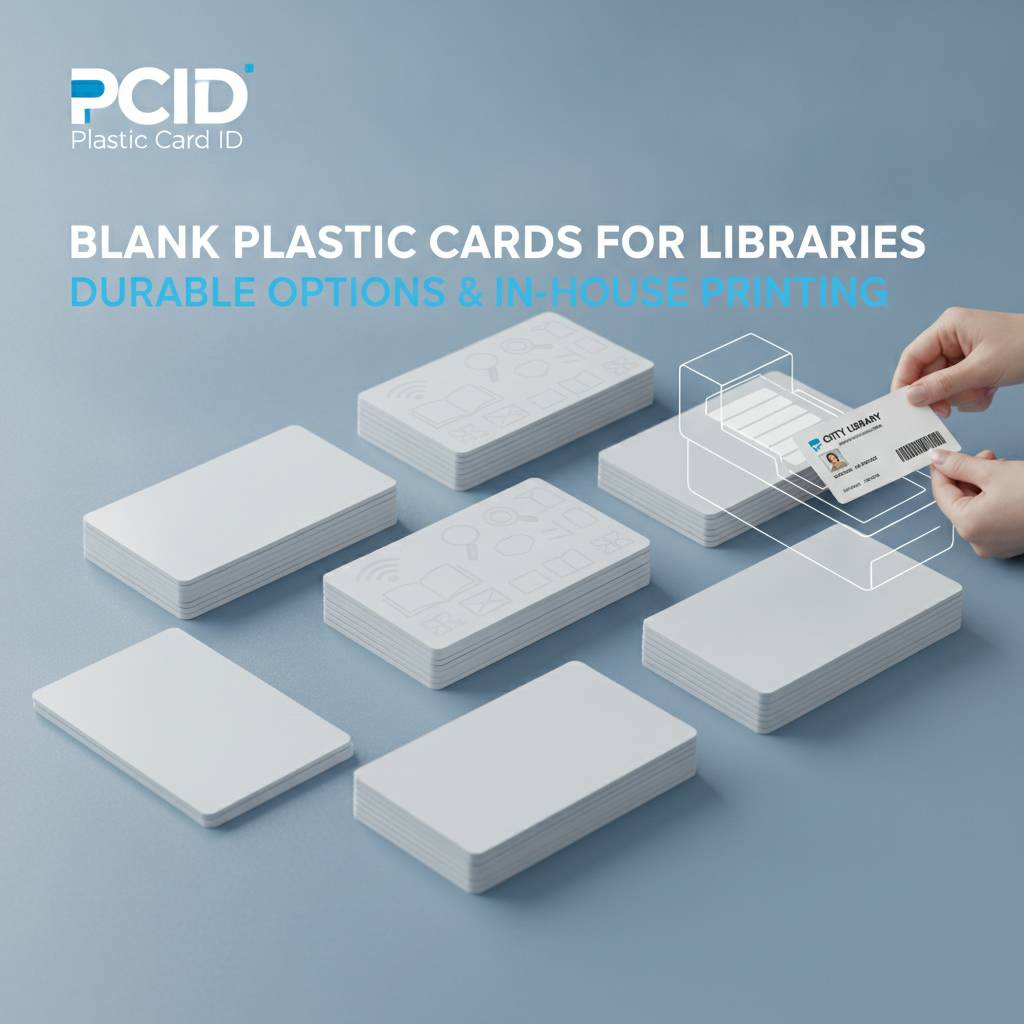 It's a question worth asking directly: why would a library system purchase blank cards rather than ordering pre-printed ones from a vendor? The answer comes down to three things - flexibility, cost, and speed. When patron information changes, when a branch redesigns its branding, or when a new card format is needed, a library with a stock of blank cards and an in-house printer can adapt immediately. There's no waiting on a vendor and no minimum order tied to a single design.
The per-card economics of blank stock are hard to argue with. Libraries that invest in a card printer and maintain a supply of blank CR80 PVC cards consistently spend less per card over time than those relying on outside printing for every batch. Add in the ability to issue cards on demand - right at the circulation desk, while the patron waits - and the operational advantages become significant.
The CR80 Standard and Why It Matters
CR80 is the ISO 7810 standard for plastic card dimensions: 3.375 inches by 2.125 inches, 30 mil thickness. That's the size of a credit card, a driver's license, a hotel key. It fits wallets. It fits card slots. It fits card printers. Standardization means interoperability, and for a library with multiple branches or a consortium sharing systems, that consistency is invaluable.
A blank CR80 white PVC card is a clean slate. Print a barcode on it. Encode a magnetic stripe. Add a patron photo, a branch logo, an expiration date. The card itself imposes no limitations - your library's ILS, your printer, and your workflow determine what it becomes. That's a fundamentally different kind of product than a pre-printed card locked to a specific design cycle.
Libraries that have transitioned from paper patron cards to CR80 plastic have seen measurable benefits in card longevity alone. Paper cards tear, fade, and get lost. A properly issued plastic card stays in a wallet for years. That durability reduces reissuance rates and administrative burden at the circulation desk.
Magnetic Stripe Options for Library Checkout Systems
Most integrated library systems (ILS) - including Polaris, Koha, Sierra, and Symphony - can be configured to read magnetic stripe data. This makes HiCo (high coercivity) and LoCo (low coercivity) magnetic stripe cards a natural choice for libraries that want encoded patron data on the card itself. HiCo stripes are significantly more resistant to accidental erasure from everyday magnetic exposure, making them the preferred choice for patron-facing cards.
Blank magnetic stripe cards arrive ready to encode. Using a card printer with an encoding module, library staff can write patron IDs, account numbers, or other data directly to the stripe during the card issuance process. This closes the loop between card production and system enrollment in a single workflow step. No separate encoding station, no batch processes, no lag time.
For libraries evaluating whether to move from barcode-only cards to magnetic stripe cards, the decision often comes down to reader infrastructure. If your self-checkout kiosks and circulation desks already have magnetic readers, adding stripe encoding to your card program is a low-cost upgrade with immediate operational benefits. CPE can help you identify the right card and printer combination for your setup.
RFID and Contactless Library Cards
Contactless technology is increasingly common in library environments, particularly in larger systems and academic libraries. RFID smart cards - including those compatible with MIFARE and MIFARE DESFire standards - allow patron authentication without physical swipe or scan. A tap at a self-checkout terminal or a reader-equipped door is all it takes.
Proximity cards using 125kHz technology serve a related but distinct purpose. They're commonly used for building access control - allowing staff or cardholders to enter restricted areas, computer labs, or after-hours study rooms. Some library systems issue a single card that functions as both patron ID and access credential, simplifying the cardholder experience significantly.
The smart card options available through CPE support both read and read/write configurations, depending on what your ILS and access control infrastructure requires. These cards arrive blank and ready for encoding through compatible card printers and encoding systems, giving your technical staff full control over what data lives on the chip.
Building a Library Card Program: From Blank Stock to Issued Card
Most library administrators think of cards in terms of what they look like when issued. But the more interesting question is how they get there. A well-structured card program has a supply chain, a production workflow, an issuance process, and a renewal strategy. Getting each of those pieces right determines whether the program runs smoothly or becomes a persistent source of operational friction.
The blank card is the starting point. Everything downstream - printing, encoding, laminating, issuing - depends on starting with a card stock that's compatible with your equipment and suited to your use case. This is where choosing the right supplier matters. A card that's incompatible with your printer's ribbon chemistry or thickness tolerance creates problems that no amount of downstream adjustment can fully solve.
Choosing the Right Card Printer for Your Library
Card printers from Evolis, Zebra, and Fargo represent the primary options for library card programs, and each brand has models suited to different volume and feature requirements. A small single-branch library issuing cards one at a time during patron registration has different needs than a county system processing hundreds of new or renewed cards per week.
Single-sided versus dual-sided printing, built-in encoding modules, lamination capability, and throughput speed are the main differentiators. Investing in a printer that matches your actual volume and feature needs - not your theoretical maximum - keeps costs appropriate and avoids over-engineering a simple workflow. Plastic Card ID supplies printers alongside card stock, ribbons, and cleaning kits, making it straightforward to outfit an entire card station from a single source.
Printer ribbons are consumables that need regular replenishment. Cleaning kits are not optional - dirty print rollers and card paths degrade print quality and shorten printer life. Stocking adequate supplies of both, and establishing a routine maintenance schedule, is one of the most cost-effective practices any library card program can adopt.
Card Carriers, Sleeves, and Mailing Services
Issuing cards in person is straightforward. Mailing them - to new patrons, to card renewal recipients, or to members of a library system that doesn't have a convenient branch near them - is more complex. A blank card needs to be printed, sometimes encoded, placed in a protective sleeve or card carrier, and mailed with any accompanying materials.
CPE offers card affixing and mailing services that handle this workflow for libraries that don't want to manage it in-house. Cards are secured to carriers, inserted into envelopes, and mailed to patron addresses. For library systems running periodic renewal campaigns or onboarding new cardholders at scale, this is a significant operational simplification.
Card sleeves also serve a protection purpose for cards issued in person. A patron receiving a new library card in a sleeve is more likely to keep it in good condition - and less likely to return to the circulation desk three months later asking for a replacement. Small touches in issuance quality have measurable effects on card longevity in the field.
Reorder Cycles and Inventory Strategy
Running out of blank card stock at a busy library is a real operational problem. Patrons who can't be issued a card during a visit may not return. Circulation staff lose time managing workarounds. Establishing a reliable reorder cycle - and maintaining a buffer stock that accounts for unexpected demand spikes - is basic supply chain discipline that pays for itself quickly.
Libraries that work with CPE as an ongoing supplier benefit from consistent product availability and the ability to order at volumes that match their actual program scale. Whether your monthly issuance is 50 cards or 5,000, ordering in quantities that reflect your real consumption keeps per-card costs low without tying up unnecessary budget in excess inventory.
Call 800.835.7919 to discuss your library's card volume and get guidance on order quantities and reorder timing that fit your program.
Card Specifications That Library Administrators Should Know
 Not all blank plastic cards are the same, even when they look identical in a product listing. Material composition, surface finish, thickness tolerance, and print surface treatment all affect how a card performs in a card printer and how long it lasts in use. Understanding these specifications helps library purchasing staff make confident, informed decisions rather than relying entirely on vendor recommendations.
PVC is the standard material for library cards. It's dimensionally stable, compatible with dye-sublimation and direct-to-card printing, and durable enough for years of wallet carry and reader contact. Composite PVC cards - with a PET core - offer additional durability and are worth considering for programs with high card wear rates or lamination requirements.
Surface Finish Options: Gloss vs. Matte
Blank white PVC cards are available in gloss and matte finishes. Gloss cards produce vivid, photo-quality prints and are the most common choice for patron-facing library cards. Matte cards reduce fingerprint visibility and glare, which some libraries prefer for staff ID cards or cards where readability under varied lighting conditions matters more than visual impact.
The surface finish also affects how card printers apply color. Some ribbon types and printer models perform better on gloss; others on matte. Matching card surface to printer and ribbon type is an important compatibility step that CPE can help navigate. Getting this right avoids print quality problems that often get misdiagnosed as printer issues when they're actually card-compatibility issues.
Thickness and Tolerance Standards
CR80 cards at 30 mil thickness are the standard for most card printers. Printers are calibrated to accept cards within a specific thickness tolerance - typically plus or minus 0.5 mil. Cards that fall outside this range can jam, misfeed, or produce inconsistent print quality. Sourcing blank cards from a supplier with consistent quality control - not the cheapest option available on a marketplace - protects the longevity and reliability of your printer investment.
Some library applications call for thinner or thicker cards. Key tag cards, for example, are popular as secondary library card formats for patron keychain attachment, and these run at different dimensions and thicknesses than standard CR80. Oversized cards for specialty applications and smaller wallet-friendly formats are also available through Plastic Card ID's catalog.
Colored and Specialty Card Stock
Not every library card needs to be white. Colored PVC card stock - available in a range of pre-dyed colors - allows libraries to use color as a functional identifier. Youth cards in one color, adult cards in another, staff cards in a third. Color-coding card categories reduces issuance errors and speeds up visual verification at the circulation desk.
Clear and frosted PVC cards are specialty options with real applications in library environments. A frosted card with a printed overlay can create a distinctive, premium look for a library's premium membership tier or Friends of the Library program. Clear cards allow creative layered designs that stand out from standard library card aesthetics and carry a perceived quality advantage.
- White gloss PVC - standard patron library cards, full color printing
- White matte PVC - staff IDs, reduced glare and fingerprinting
- Colored stock cards - category identification, youth vs. adult programs
- Clear PVC cards - premium membership tiers, specialty programs
- Frosted cards - distinctive appearance, layered design effects
- Key tag cards - secondary patron credentials for keychain carry
- Composite PVC/PET cards - higher durability, lamination-compatible
Common Questions About Blank Library Cards
Library card programs attract a consistent set of questions from administrators, purchasing directors, and IT staff who are evaluating or upgrading their card programs. The following covers the ones that come up most frequently when working with new library clients.
Can Blank Cards Be Used With Any Card Printer?
Blank PVC CR80 cards are compatible with virtually all major card printer brands and models, including Evolis, Zebra, and Fargo. The key compatibility variables are card thickness, surface finish, and whether the card has a magnetic stripe or RFID chip that requires the printer to have the corresponding encoding module. Standard blank white cards work across all current major platforms without issue.
Where compatibility gets more nuanced is with laminating printers or printers that use overlay ribbon panels. In these cases, the card surface chemistry matters more, and sourcing cards specifically rated for lamination is advisable. CPE can help match card specifications to your specific printer model to eliminate compatibility guesswork. Call 800.835.7919 and speak directly with a product specialist before placing your first order if you have printer-specific questions.
What Quantities Should Libraries Order?
Card stock is sold in quantities that allow libraries of all sizes to order appropriately. Small branches issuing under 100 cards per month can order accordingly without being forced into large minimum quantities. High-volume library systems processing thousands of cards monthly benefit from bulk pricing that reduces per-card cost substantially.
A reasonable approach for most library programs is to maintain a 60-90 day supply on hand, with a standing reorder triggered when stock reaches a 30-day level. This provides a buffer against delivery delays or unexpected demand increases without over-investing in inventory. Working with a reliable supplier who can fulfill consistent reorders on short notice is worth more than saving a fraction of a cent per card on a single large order from an unknown source.
Are Loyalty-Style Incentive Cards Right for Libraries?
Some library systems have experimented with loyalty card mechanics - summer reading programs, patron engagement initiatives, or Friends of the Library membership cards that carry benefits or recognition tiers. These don't require a different physical card, but they often call for a different design approach and sometimes different encoding requirements.
The same blank PVC card stock that serves standard patron issuance can support loyalty-adjacent programs. The differentiation happens at the printing and encoding stage, not the card stock stage. Libraries interested in running a tiered membership or patron engagement card program alongside their standard library card program can do so without adding a second card product to their supply chain.
Why Plastic Card ID Is the Right Partner for Your Library Card Program
There's a difference between a supplier and a partner. A supplier takes your order and ships your cards. A partner helps you understand what you need, guides your purchasing decisions, supports your program as it evolves, and is available when something unexpected comes up. After 25 years and more than 50 million cards delivered, Plastic Card ID operates firmly in the second category.
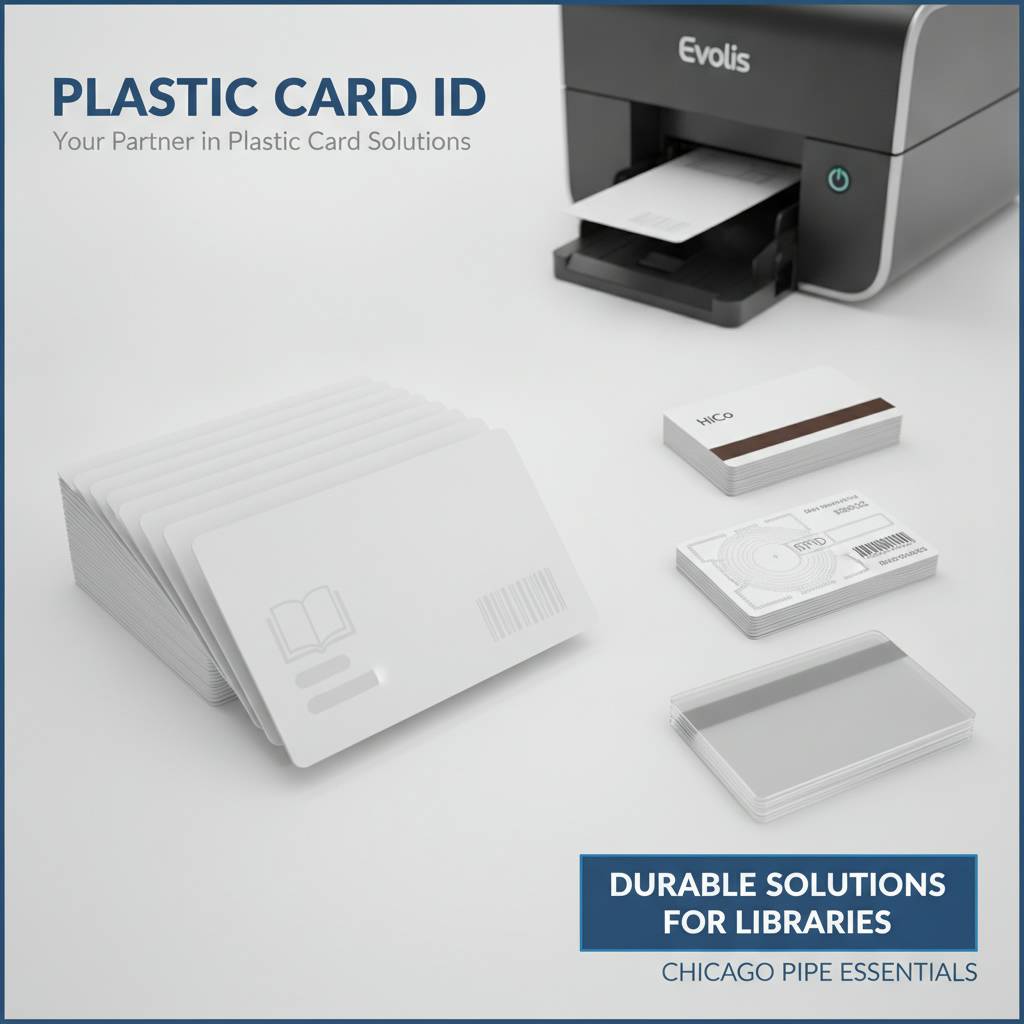
Libraries across the United States - public systems, academic libraries, school libraries, and special libraries - have relied on Plastic Card ID for consistent card quality, reliable fulfillment, and knowledgeable support. The catalog covers every card type a library program could need: blank white PVC, magnetic stripe in HiCo and LoCo, RFID and proximity cards, specialty formats, and the full range of printers, ribbons, and accessories that make a card program run.
One Source for Cards, Printers, and Supplies
Managing multiple vendors for card stock, printer hardware, ribbons, and accessories creates unnecessary complexity. When a print quality problem arises, the card vendor blames the ribbon, the ribbon vendor blames the card, and the library is left troubleshooting in the middle. Sourcing everything from Plastic Card ID eliminates that dynamic entirely.
Card stock, printer ribbons, cleaning kits, card sleeves, card carriers, and the printers themselves are all available through a single relationship. When support is needed, there's one number to call and one team that knows your entire setup. That integration of product and support is one of the most practical benefits of working with a full-service card supplier.
Reach the Plastic Card ID team directly at 800.835.7919 to discuss your library's card program needs, get product recommendations, or place an order for blank card stock and supplies.
Scalable Solutions for Libraries of Every Size
A two-branch public library system and a multi-county consortium have fundamentally different card program requirements. Volume, issuance workflow, encoding complexity, and budget all differ by an order of magnitude. Plastic Card ID serves both - and every scale in between - with product options and order quantities that fit actual program realities rather than forcing customers into one-size-fits-all solutions.
Small library programs benefit from the ability to order modest quantities of blank cards without high minimums, while larger systems unlock better per-card pricing as volume increases. The program scales with you, which means there's no need to switch suppliers as your library system grows or as your card program becomes more sophisticated.
Proven Track Record Across the United States
With over 100,000 customers served and more than 50 million cards delivered, Plastic Card ID has the operational depth to support library card programs reliably at any scale. Consistent product quality, dependable fulfillment, and accessible support are not promises - they're the result of 25 years of building and maintaining customer relationships in a specialized industry.
Libraries that partner with CPE for their blank card supply don't have to worry about quality inconsistencies between orders, unexpected product discontinuations, or support staff who don't understand card programs. That institutional knowledge and operational reliability is the real product - the cards are how it gets delivered.
Ready to upgrade your library's card program with professional-grade blank plastic cards and the right printer and supply setup to match? Contact Plastic Card ID today at 800.835.7919 and let our team help you build a card program your patrons and staff will rely on for years to come.
Previous Page