What Is a HiCo Magnetic Stripe Card? Full Breakdown
Table of Contents []
- What Is a HiCo Magnetic Stripe Card? Your Complete Guide From Plastic Card ID
- HiCo vs. LoCo: Choosing the Right Card for Your Application
- The Full Catalog: HiCo Cards and Beyond
- Card Printers That Work With HiCo Magnetic Stripe Cards
- Frequently Asked Questions About HiCo Magnetic Stripe Cards
- Industries and Applications That Rely on HiCo Magnetic Stripe Cards
- Ready to Build Your Card Program? Contact Plastic Card ID Today
What Is a HiCo Magnetic Stripe Card? Your Complete Guide From Plastic Card ID
Swipe a card at a point-of-sale terminal, a hotel front desk, or an access control reader, and something almost invisible is doing the heavy lifting - a thin band of magnetic material encoded with data. Most people never think twice about it. But if you run a card program of any kind, understanding the difference between HiCo and LoCo magnetic stripe cards can genuinely change how reliable, scalable, and professional your program becomes.
HiCo - short for High Coercivity - refers to the magnetic strength required to encode and erase data on a card's stripe. It is a technical specification, yes, but its real-world implications are entirely practical: how long the data holds, how resistant it is to accidental erasure, and whether it survives daily life in a wallet, a back pocket, or a busy retail environment. This page covers everything you need to know, from the physics behind it to choosing the right card for your application.
The Magnetic Stripe: A Quick Primer
A magnetic stripe card carries a strip - usually dark brown or black - embedded with iron-based magnetic particles. When an encoder writes data to the card, it aligns those particles in a specific pattern. A reader then detects that pattern and interprets it as usable information: a membership number, an employee ID, an access credential, a hotel room code.
The stripe itself is divided into tracks. Track 1 holds alphanumeric data (names, account identifiers). Track 2 is the most commonly used - it stores numeric data and is the standard for most access and loyalty applications. Track 3 is less commonly used but available on most cards. Knowing which tracks your card printer and reader combination uses helps you select the right encoding setup from the start.
HiCo Defined: The High Coercivity Standard
High Coercivity magnetic stripe cards are encoded at 4,000 Oersteds (Oe) - a unit measuring magnetic field strength. That higher resistance to demagnetization is exactly what makes HiCo cards the dominant choice for any card program where durability and data integrity matter. Accidental exposure to magnetic fields, proximity to other cards, and normal daily friction are far less likely to corrupt HiCo data.
LoCo cards, by contrast, are encoded at 300 Oe. They require less force to encode and erase, which makes them appropriate for short-term or single-use applications - think temporary event badges or hotel key cards where you want the data to be easily reset. But for anything meant to last months or years, HiCo is the clear choice. CPE stocks both formats in multiple card styles, but HiCo cards consistently represent the bulk of what serious card programs order.
Why Oersteds Matter in the Real World
Here is where the abstraction becomes tangible. A HiCo card stored next to a smartphone, tossed in a bag with keys, or repeatedly run through a card reader retains its encoded data reliably over time. A LoCo card in the same scenario may degrade far sooner. For employee ID programs, access control, loyalty rewards, and membership applications - where a card is expected to survive a year or more of active use - HiCo is not a luxury, it is a baseline requirement.
The encoding equipment matters too. HiCo cards require a printer or encoder specifically rated for high coercivity encoding. Using a LoCo encoder on a HiCo card will either fail to write data correctly or produce a stripe that reads inconsistently. This is one reason working with a knowledgeable supplier from day one saves significant operational headaches later.
HiCo vs. LoCo: Choosing the Right Card for Your Application
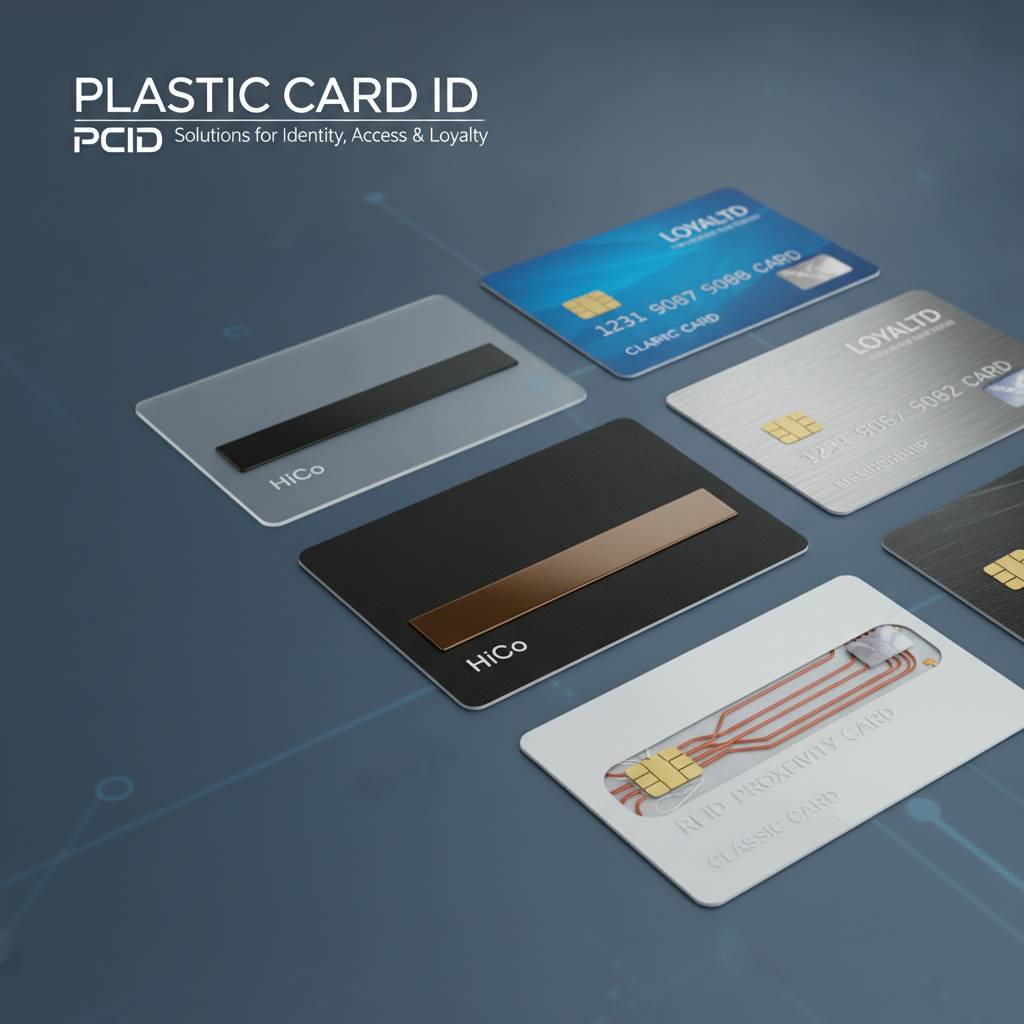 Selecting between HiCo and LoCo is not about prestige - it is about matching technical specifications to your operational reality. Both formats have legitimate use cases. The mistake most first-time card buyers make is defaulting to whichever card is slightly cheaper without considering the total cost of card failures, reprints, and frustrated cardholders.
Consider a retail loyalty program. Cards are issued once, carried daily, and used for months or years. Every failed swipe at checkout is a moment of friction between your brand and your customer. A degraded magnetic stripe is invisible until it causes a problem - and by then, the damage is done. HiCo cards eliminate that risk category almost entirely.
When HiCo Is the Right Choice
HiCo magnetic stripe cards are the standard for applications requiring durability, repeated use, and data longevity. The list of appropriate use cases is long: employee ID badges, access control credentials, loyalty program cards, membership cards, gift cards, student IDs, fleet management cards, and library cards. Essentially, if a card will be used more than a handful of times, HiCo is the correct specification.
Businesses that switched from paper punch cards to plastic HiCo loyalty cards report measurable results. Retailers see gift card sales increase by 35-50% when moving from paper to plastic formats. The card itself signals value and permanence - consumers keep them, reference them, and return specifically because they have a card in their wallet. That physical touchpoint is something a digital coupon or a paper punch card simply does not replicate with the same consistency.
When LoCo Makes Sense
LoCo cards shine in short-cycle, controlled environments. Hotel key cards are the textbook example - guests check in, use the card for a few days, check out, and the card is reset for the next guest. The ability to quickly erase and re-encode a LoCo card is an operational advantage in that specific context. Event access credentials with a single-day lifespan are another appropriate use case.
The cost difference between HiCo and LoCo cards is real but modest - and that modest savings often evaporates the first time you have to reissue cards due to stripe degradation. For anything beyond truly short-term use, the math generally favors HiCo. CPE can help you run those numbers for your specific volume and use case before you commit to an order.
Comparing HiCo and LoCo at a Glance
| Feature | HiCo (High Coercivity) | LoCo (Low Coercivity) |
|---|---|---|
| Encoding Strength | 4,000 Oe | 300 Oe |
| Durability | High - long-term use | Lower - short-term use |
| Typical Applications | Loyalty, ID, access, membership | Hotel keys, temp event badges |
| Re-encode Ease | Requires HiCo encoder | Easier to erase and rewrite |
| Cost | Modest premium | Slightly lower |
| Best For | Programs lasting months-years | Single-use or rapid-recycle |
The Full Catalog: HiCo Cards and Beyond
Understanding HiCo is only part of the picture. Real card programs rarely involve a single card type - they evolve over time, adding new features, accommodating new use cases, and integrating with different reader technologies. That is why CPE carries a comprehensive inventory that goes well beyond a single stripe specification.
From standard blank CR80 PVC cards at 30 mil thickness - the ISO 7810 standard that fits any card printer or wallet - to RFID-enabled smart cards, proximity access cards, and specialty formats including clear, frosted, and custom die-cut shapes, the catalog is designed to support any card program at any scale. Whether you need 50 cards a month for a small business loyalty push or tens of thousands for a regional membership rollout, the same expertise and inventory depth applies.
Blank CR80 HiCo Cards: The In-House Card Program Workhorse
Blank HiCo magnetic stripe cards at the CR80 standard give organizations something genuinely valuable: total control. You design, print, and encode in-house, on your schedule, with your branding. The per-card cost over time is lower than outsourcing every print run. And when someone loses a card, you reissue immediately - no waiting on a vendor turnaround.
A blank HiCo card can become almost anything - an employee ID badge with photo and access level encoded on the stripe, a loyalty card with a customer number, a membership credential, a student ID. The card itself is infrastructure; what you print and encode on it determines its function. That flexibility is why blank CR80 HiCo cards are among the most ordered products in the entire catalog.
HiCo Cards With Pre-Printed and Custom Designs
Not every organization wants to print in-house. For bulk orders where design is consistent and volume justifies pre-printing, custom-printed HiCo cards deliver a polished, professional result that would be difficult to match with a desktop printer. Think retail gift card programs, branded membership cards for fitness studios, and loyalty cards for restaurant groups with multiple locations.
The combination of professional print quality on the face side and a reliable HiCo stripe on the back creates a card that functions as both a marketing asset and an operational tool. Every time a cardholder reaches for it, your brand is in their hand. That kind of passive, recurring brand exposure is remarkably cost-effective compared to most marketing channels.
Specialty HiCo Formats: Clear, Colored, and Beyond
Standard white PVC is not the only option. Colored core cards, clear and frosted cards, and even luxury metal cards in stainless steel, brass, and gold are available for programs where visual differentiation matters. A premium membership tier, a VIP loyalty level, or an exclusive access credential all communicate something different when delivered in a non-standard format.
Clear and frosted HiCo cards in particular have become popular in fitness, spa, and boutique retail contexts where design aesthetics are part of the brand experience. The magnetic stripe functions identically to a standard white card - same encoding strength, same reader compatibility, same durability - but the visual impression on the cardholder is entirely different. For organizations competing on brand experience, that difference is not trivial.
Card Printers That Work With HiCo Magnetic Stripe Cards
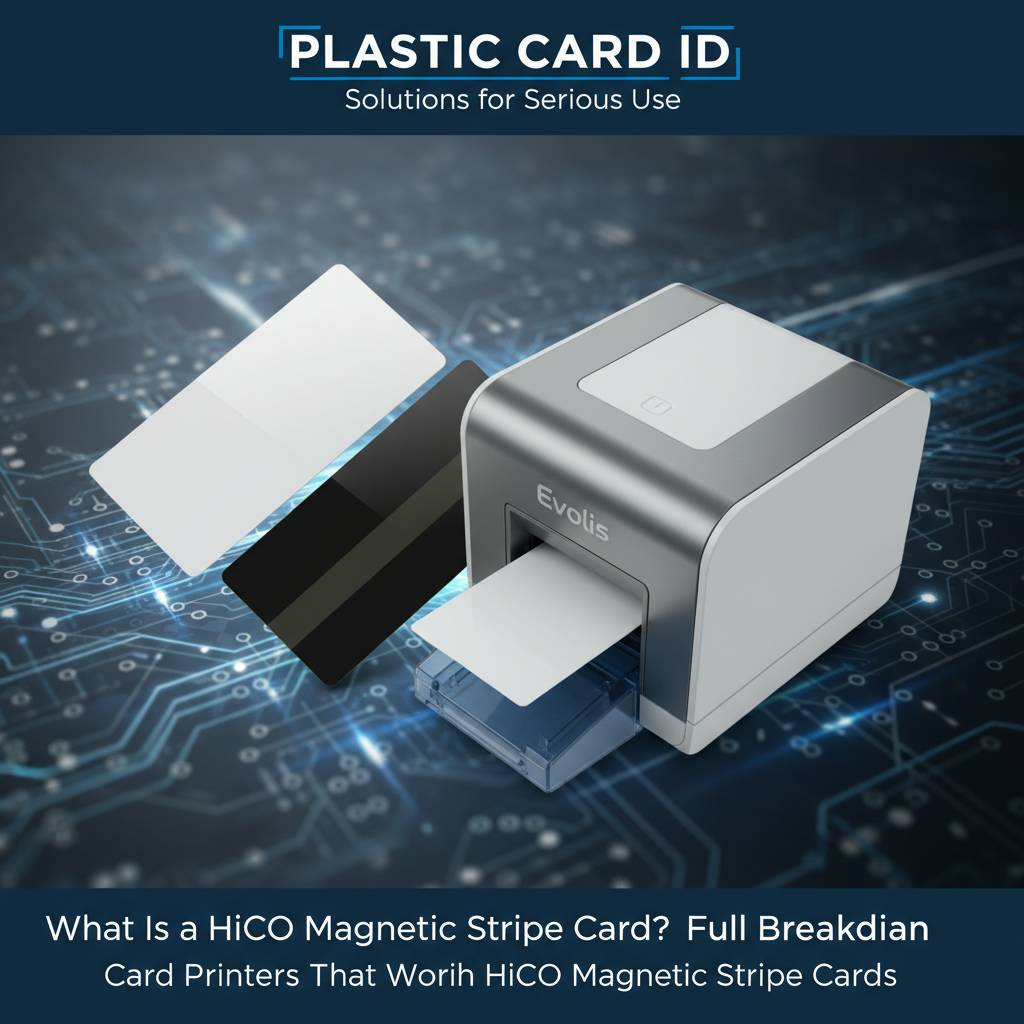 A HiCo magnetic stripe card is only as useful as the encoder that writes to it and the printer that personalizes it. The right printer-card combination determines print quality, encoding reliability, throughput speed, and long-term operational cost. Choosing them in isolation is a common and avoidable mistake.
Plastic Card ID carries card printers from three of the most respected brands in the industry - Evolis, Zebra, and Fargo. Each manufacturer has models suited to different volumes, encoding requirements, and organizational budgets. The right choice depends on factors including daily print volume, whether you need single-sided or dual-sided printing, lamination requirements, and whether your application demands contact chip encoding in addition to magnetic stripe.
Evolis Printers and HiCo Compatibility
Evolis printers are known for their compact design, reliable performance, and clean output quality. Models like the Primacy 2 and Zenius support HiCo magnetic stripe encoding as an integrated option, making them well-suited for small to mid-size card programs - retail loyalty, membership, employee ID - where reliable in-house printing is the goal without requiring industrial-scale equipment.
The Evolis ecosystem also includes cleaning kits and printer ribbons, available through CPE, that extend printer life and maintain consistent print quality over time. A printer that is properly maintained with the correct supplies produces better cards, fewer jams, and lower total cost of ownership. These are not accessories - they are part of the system.
Zebra and Fargo Printers for Higher Volume HiCo Programs
Zebra and Fargo printers are built for higher throughput and more demanding encoding applications. The Fargo HDP series in particular delivers edge-to-edge printing with HiCo encoding capability, lamination options, and the kind of card quality that supports photo ID, access control, and government-adjacent applications. For organizations issuing hundreds or thousands of cards per month, these systems deliver the throughput and reliability that lower-volume printers cannot.
Zebra's ZC and ZXP series occupy a similar space - robust HiCo encoding, durable construction, and compatibility with a wide range of card types and ribbon formats. Call 800.835.7919 to discuss which printer model aligns with your specific volume, encoding needs, and budget. The right recommendation depends on your actual workflow, not a generic spec sheet comparison.
Ribbons, Cleaning Kits, and Supplies That Keep Programs Running
Every card printer requires a consistent supply of ribbons, cleaning cards, and cleaning kits to function at specification. Using off-brand or incompatible ribbons is one of the most common causes of print quality degradation and premature printhead failure. CPE stocks manufacturer-approved ribbons for Evolis, Zebra, and Fargo printers - YMCKO, KO, and monochrome formats depending on your application.
Cleaning kits are particularly important for HiCo programs because a contaminated encoder or card path can affect stripe encoding consistency. Regular cleaning, on the schedule recommended by the printer manufacturer, is the single most cost-effective maintenance step available. Clean printers produce clean cards - and clean cards produce fewer failed reads at the point of use.
Frequently Asked Questions About HiCo Magnetic Stripe Cards
After 25 years of serving card programs across the United States, certain questions come up consistently. The answers below reflect real-world experience, not just spec-sheet summaries. If your question is not covered here, the team at Plastic Card ID is available to help directly.
Common HiCo Questions Answered
- Can a LoCo printer encode HiCo cards? No. A LoCo encoder does not generate sufficient magnetic field strength to reliably encode a HiCo stripe. You must use a printer or encoder specifically rated for HiCo (4,000 Oe) encoding.
- Will a HiCo card work in a LoCo reader? Yes. Readers are generally forward-compatible - a standard magnetic stripe reader reads both HiCo and LoCo cards. The difference is on the encoding side, not the reading side.
- How long does data on a HiCo stripe last? Under normal use conditions, HiCo stripe data can reliably persist for several years. Extreme heat, strong magnets, or physical abrasion can shorten that lifespan, but for standard card program use, multi-year data retention is reasonable to expect.
- What is the standard card size for HiCo magnetic stripe cards? CR80, which measures 3.375 x 2.125 inches at 30 mil thickness - the same as a standard credit card. This is the ISO 7810 standard and is compatible with virtually all card printers, readers, wallets, and card holders.
- Can HiCo cards also have RFID or chip technology? Yes. Combination cards with both a HiCo magnetic stripe and an embedded RFID chip or contact smart chip are available. These are common in access control and campus ID applications where different reader types may be deployed across a single campus or facility.
- What is the minimum order quantity? CPE supports programs starting at 50 cards per month and scales to tens of thousands. There is no minimum that prices out small organizations, which is part of what makes the catalog genuinely accessible to businesses of all sizes.
Buyer Tips: Getting the Most From Your HiCo Card Program
Before ordering, confirm the encoding specification your reader infrastructure requires. Most modern access control systems and loyalty terminals are HiCo-compatible, but verifying before you order prevents the specific frustration of receiving cards that do not interact correctly with your existing equipment. Your card printer documentation will specify HiCo or LoCo encoding capability clearly.
Order a sample pack before committing to a large volume. Verifying that a card encodes, reads, and prints correctly in your specific setup - with your specific printer and reader combination - before ordering 5,000 units is straightforward good practice. A small upfront investment in verification saves significant downstream cost and delay. The team at CPE can advise on sample ordering for any card type in the catalog.
Avoiding Common HiCo Card Program Mistakes
The most common mistake is mixing HiCo cards with a LoCo encoder - usually because a lower-cost printer was purchased without checking its encoding specification. The result is cards that appear to encode correctly but fail inconsistently at the point of read. Intermittent failures are particularly disruptive because they are difficult to diagnose without understanding the underlying technical mismatch.
The second most common mistake is underestimating card volume. Programs that start small often grow faster than anticipated - a loyalty program that launches with 200 members can reach 2,000 within a year if the program is well-designed. Planning your printer and supply chain for growth from day one avoids the operational disruption of mid-program equipment upgrades. Order supplies in quantities that make sense for where your program is going, not just where it is today.
Industries and Applications That Rely on HiCo Magnetic Stripe Cards
HiCo magnetic stripe cards are not niche technology. They are the backbone of card programs across virtually every industry vertical - retail, healthcare, hospitality, education, corporate, government-adjacent, entertainment, and beyond. The stripe is quiet, invisible, and unremarkable precisely because it works so reliably when specified correctly.
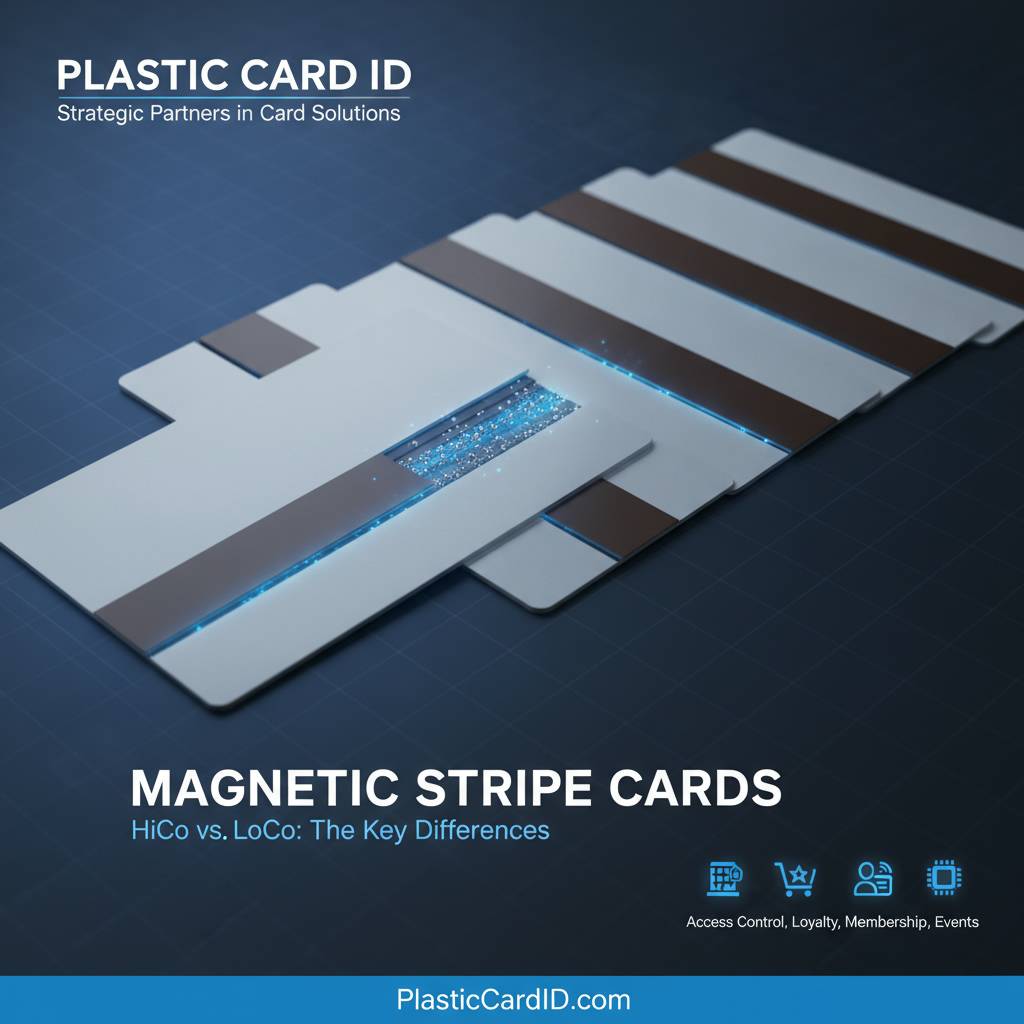
What varies by industry is not the underlying technology but the application context: what data is encoded, what readers are deployed, what the card looks like on its face, and how card issuance is managed organizationally. Understanding your industry context helps determine which configuration of HiCo card and associated equipment is the right starting point.
Retail Loyalty and Gift Card Programs
Retail is where the argument for plastic HiCo cards over paper alternatives is most quantifiable. Retailers report 35-50% increases in gift card sales when switching from paper certificates to plastic cards. Loyalty cards in wallet format have higher redemption rates than paper punch cards. The card itself - durable, professional, branded - does part of the selling work before it is ever swiped.
For gift card programs in particular, the HiCo stripe carries the card value reference number, which is then associated with a balance in the retailer's point-of-sale system. Data integrity on that stripe is not a nice-to-have - it directly affects transaction reliability. A degraded stripe on a gift card is a customer service problem that reflects on the brand, not the technology.
Employee ID and Access Control Programs
Corporate and institutional ID programs are among the most demanding applications for HiCo magnetic stripe cards. Cards are used daily, often multiple times per day, passed through readers repeatedly, stored in badge holders, and expected to function reliably for the full term of an employee's tenure. The 4,000 Oe encoding strength of HiCo is what makes that durability expectation realistic.
Many access control programs pair HiCo magnetic stripe cards with proximity or RFID technology, creating combination credentials that work across both legacy magnetic stripe readers and newer contactless infrastructure. This combination approach is particularly common in campus environments, healthcare facilities, and corporate campuses where reader types vary by building age and access tier.
Membership, Fitness, and Club Programs
Membership organizations - fitness studios, country clubs, professional associations, libraries, museums - rely on HiCo cards to maintain member records, track visits, and gate access to facilities or services. A membership card is also a brand artifact: it signals belonging, legitimacy, and organizational seriousness in a way that a paper card or a digital record on a phone screen does not fully replicate.
Physical cards drive retention. A cardholder who pulls a branded membership card out of their wallet is reminded of their membership, their commitment, and the organization's value every time they reach for it. That passive brand reinforcement, repeated dozens of times per week, is a meaningful driver of the engagement that keeps membership programs healthy over time.
Ready to Build Your Card Program? Contact Plastic Card ID Today
Whether you are launching a brand-new card program or scaling an existing one, the right starting point is a conversation with people who have been doing this for over 25 years and have served more than 100,000 customers along the way. HiCo magnetic stripe cards, blank CR80 stock, card printers, ribbons, cleaning supplies, card carriers, and mailing services - everything your program needs is available from a single, knowledgeable source.
Programs of 50 cards a month and programs of 50,000 cards a month get the same quality of product and the same depth of expertise. That is not a marketing promise - it is a reflection of how CPE is built to operate. Scale is not a barrier to getting the right card for the right application at the right price.
Get Expert Guidance on HiCo Cards and Card Program Setup
The variables in a card program - card type, encoding specification, printer model, ribbon format, reader compatibility - interact in ways that can produce excellent results or frustrating failures depending on how they are configured together. Getting those configurations right from the start is significantly easier with guidance from a team that has seen every combination and outcome.
Call 800.835.7919 to speak directly with the team at Plastic Card ID. There is no scripted sales process - just knowledgeable people who understand card programs and want yours to succeed. Bring your questions, your use case, your volume estimate, and your reader infrastructure details. The right recommendation follows from that conversation, not from a product catalog alone.
Order HiCo Magnetic Stripe Cards With Confidence
With over 50 million cards sold and a catalog that covers every major card format and printer brand, CPE has the depth of inventory and the practical experience to support card programs of any description. HiCo magnetic stripe cards are available in blank white, colored stock, clear, frosted, pre-printed custom designs, and combination RFID formats - all at the CR80 standard, all ready to work with your existing printer or one sourced through the same catalog.
The path from understanding what a HiCo magnetic stripe card is to running a card program that actually delivers results for your organization is shorter than most buyers expect. The technology is proven, the products are in stock, and the expertise is available to help you deploy correctly from day one.
Contact Plastic Card ID now at 800.835.7919 and let a 25-year veteran of the card industry help you build the HiCo card program your organization deserves.