Blank Plastic Cards for Photo ID Programs: Best Options
Table of Contents []
- Blank Plastic Cards for Photo ID Programs - Plastic Card ID
- Why Blank CR80 Cards Are the Workhorse of In-House ID Programs
- Understanding the Full Card Catalog for Photo ID Applications
- Card Printers That Pair Perfectly with Blank ID Card Stock
- Building a Photo ID Program That Scales
- Industries That Rely on Blank Plastic Cards for Photo ID Programs
- Frequently Asked Questions About Blank Plastic Cards for Photo ID Programs
- Partner with Plastic Card ID for Your Photo ID Card Program
Blank Plastic Cards for Photo ID Programs - Plastic Card ID
What separates a credible organization from one that feels improvised? Often, it comes down to something as tangible as the card in someone's hand. Blank plastic cards for photo ID programs are the foundation of professional identity management - and getting them right matters more than most people realize until they've done it wrong first.
Plastic Card ID has supplied more than 50 million plastic cards to over 100,000 customers across the United States. That's not a boast - it's context. When you work with a team that has seen virtually every card program configuration imaginable, across industries from healthcare to hospitality to higher education, you benefit from that accumulated knowledge every time you place an order.
| Card Type | Best For | Key Feature |
|---|---|---|
| Blank CR80 PVC Cards | Standard photo ID programs | ISO 7810 compliant, 30 mil thickness |
| Magnetic Stripe Cards (HiCo) | Access control, employee ID | High-coercivity, durable encoding |
| RFID Smart Cards | Contactless ID and access | MIFARE DESFire capable |
| Proximity Cards | Building access, campus ID | Contactless reader compatible |
| Clear and Frosted Cards | Premium visual ID programs | Distinctive, professional appearance |
Why Blank CR80 Cards Are the Workhorse of In-House ID Programs
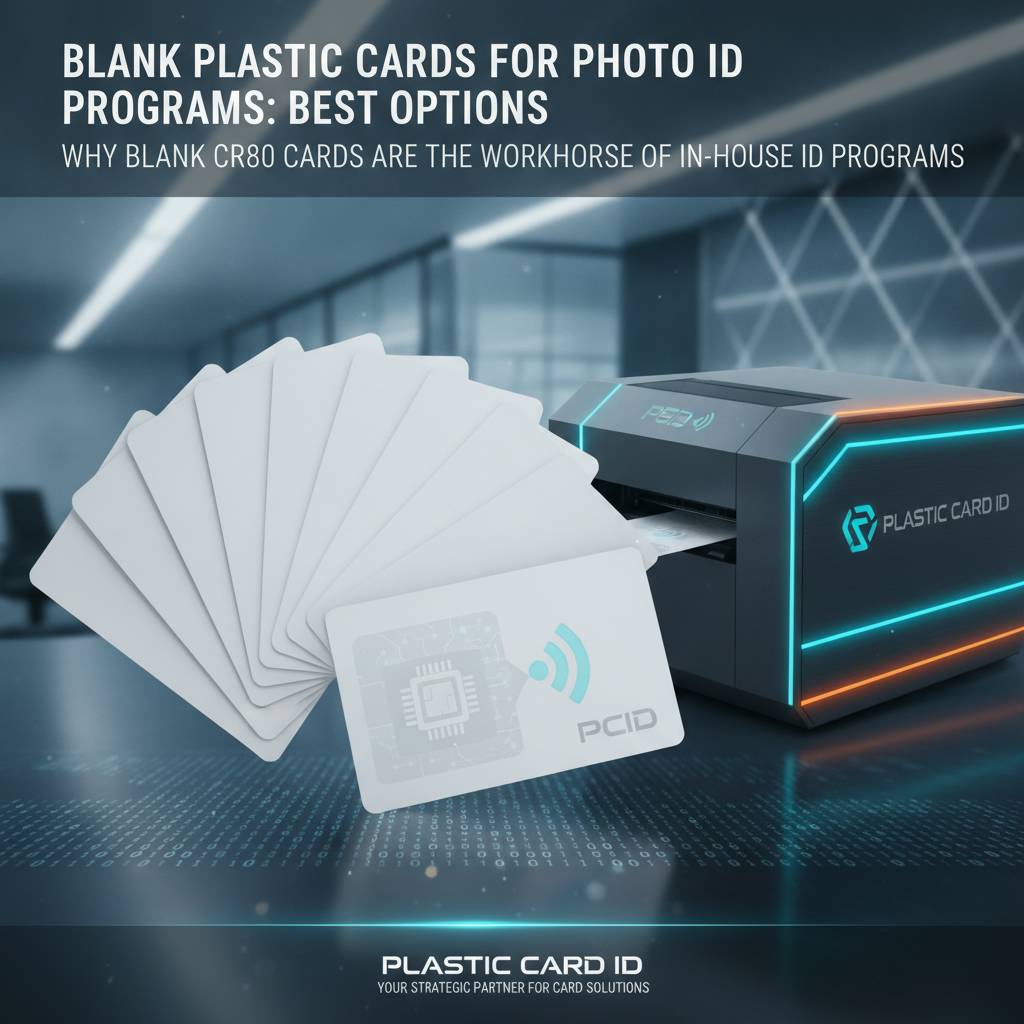 There's a reason the CR80 format has become the universal standard. At 3.375 inches by 2.125 inches and precisely 30 mils thick, these cards fit every standard wallet slot, every card printer tray, and every ID badge holder on the market. Consistency matters enormously in card programs, and blank CR80 PVC cards deliver it reliably every single time.
When you purchase blank cards and print them in-house, you own the process entirely. Need to issue a replacement immediately? Done. Want to update the design next quarter without scrapping pre-printed inventory? Easy. The flexibility that comes with maintaining your own card printer and a supply of blank stock is genuinely difficult to overstate once you've experienced it firsthand.
The ISO 7810 Standard and Why It Matters
ISO 7810 is the international standard that defines the physical dimensions of identification cards. When a card meets this standard, it works everywhere - in printers, readers, badge holders, and wallets - without friction. Blank PVC cards from CPE are fully ISO 7810 compliant, ensuring seamless compatibility across your entire card infrastructure.
This isn't a small detail. Organizations that source cards from non-compliant suppliers discover the problem at the worst possible moment - when cards jam in printers, buckle in readers, or simply look off compared to industry norms. Compliance is a baseline requirement, not a premium feature.
30 Mil Thickness and Card Durability
Thirty mil is the standard thickness for CR80 cards - not because it's arbitrary, but because decades of real-world use have validated it. Cards at this thickness resist bending under normal use, survive in wallets and pockets, and carry printed graphics without cracking or peeling over time. Durability is built into the specification itself.
Thinner cards - sometimes sold as budget alternatives - flex noticeably, look cheap when handed over, and can cause printer feed issues. The difference in cost per card rarely justifies the difference in perception and performance. When your ID program represents your organization, card stock is not the place to cut corners.
In-House Printing vs. Pre-Printed Cards
Organizations running ongoing ID programs - schools, hospitals, corporate campuses, membership clubs - almost universally benefit from in-house printing. The math is simple: once you have a card printer, your per-card cost drops dramatically compared to ordering custom-printed cards for every new hire, student, or member. Blank card stock combined with an in-house printer is the most cost-effective long-term model for programs issuing cards regularly.
Pre-printed custom cards make excellent sense for large one-time runs - events, promotional campaigns, or initial program launches. For ongoing issuance, though, blank cards give you speed, control, and economy that pre-printed orders simply cannot match. CPE can walk you through both options and help you determine which fits your specific situation.
Understanding the Full Card Catalog for Photo ID Applications
Not every ID program has identical requirements. A gym issuing member photo IDs has different needs than a university running a campus-wide access credential program or a corporation managing contractor badges across multiple facilities. The right card stock depends on what the card needs to do beyond simply displaying a face and a name.
This is why a broad catalog matters. Plastic Card ID stocks everything from pure blank white PVC cards to sophisticated smart chip cards capable of contactless authentication. Understanding what's available - and what each type adds to a photo ID program - is the starting point for building a program that actually works at scale.
Magnetic Stripe Cards for Photo ID Programs
Magnetic stripe cards add a layer of encoded functionality to a standard photo ID. A card can display an employee's photo while simultaneously encoding an employee number on the magnetic stripe for clock-in systems, cafeteria accounts, or library access. HiCo (high-coercivity) magnetic stripe cards are the standard for most business and institutional ID programs because they resist accidental erasure far better than LoCo alternatives.
LoCo cards still have their place in short-term applications - hotel room keys, event credentials, temporary visitor passes - where longevity matters less than cost per unit. For permanent or long-term ID programs, HiCo is almost always the better investment. The difference in durability is significant enough that most experienced card program managers specify HiCo by default.
Contact CPE at 800.835.7919 to discuss whether HiCo or LoCo magnetic stripe cards are the right specification for your photo ID program's unique requirements.
RFID and Proximity Cards for Advanced ID Programs
When a photo ID also needs to function as an access credential for doors, elevators, parking gates, or time-and-attendance systems, RFID and proximity cards are the appropriate solution. These cards contain an embedded chip and antenna that communicate wirelessly with card readers - no swipe required. Contactless technology dramatically improves throughput in high-volume access points like building entrances during shift changes.
MIFARE DESFire cards represent the current high-security standard in contactless smart card technology, offering encryption and multi-application capability that basic proximity cards cannot match. For organizations where security is paramount, specifying the right RFID standard upfront avoids costly infrastructure replacements later.
Clear, Frosted, and Specialty Card Stock
Standard white PVC is the most common blank card substrate - but it's not the only option. Clear and frosted cards produce striking visual effects when printed on, allowing background imagery to show through or creating a sophisticated matte aesthetic that immediately distinguishes a card program from the ordinary. Premium card stock signals organizational quality and permanence in a way that generic white cards simply cannot.
Specialty options extend further into custom die-cut shapes and luxury metal cards in stainless steel, brass, and gold for applications where the card itself is meant to impress. Executive membership cards, VIP credentials, and premium club IDs benefit enormously from materials that communicate value at first touch. The card you hand someone shapes how they perceive the organization behind it.
Card Printers That Pair Perfectly with Blank ID Card Stock
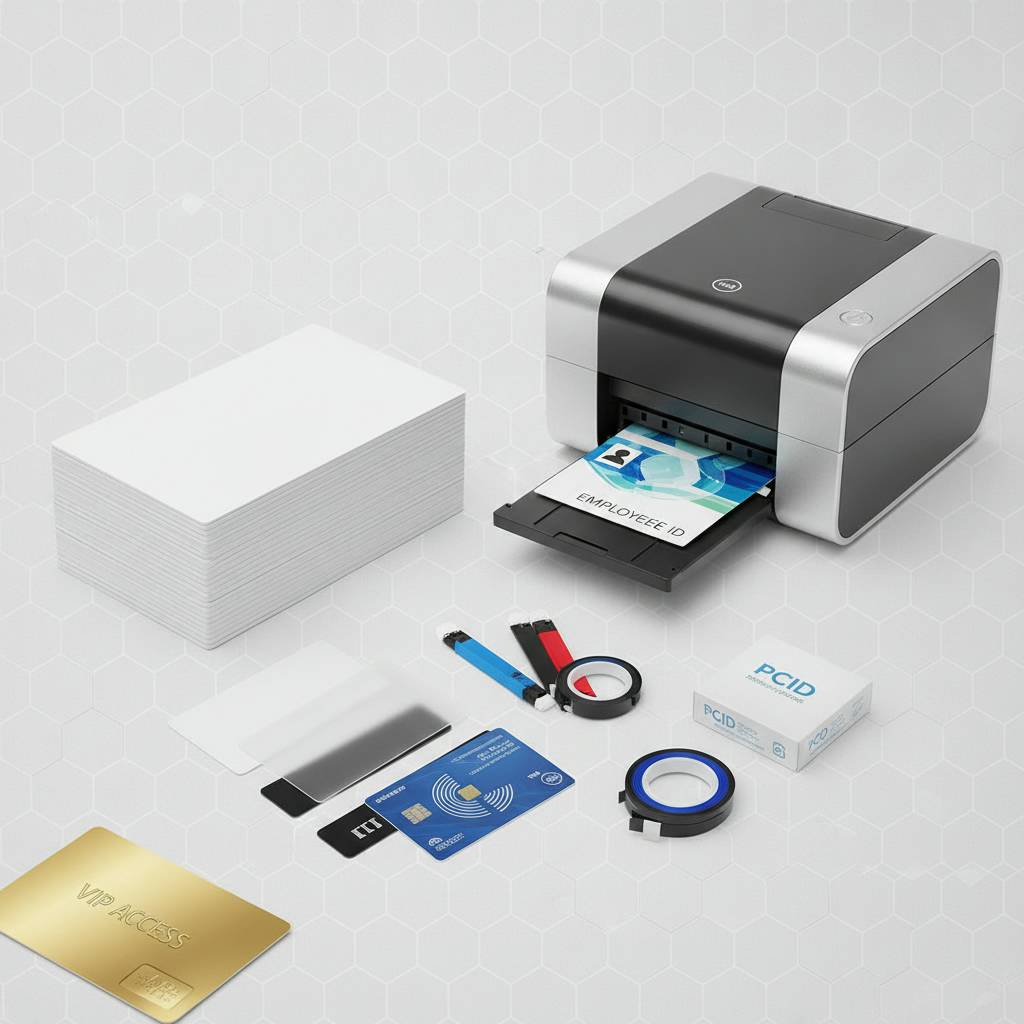 A photo ID program requires two things working in harmony: quality card stock and a reliable printer. Plastic Card ID carries a complete lineup of card printers from three of the industry's most respected manufacturers - Evolis, Zebra, and Fargo. Matching the right printer to your card volume and feature requirements is as important as selecting the right card stock.
Low-volume programs issuing fewer than 500 cards per month have different printer needs than high-throughput operations printing thousands of cards weekly. Entry-level desktop printers handle small programs with ease and minimal investment. Mid-range and enterprise printers add features like dual-sided printing, lamination, encoding capabilities, and high-capacity hoppers for uninterrupted large runs.
Evolis Card Printers
Evolis printers are widely regarded as the benchmark for reliability and print quality in the desktop card printer category. Their product range spans from the compact Primacy series for small programs to the Avansia for retransfer printing that produces exceptional edge-to-edge print quality on specialty card substrates including clear and frosted cards. Evolis printers integrate seamlessly with standard blank CR80 PVC cards and the full range of specialty card stocks.
Retransfer printing technology, available in higher-end Evolis models, prints the image onto a transparent film that is then thermally bonded to the card surface. This produces sharper images, true over-the-edge printing, and significantly better durability than direct-to-card printing - a meaningful upgrade for programs where card longevity and appearance are priorities.
Zebra and Fargo Printers for High-Volume Programs
Zebra card printers are the workhorses of high-volume institutional programs - universities, large hospitals, corporate campuses, and government agencies that need throughput without sacrificing reliability. Zebra's ZC and ZXP series offer encoding options for magnetic stripe, smart chip, and RFID alongside fast print speeds that keep pace with demanding issuance schedules. Fargo printers from HID Global are particularly well-regarded in security-sensitive environments where card authentication features are built into the hardware itself.
Choosing between Zebra and Fargo often comes down to specific encoding requirements and existing infrastructure. Both brands produce printers capable of handling the full range of blank card stock options available through CPE, ensuring that whatever card type your program requires, there's a printer in the lineup that handles it efficiently.
Printer Ribbons, Cleaning Kits, and Supplies
A card printer is only as good as the consumables running through it. Using the correct ribbon for your specific printer model is non-negotiable - off-brand or incorrectly specified ribbons can degrade print quality, damage print heads, and void manufacturer warranties. Sourcing ribbons and cleaning kits from the same supplier as your card stock simplifies procurement and ensures compatibility across everything in your program.
Plastic Card ID stocks printer ribbons, cleaning kits, card carriers, and card sleeves as part of a genuinely comprehensive supply chain for card programs. When your ribbon supply runs low or your cleaning cycle is due, everything you need is available from a single trusted source - no hunting across multiple vendors, no compatibility guesswork.
Building a Photo ID Program That Scales
The difference between a card program that runs smoothly and one that creates constant friction is almost always planning. Organizations that think carefully about volume, card types, encoding needs, and issuance workflows before committing to equipment and stock consistently outperform those that improvise. A well-structured photo ID program is a genuine operational asset - not just an administrative function.
Plastic Card ID has helped organizations build card programs starting at 50 cards per month and scaling to tens of thousands. Both ends of that spectrum require thoughtful setup, but the considerations differ meaningfully. Small programs need simplicity and low per-card cost. Large programs need throughput, consistency, and supply chain reliability. CPE brings 25 years of experience to help you plan correctly from the start.
Assessing Your Card Volume and Issuance Frequency
Volume and frequency are the two primary variables that drive card program design. A company issuing 20 employee badges per month has fundamentally different needs than a university processing thousands of new student IDs at the start of each semester. Accurately forecasting your issuance volume prevents both underinvestment and overinvestment in equipment and stock quantities.
Buying blank cards in larger quantities reduces per-card cost meaningfully - but only if your storage and usage patterns justify the volume. CPE can help you model the economics of different order quantities against your realistic issuance projections, ensuring your per-card cost is optimized without tying up budget in excess inventory.
Encoding Requirements and System Integration
Many photo ID programs today do double or triple duty - the card displays identifying information visually while also encoding data for one or more back-end systems. Before ordering card stock, it's essential to know exactly what your card readers expect. Magnetic stripe track format, RFID frequency, chip type, and data format must all align between your cards and your infrastructure. Mismatched specifications are the most common and costly mistake in new card program setup.
This is where working with an experienced supplier rather than a commodity vendor makes a tangible difference. Plastic Card ID can help you verify encoding specifications before you commit to stock, preventing the frustration of receiving cards that don't work with your existing readers or access control systems.
Card Program Supplies Checklist
Successful photo ID programs require more than just card stock and a printer. The full supply picture includes consumables, accessories, and sometimes card distribution infrastructure. Getting all of it right from the beginning prevents the operational gaps that derail programs after launch.
- Blank CR80 PVC card stock in appropriate quantity
- Card printer matching your volume and feature requirements
- Printer ribbons (YMCKO or monochrome, depending on print requirements)
- Cleaning kits for regular printer maintenance cycles
- Card sleeves or carriers for card protection and distribution
- Lanyards, badge reels, or badge holders for card display
- Magnetic stripe, RFID, or smart chip encoding capability if required
- Card affixing and mailing services for distributed issuance programs
Every item on this list is available through Plastic Card ID, making the entire supply chain for your photo ID program manageable through a single relationship rather than fragmented across multiple vendors. Simplicity in procurement translates directly to reliability in operations.
Industries That Rely on Blank Plastic Cards for Photo ID Programs
Photo ID programs built on blank plastic card stock serve an extraordinary range of industries and organizational types across the United States. The common thread isn't industry - it's the need to establish identity, control access, or demonstrate membership and affiliation with something tangible that paper cannot credibly provide. Plastic ID cards signal legitimacy and permanence in a way that even the most professionally printed paper badge simply cannot replicate.
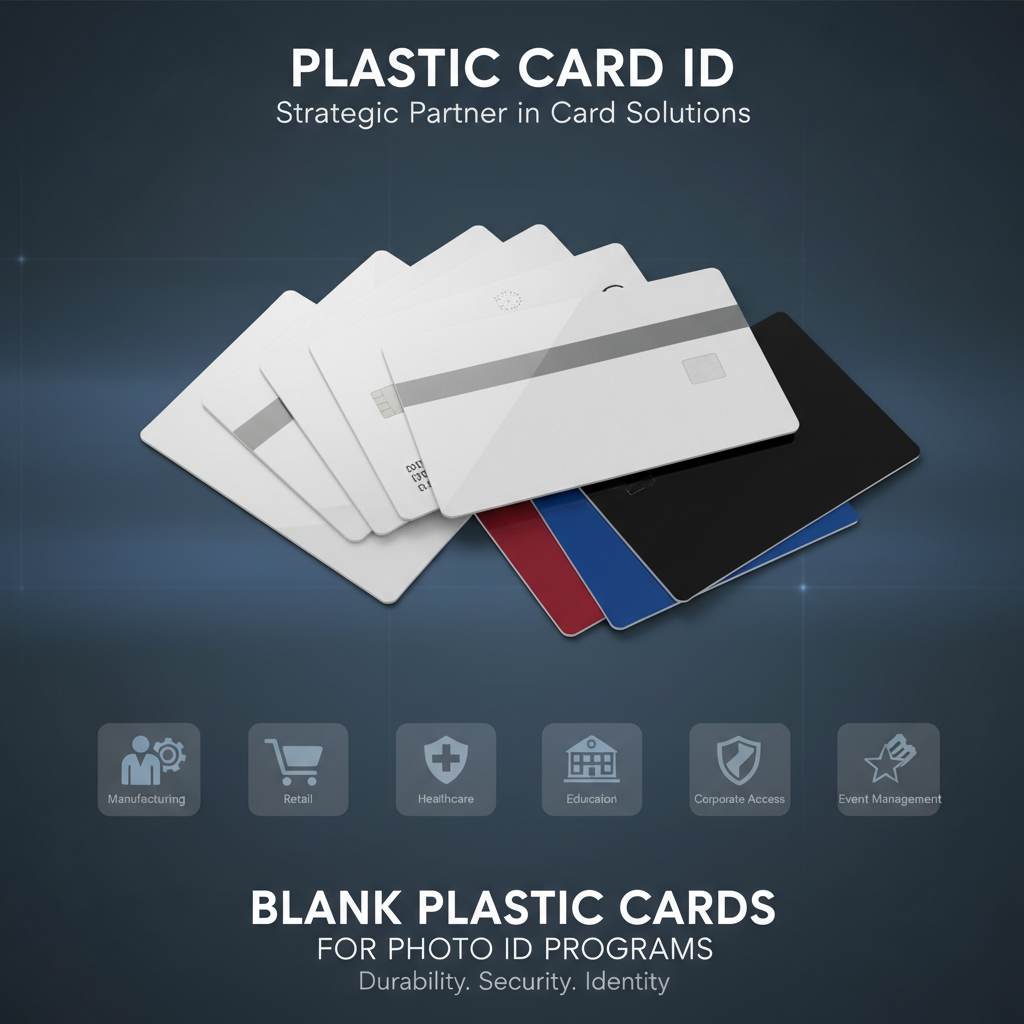
From the card stock perspective, the underlying needs across industries translate into recognizable patterns. Healthcare needs photo ID combined with access control. Education needs high-volume student issuance with optional meal plan and library encoding. Corporate environments need employee badging with access tiers. Understanding these patterns is part of what CPE brings to every client relationship.
Healthcare and Hospital ID Programs
Hospitals and healthcare systems operate some of the most complex ID card programs in existence. Staff IDs must display photos, roles, and department information while often encoding access credentials for secure areas, time-and-attendance systems, and medication dispensing equipment. Healthcare photo ID programs demand card stock and encoding specifications that perform consistently in high-use, high-stakes environments where card failure is not an acceptable outcome.
Visitor and contractor ID programs within healthcare settings add another layer of complexity, requiring issuance flexibility and often time-limited access encoding. Blank card stock with in-house printing capability gives hospital security and HR departments the agility to issue, replace, and revoke credentials on demand without waiting for external print runs.
Reach the team at CPE directly at 800.835.7919 to discuss card specifications for healthcare ID programs, including encoding options compatible with major access control and time-and-attendance systems.
Education and Campus ID Programs
Universities, colleges, community colleges, and K-12 school districts are among the largest consumers of blank plastic card stock for photo ID programs in the country. Student IDs that double as library cards, dining hall credentials, and building access passes require robust multi-encoding capability combined with the volume issuance throughput to process thousands of cards at semester start. Education card programs benefit enormously from the economics of blank card stock - lower per-card cost and in-house flexibility are essential for institutions managing tight operational budgets.
Faculty and staff IDs in educational settings often carry elevated access encoding compared to student cards, requiring careful card specification and printer configuration to ensure the right credential is issued to the right person every time. Plastic Card ID has supported educational institutions of every scale in building card programs that handle this complexity reliably.
Corporate, Contractor, and Event ID Programs
Corporate environments running multi-site operations with staff, contractors, and visitors need ID card programs that are simultaneously consistent across locations and flexible enough to accommodate varying access levels. Blank card stock with in-house printing satisfies both requirements - every card produced adheres to the same physical standard while encoding and visual design can be customized per role or location. Contractor and visitor badge programs particularly benefit from the rapid issuance capability that blank card stock with an on-site printer provides.
Event credentials represent a specialized application - high volumes, often tight timelines, and varying levels of access encoded into a card that also serves as a visual identifier at checkpoints. Whether the event is a corporate conference, a trade show, or a large venue attraction, blank card stock and the right printer combination can produce professional credentials on demand and at scale.
Frequently Asked Questions About Blank Plastic Cards for Photo ID Programs
After working with over 100,000 customers, the team at Plastic Card ID has heard virtually every question about blank plastic cards for photo ID programs. The ones that come up most consistently tend to reflect real decision points - moments where the right answer meaningfully affects how a card program performs. Here are the most important ones, answered plainly.
What is the difference between HiCo and LoCo magnetic stripe cards?
HiCo (high-coercivity) magnetic stripe cards require a stronger magnetic field to encode but are significantly more resistant to accidental erasure from everyday magnetic sources - phone cases, other cards, bag clasps. For permanent employee ID cards, student cards, or any card intended for extended use, HiCo is the standard recommendation. LoCo cards are appropriate for short-term applications like hotel keys or single-event credentials where cost per card matters more than longevity.
The choice between HiCo and LoCo should be made in the context of both your card reader infrastructure and your issuance model. Most modern card readers handle both standards, but it's worth confirming before committing to a large order. CPE can verify compatibility with your existing reader specifications.
How many cards should I order to start?
Minimum order quantities for blank card stock are designed to accommodate programs of virtually any size. That said, ordering in larger quantities reduces your per-card cost meaningfully - the economics favor planning ahead rather than buying in small increments. For most organizations, estimating six to twelve months of projected issuance and ordering accordingly represents the right balance between cost efficiency and inventory management.
Consider also your storage environment. Blank card stock stores well in controlled indoor conditions, so a year's supply on hand is entirely practical for most programs. Where organizations get into trouble is ordering far more than they can realistically use before card technology or program design evolves. A conversation with CPE about your realistic issuance projections is always worth the time before committing to a quantity.
Can blank cards be used with any card printer?
Standard blank CR80 PVC cards are compatible with virtually all desktop card printers - Evolis, Zebra, Fargo, and most other major brands. Specialty card substrates like clear, frosted, or RFID cards have more specific printer compatibility requirements and should be matched to your printer model before ordering. Not every printer handles every card type, and mismatches can result in feed errors, poor print quality, or card damage.
Plastic Card ID can cross-reference any card type in the catalog against your existing printer model to confirm compatibility before you order. For organizations still selecting a printer, CPE can recommend the right model for your specific card type, volume, and encoding requirements from the complete Evolis, Zebra, and Fargo lineup.
Partner with Plastic Card ID for Your Photo ID Card Program
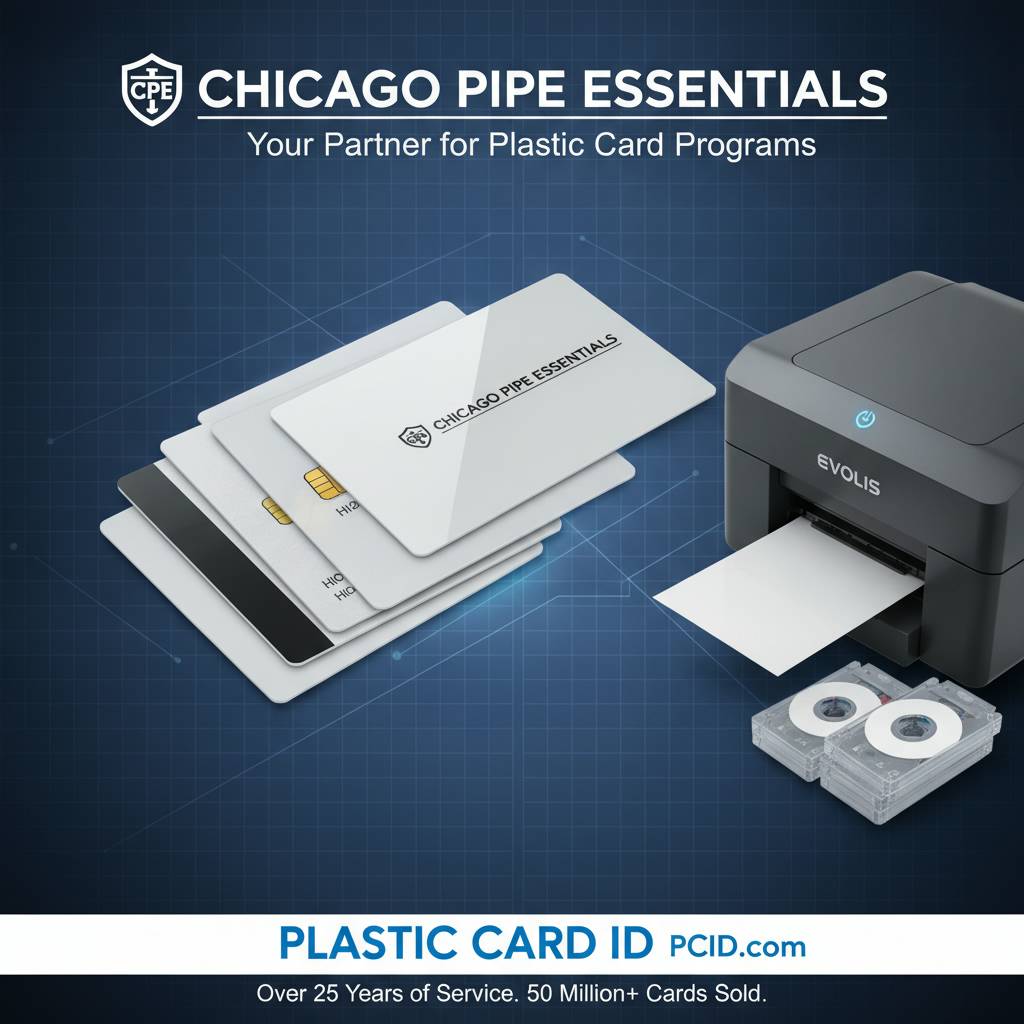 Twenty-five years of serving American businesses and organizations means Plastic Card ID has encountered virtually every variation of photo ID program challenge - and built the expertise, catalog, and supply chain to solve them reliably. This is what a true card program partner looks like: not just a supplier who ships boxes, but a knowledgeable team that helps you build something that works the first time and keeps working as your needs evolve.
From the simplest blank white PVC card stock for a small in-house ID program to sophisticated RFID smart card programs with multi-application encoding for large institutional operations, the full solution is available through a single supplier relationship. Blank cards, printers, ribbons, cleaning supplies, card accessories, and mailing services - everything your photo ID program needs, from one source that has earned the trust of over 100,000 customers across the United States.
Ready to build or upgrade your photo ID card program? Contact Plastic Card ID today at 800.835.7919 and speak with a card program specialist who will take the time to understand your specific requirements and recommend exactly the right solution.
Previous Page