Blank Plastic Cards for Time and Attendance Systems
Table of Contents []
- Blank Plastic Cards for Time and Attendance Systems - Plastic Card ID
- Why the Card Type You Choose Defines Your Whole System
- Understanding CR80 Blank PVC Cards - The Standard That Powers Everything
- Card Printers That Bring Your Time and Attendance Cards to Life
- Frequently Asked Questions About Blank Cards for Time and Attendance
- Specialty Card Options That Add Functionality Beyond Basic Time Tracking
- Building a Reliable Card Program with Plastic Card ID
Blank Plastic Cards for Time and Attendance Systems - Plastic Card ID
Every swipe, tap, or scan at a time clock tells a story - who showed up, when they clocked in, and when they left. That story is only as reliable as the card behind it. Blank plastic cards built specifically for time and attendance systems are the unsung workhorses of workforce management, and getting them right matters more than most operations managers initially realize.
Plastic Card ID has supplied blank and custom plastic cards to businesses across the United States for over 25 years, serving more than 100,000 customers and delivering upwards of 50 million cards. That kind of track record doesn't happen by accident - it happens because the right card, matched to the right system, changes how smoothly an entire operation runs.
| Card Type | Common Encoding | Best Use Case | Compatibility |
|---|---|---|---|
| Blank PVC CR80 | None (print-ready) | Visual ID barcode print | Most card printers |
| HiCo Magnetic Stripe | High Coercivity (2750 Oe) | Frequent-swipe time clocks | Mag stripe readers |
| LoCo Magnetic Stripe | Low Coercivity (300 Oe) | Low-volume environments | LoCo readers |
| Proximity (Prox) Card | 125kHz RFID | Contactless clock-in | HID-compatible readers |
| Smart Chip Card | ISO 7816 / MIFARE | Multi-function workforce ID | Smart card readers |
Why the Card Type You Choose Defines Your Whole System
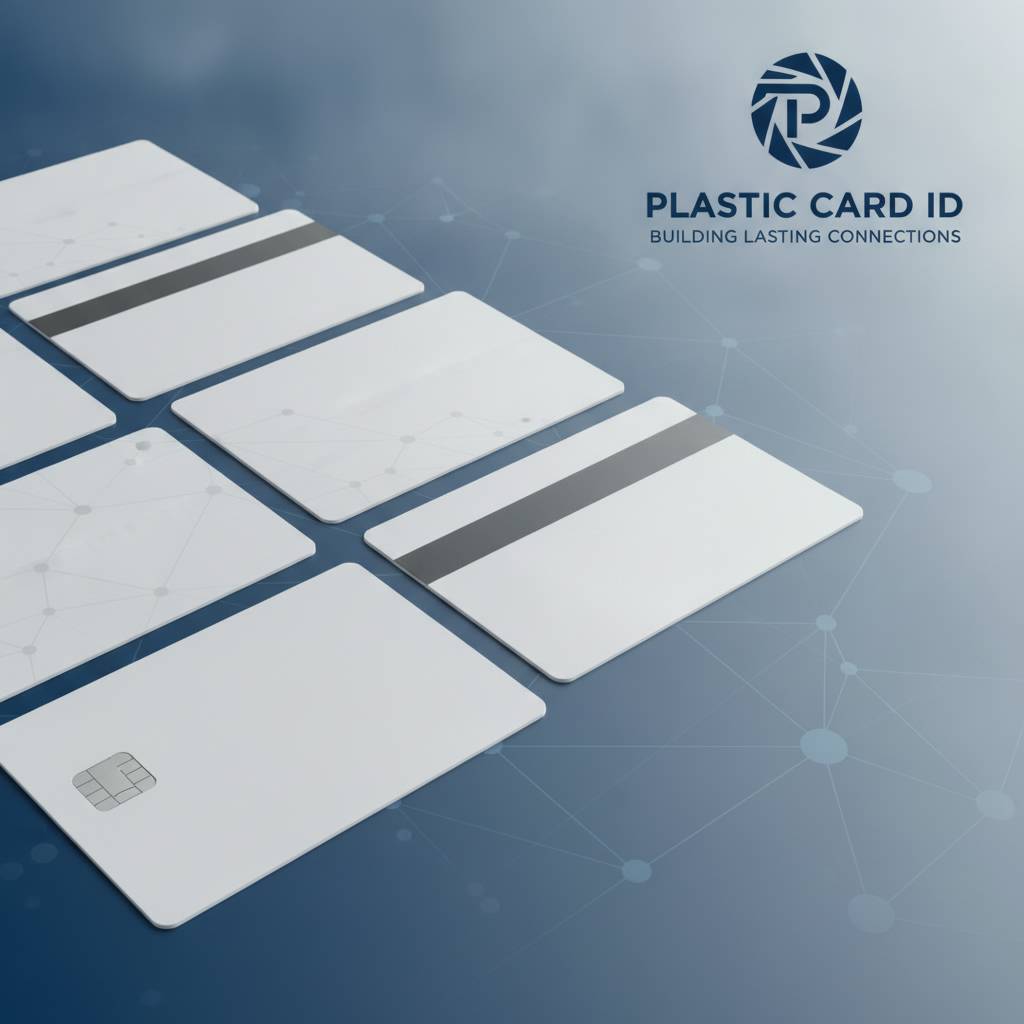 It's a mistake that costs companies time and money every year: purchasing the wrong blank card format for their time and attendance hardware. A LoCo card in a HiCo reader, or a proximity card in a system that expects a barcode - these mismatches create read errors, frustrated employees, and inflated support tickets. Choosing the right card from the start is not a minor procurement detail; it's a foundational operational decision.
The good news is that once you understand your system's requirements, sourcing the right blank cards becomes straightforward - especially when you work with a supplier who actually knows the difference between card technologies and doesn't just sell generic "plastic cards."
Magnetic Stripe Cards and Time Clock Compatibility
Magnetic stripe technology remains dominant in workforce time tracking precisely because it's proven, affordable, and fast. HiCo (high coercivity) magnetic stripe cards - encoded at 2750 Oersteds - are the industry standard for time and attendance environments. Their resistance to accidental demagnetization makes them the smarter choice for employees who carry cards alongside phones, keys, and other magnetic-field-generating items.
LoCo cards, encoded at 300 Oe, are less resistant to interference but are used in controlled settings where demagnetization risk is minimal. If your time clocks are in a factory, warehouse, or outdoor setting, HiCo is almost always the wiser specification. CPE carries both formats in bulk quantities to accommodate any scale of workforce program.
Proximity Cards for Contactless Workforce Management
Proximity cards operate at 125kHz and allow employees to clock in without physically swiping - a feature that has become increasingly valuable in high-throughput environments like distribution centers, hospitals, and manufacturing floors. The card simply needs to come within a few inches of the reader, which means faster throughput at shift changes and fewer mechanical failures over time.
These cards are also dual-functional: they can serve as both time and attendance credentials and access control tokens simultaneously. One card unlocks the door and logs the clock-in. That kind of operational efficiency is exactly why proximity cards are growing in popularity across mid-size to enterprise-level organizations that want to consolidate their badge infrastructure.
Smart Chip Cards for Advanced Workforce Systems
Organizations running sophisticated workforce platforms - particularly those integrating time tracking with HR systems, payroll, and access control - increasingly turn to smart chip cards. These ISO 7816-compliant cards carry an embedded microprocessor capable of storing employee data, biometric references, and encrypted credentials directly on the card itself.
MIFARE DESFire variants offer contactless smart card functionality, making them compatible with modern NFC-enabled time clocks. If your organization is scaling or planning to upgrade your systems in the next few years, investing in smart chip-compatible blank cards now can prevent a costly mid-cycle card replacement. Call 800.835.7919 to discuss which chip specification aligns with your current hardware.
Understanding CR80 Blank PVC Cards - The Standard That Powers Everything
CR80 is not just a card size - it's the ISO 7810 standard that defines the physical dimensions (3.375" x 2.125") and thickness (30 mil) used in virtually every professional card reader on the market. When a time clock manufacturer builds a card slot, they build it for CR80. When an HR department orders ID cards, CR80 is the format. This is the universal card standard, and blank CR80 PVC cards are the raw material behind millions of workforce programs.
What makes blank CR80 cards particularly valuable for time and attendance programs is design flexibility combined with cost efficiency. An organization can print employee photos, names, barcodes, or QR codes in-house using a card printer, then immediately deploy the card to the time clock system. No minimum order from a printer, no waiting weeks for production - just on-demand card issuance at a per-card cost that decreases dramatically at volume.
Why Blank Cards Beat Pre-Printed Cards for Dynamic Workforces
Businesses with high employee turnover - think hospitality, logistics, construction, or retail - need to issue new cards quickly and frequently. Pre-ordering custom-printed cards with employee data means waiting for production runs and dealing with leftover inventory when employees leave. Blank PVC cards paired with an in-house card printer solve this entirely.
The blank card becomes whatever it needs to be at the moment of printing. Barcode for the time clock. Photo for visual identification. Department color coding. Emergency contact printed on the back. One blank card format, infinite configuration possibilities - and total control over your program without relying on an outside vendor every time something changes.
Card Thickness and Durability for Industrial Environments
Standard 30 mil CR80 cards are durable enough for most office and commercial environments. However, organizations in heavy industrial settings - steel plants, chemical processing facilities, construction sites - sometimes benefit from thicker card stock or laminate overlaminates that protect printed surfaces from abrasion, chemical exposure, or moisture.
CPE stocks standard 30 mil cards and can advise on protective options like holographic overlaminates or durable card carriers that extend the working life of cards in demanding conditions. A card that fails after two weeks doesn't just cost money in replacement - it disrupts the entire attendance record for that employee during the gap.
Bulk Ordering and Per-Card Cost Economics
The economics of blank plastic cards for time and attendance scale remarkably well. Organizations managing 50 employees might order 500 cards annually to account for replacements and new hires. A company with 2,000 employees might order 5,000-10,000 cards per year. At each tier, the per-card cost drops significantly, and having stock on hand means zero delay when a new employee starts on Monday morning.
- Small teams (under 50 employees): Order in packs of 100-500 for flexibility
- Mid-size organizations (50-500 employees): Case quantities of 500-2,500 provide strong per-card pricing
- Large enterprises (500 employees): Bulk orders of 5,000-50,000 unlock the best economics
- High-turnover industries: Build a standing inventory buffer of 20-30% above current headcount
- Multi-location businesses: Standardize on one card format to simplify procurement across sites
Card Printers That Bring Your Time and Attendance Cards to Life
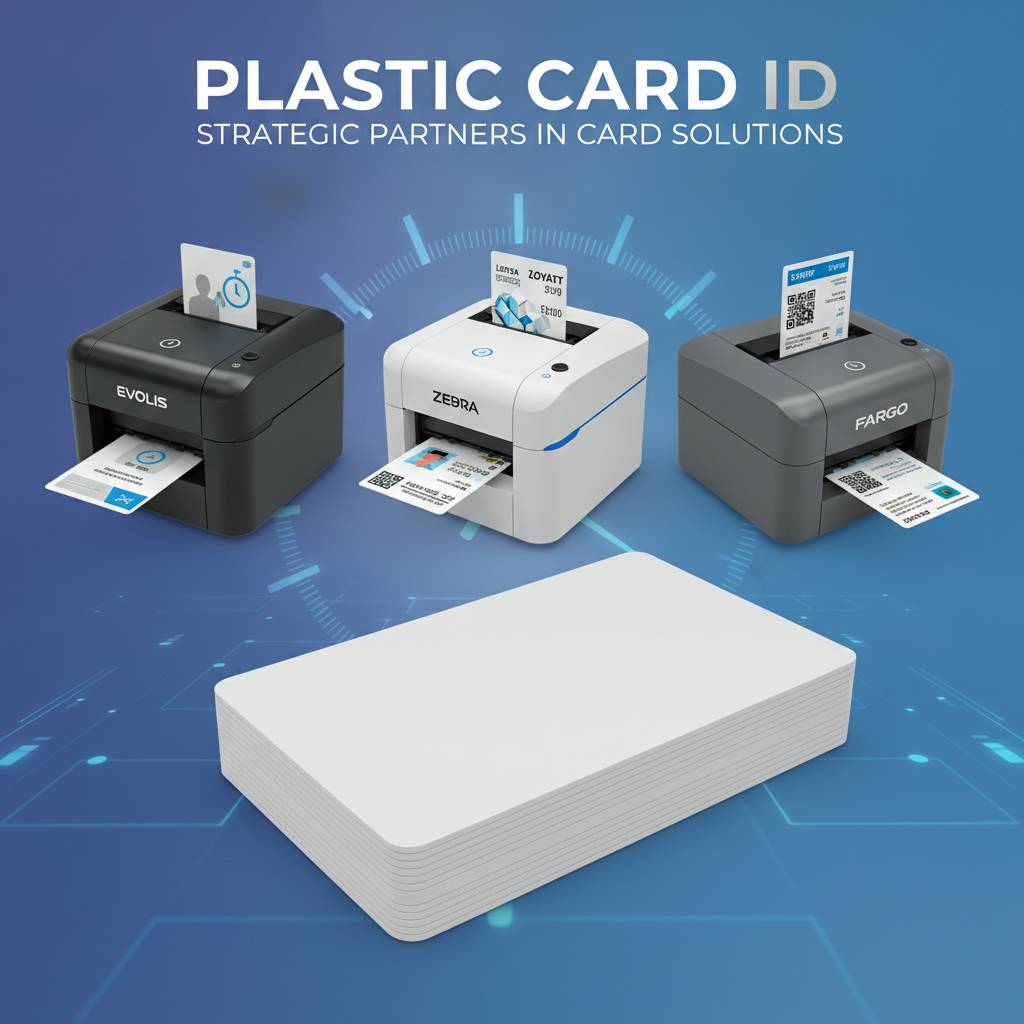 A blank card is only half the equation. For organizations doing in-house card issuance, the card printer is what transforms a blank CR80 into a functional, professional employee credential. Plastic Card ID carries a full lineup of card printers from three of the most respected names in the industry: Evolis, Zebra, and Fargo. Each brand brings specific strengths to the table depending on your volume, feature requirements, and budget.
The right printer-card combination is what separates a professional time and attendance card program from one that produces faded, peeling, or misread cards within months. Investing in quality at the printer and card level pays dividends in system reliability and employee satisfaction.
Evolis Card Printers for Workforce Programs
Evolis printers are known for their user-friendly design, compact footprint, and reliable single-sided or dual-sided printing capabilities. Models like the Evolis Primacy and Zenius are popular among HR departments that issue cards on demand without requiring dedicated print technicians. Setup is intuitive, maintenance is minimal, and print quality is consistently sharp.
For time and attendance programs where the card needs a printed barcode or QR code that a scanner must reliably read, print precision matters. Evolis printers deliver high-resolution output that meets barcode scanning requirements without the need for specialized calibration. Contact CPE at 800.835.7919 to explore which Evolis model fits your issuance volume.
Zebra and Fargo for High-Volume Issuance
Zebra card printers, particularly the ZC series, are built for organizations that need to produce large quantities of cards quickly and consistently. Their robust build quality and high ribbon capacity make them ideal for initial deployments of hundreds or thousands of cards, or for organizations running continuous issuance programs at scale.
Fargo printers - now part of the HID Global family - bring enterprise-grade security features including holographic lamination and smart card encoding capabilities. For organizations using their time and attendance cards as multi-function credentials (access control, cafeteria payment, locker access), Fargo's encoding options make it the printer of choice for complex card programs.
Ribbons, Cleaning Kits, and Ongoing Supplies
A printer without a reliable ribbon supply is a procurement headache waiting to happen. Plastic Card ID stocks compatible ribbons for Evolis, Zebra, and Fargo printers, alongside cleaning kits that extend printer life and maintain print quality over time. Neglecting printer cleaning is one of the most common causes of premature print head failure and degraded barcode readability.
Card cleaning kits typically include cleaning cards, cleaning swabs, and cleaning solution - all standardized for the specific printer model. Establishing a regular cleaning schedule, typically every 1,000-2,000 prints, keeps output quality consistent and protects the hardware investment. CPE bundles ribbon and cleaning supply programs for clients who want to simplify ongoing procurement.
| Printer Brand | Best For | Volume Range | Encoding Options |
|---|---|---|---|
| Evolis | On-demand HR issuance | Low to medium | Mag stripe, smart chip |
| Zebra | High-volume batch printing | Medium to high | Mag stripe, RFID |
| Fargo (HID) | Secure enterprise credentials | Medium to enterprise | Smart chip, MIFARE, laminate |
Frequently Asked Questions About Blank Cards for Time and Attendance
The questions that arrive at Plastic Card ID from time and attendance program managers tend to follow predictable patterns - which makes sense, because the same challenges show up across industries. Here are the most common questions, answered directly and practically.
What is the difference between HiCo and LoCo magnetic stripe cards?
HiCo (high coercivity) cards are encoded at 2750 Oersteds, making them resistant to demagnetization from proximity to phones, keys, and other everyday magnetic sources. LoCo (low coercivity) cards are encoded at 300 Oe and are more easily erased, which is why they're used in lower-security, controlled environments. For time and attendance applications in real-world employee environments, HiCo is almost universally the correct choice.
The practical difference shows up in card lifespan. A LoCo card carried in a wallet alongside a hotel key card or a phone might fail within weeks, causing missed clock-ins and data gaps. A HiCo card in the same wallet performs reliably for years. The cost difference between HiCo and LoCo is negligible - the reliability difference is substantial.
Can I use proximity cards with my existing time clock system?
In most cases, yes - provided your time clocks have proximity readers installed or can be upgraded to support them. The vast majority of modern time and attendance hardware supports 125kHz proximity cards, which is the standard format offered by CPE. Before ordering, confirm your reader's frequency and protocol compatibility (HID, EM, or other standard) to ensure seamless integration.
Proximity cards offer a meaningful advantage in environments where hygiene, speed, or harsh conditions make physical swiping impractical. A quick tap replaces a swipe, reducing wear on both the card and the reader over thousands of daily interactions. Call 800.835.7919 if you need help matching a proximity card specification to your current hardware setup.
How many cards should I keep in inventory at any given time?
A practical rule of thumb for time and attendance programs: maintain an inventory buffer equal to at least 20% of your active workforce, plus a 90-day new-hire projection based on your historical hiring rate. This prevents stock-outs during onboarding surges, replacement requests, and system upgrades. For businesses with seasonal staffing patterns, increase the buffer to 30-40% ahead of peak hiring periods.
Over-ordering is rarely a significant problem with blank cards, since they have an indefinitely long shelf life when stored properly (away from heat, humidity, and magnetic sources). Under-ordering, on the other hand, directly delays employee onboarding and creates gaps in your attendance data. Inventory planning for blank cards is simpler than it seems once you have one or two years of consumption data.
Specialty Card Options That Add Functionality Beyond Basic Time Tracking
Blank plastic cards for time and attendance don't have to be one-dimensional. Many organizations - particularly those managing complex workforces across multiple facilities - build card programs where the same credential serves several operational purposes simultaneously. The card that clocks in an employee at 6 a.m. might also open a restricted area, verify a cafeteria meal entitlement, and identify the cardholder in an emergency.
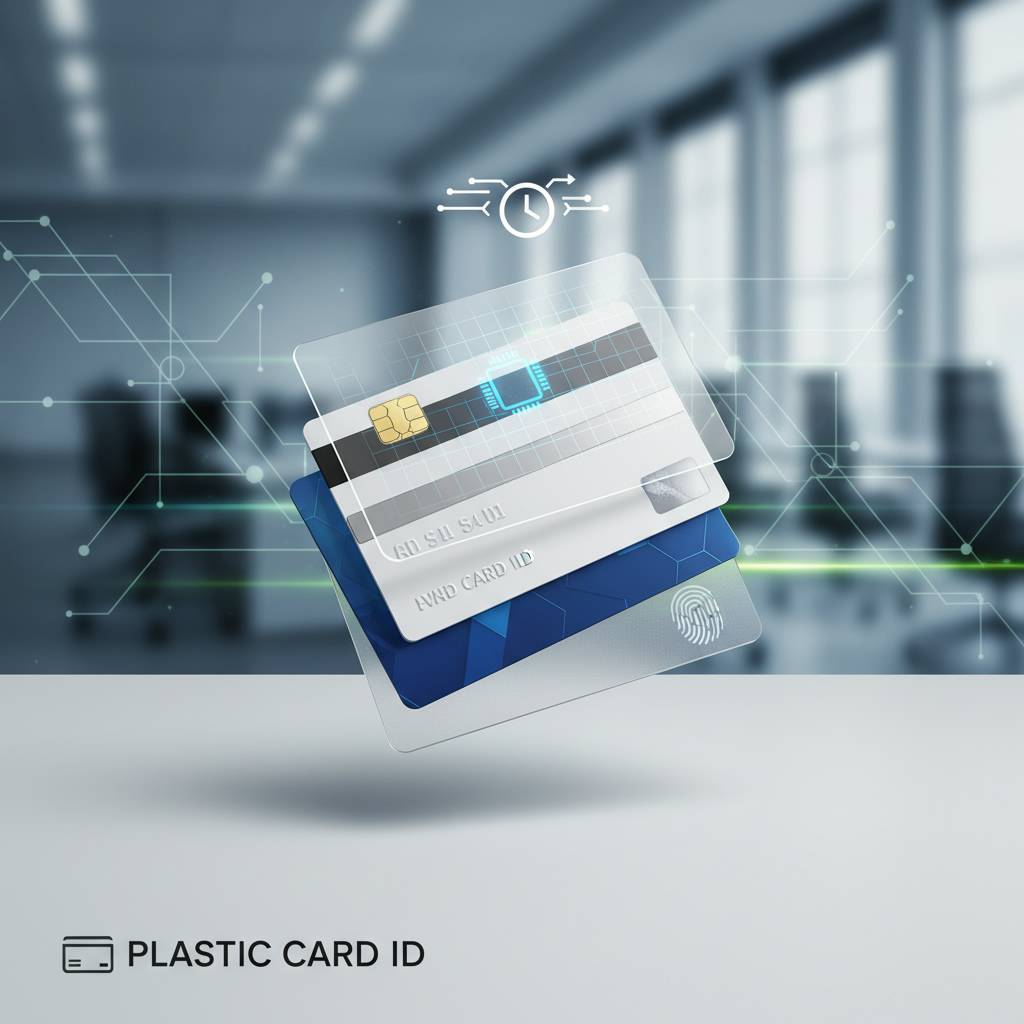
Plastic Card ID carries specialty card formats that go well beyond the standard blank PVC card, enabling organizations to build multi-function credential programs without requiring separate card issuance for each application.
Clear and Frosted Plastic Cards for Custom Program Design
Clear and frosted PVC cards allow organizations to create visually distinctive credentials that stand out from standard white-stock badges. A clear card with printed employee information creates a different aesthetic than a white card - useful for organizations that want their time and attendance badges to double as professional-looking ID cards that employees are proud to carry and display.
Frosted cards in particular work well when the design incorporates layered graphics, since the frosted surface gives printed elements a premium appearance. When your employee badge looks polished and professional, it subtly reinforces the legitimacy and permanence of your organization - a benefit that extends well beyond time tracking.
Colored Stock Cards for Department or Role Differentiation
Managing a workforce across multiple departments, shift types, or security clearance levels? Colored card stock is a simple, effective visual management tool. A red-bordered card for security personnel, a blue card for general floor staff, and a yellow card for contractors - at a glance, supervisors and access control systems can visually confirm who belongs where without reading printed text.
This approach is especially practical in fast-paced environments like manufacturing plants, warehouses, and healthcare facilities where quick visual verification matters. Colored stock cards can still carry magnetic stripes, RFID functionality, or chip encoding - the color is a surface-level visual cue that overlays, not replaces, the underlying card technology.
Card Carriers, Sleeves, and Affixing Solutions
A time and attendance card that lives in a lanyard holder, badge reel, or card sleeve stays cleaner, lasts longer, and is less likely to be lost or damaged. Plastic Card ID supplies card carriers, sleeves, and affixing accessories alongside the cards themselves - which is what makes it a genuine one-stop source for complete card program management.
For organizations managing mail distribution of cards to remote employees, distributed workforces, or seasonal staff, card affixing and mailing services eliminate a significant administrative burden. Cards can be prepared, packaged, and mailed directly from CPE, saving HR teams hours of manual processing. Every value-added service in the supply chain that you don't have to manage yourself is operational capacity returned to your core business.
Building a Reliable Card Program with Plastic Card ID
A time and attendance card program that works reliably, scales without friction, and costs what it should doesn't happen by accident. It happens when the organization behind the procurement understands card technology, hardware compatibility, volume economics, and program management - and when their supplier functions as a strategic partner rather than a transactional vendor.
Plastic Card ID has spent more than two decades helping businesses across the United States build card programs that actually perform. From the single-location business issuing 50 cards per month to the multi-state enterprise managing tens of thousands of credentials, the approach is the same: match the right card to the right system, at the right scale, with the support infrastructure to keep it running.
Partnering for the Long Term, Not Just the First Order
The first order is easy. What matters more is what happens on the fourth, fifth, and tenth order - when your workforce has grown, your hardware has changed, and your program requirements have evolved. CPE builds relationships that adapt to those changes, helping clients upgrade card formats as technology advances and scale inventory as headcount grows, without the friction of re-qualifying a new supplier every time requirements shift.
With over 100,000 customers served and more than 50 million cards delivered, Plastic Card ID brings institutional knowledge to every program - the kind of practical understanding that only comes from working with organizations across every industry, every state, and every scale of card program imaginable.
Ready to Order or Need Guidance First?
Call Plastic Card ID at 800.835.7919 today. Whether you know exactly which blank plastic cards your time and attendance system requires or you need expert guidance to identify the right format, encoding, and quantity for your workforce - the team is ready to help you build a program that works from day one and scales with your organization over time.
From blank CR80 PVC cards to HiCo magnetic stripe, proximity, and smart chip formats - from single-location small businesses to enterprise deployments - Plastic Card ID is the strategic partner your card program deserves. Reach out today and put 25 years of expertise to work for your workforce.
Previous Page