How Long Do Blank Plastic Cards Last?
Table of Contents []
- How Long Do Blank Plastic Cards Last? Everything You Need to Know - From Plastic Card ID
- Understanding PVC Card Construction and Why It Matters
- Magnetic Stripe Cards: HiCo vs. LoCo Longevity Compared
- RFID and Proximity Cards: Built for the Long Haul
- Storage, Environment, and Handling: The Variables That Change Everything
- Running a Smart Card Program: Practical Buyer Tips
- Why Plastic Card ID Is the Right Partner for Your Card Program
How Long Do Blank Plastic Cards Last? Everything You Need to Know - From Plastic Card ID
It is a question that comes up more than you might expect: how long do blank plastic cards actually last? Whether you are ordering employee ID cards, loyalty cards, membership credentials, or event passes, durability matters. A card that fades, cracks, or demagnetizes after a few months is not just inconvenient - it is a cost problem, a credibility problem, and an operational headache all at once.
The short answer is that a quality blank PVC card, properly stored and handled, can last anywhere from 3 to 10 years or more depending on how it is used, encoded, and maintained. But that range is wide for a reason. Let us break it down in a way that actually helps you make a smarter purchasing decision.
| Card Type | Typical Lifespan | Key Durability Factor |
|---|---|---|
| Blank CR80 PVC Card | 5-10 years (stored); 3-5 years (active use) | Material quality, storage conditions |
| Magnetic Stripe (HiCo) | 3-5 years active use | Stripe protection, swipe frequency |
| Magnetic Stripe (LoCo) | 1-3 years active use | Magnetization strength, environment |
| RFID / Proximity Card | 5-10 years | No contact wear, chip integrity |
| Smart Chip Card | 3-8 years | Contact frequency, chip quality |
| Clear / Frosted PVC Card | 3-7 years active use | Handling care, print protection |
Understanding PVC Card Construction and Why It Matters
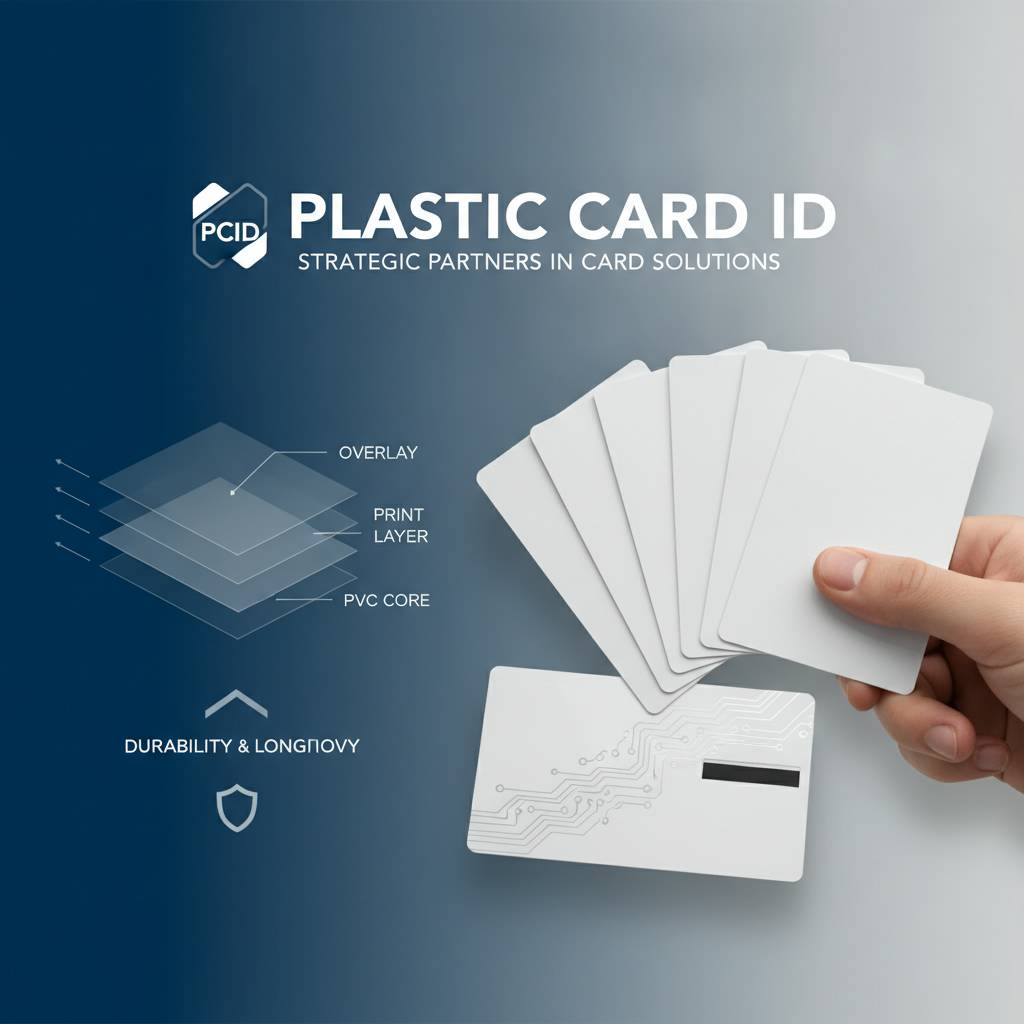 Before diving into lifespan variables, it helps to understand what a blank plastic card actually is. The CR80 standard - the same size as a credit card, measuring 3.375 x 2.125 inches at 30 mil thickness - is the workhorse format for virtually every in-house card program in America. These cards are made from PVC, a material engineered to withstand repeated handling, temperature shifts, and daily wallet friction.
Not all PVC cards are created equal. Composite cards blend PVC with polyester, adding tensile strength for high-heat printing environments. Pure PVC cards are cost-effective and perform well across most standard applications. Knowing which construction fits your use case is step one in maximizing card longevity.
The Role of Card Thickness in Durability
Thickness is measured in mils - thousandths of an inch. The standard 30 mil card is rigid, professional-feeling, and resistant to bending. Thinner options, like 10 mil or 20 mil cards, are more flexible and often used for luggage tags or temporary credentials where permanence is not the priority.
For programs that demand long-term durability - employee IDs, access cards, loyalty programs - 30 mil is the gold standard. It resists the kind of micro-fractures that thinner cards develop over time from constant pocket or wallet cycling. The physics are simple: more material means more resilience under mechanical stress.
Laminate Overlaminates and Surface Protection
Printed cards benefit enormously from laminate overlays. A holographic or clear overlaminate applied after printing shields the card surface from UV fading, moisture, and abrasion. CPE carries a full range of printer ribbons and laminate films designed specifically for Evolis, Zebra, and Fargo card printers.
Without lamination, a printed card's surface can begin showing wear within 12-18 months of daily handling. With a proper overlaminate, that same card might look sharp for 5 years or more. It is one of the simplest and most cost-effective ways to extend the useful life of any card program.
How Card Quality Affects Your Total Cost of Ownership
Buying cheap cards that need replacing every 18 months is not actually cheap. When you factor in reprinting costs, staff time, cardholder inconvenience, and brand perception, quality cards pay for themselves many times over. A blank CR80 card at a few cents more per unit can translate to thousands of dollars saved annually in mid-sized programs.
The math shifts even further in programs with magnetic encoding or chip data. Re-encoding cards - especially if it means interacting with cardholders again - has real operational costs. Durability is not a luxury feature; it is a financial strategy.
Magnetic Stripe Cards: HiCo vs. LoCo Longevity Compared
Magnetic stripe cards introduce a new durability dimension: the stripe itself. Two encoding standards exist - High Coercivity (HiCo) and Low Coercivity (LoCo) - and they behave very differently under real-world conditions. Choosing the wrong stripe type is one of the most common and costly mistakes in card program setup.
HiCo stripes require stronger magnetic fields to encode and are significantly harder to accidentally demagnetize. LoCo stripes are easier to encode but more vulnerable to everyday magnetic interference - a hotel key card on the same side of your wallet as your phone, for instance. For most business applications, HiCo is the smarter long-term choice.
HiCo Stripe Lifespan in Active Use
A HiCo magnetic stripe card used regularly - swiped multiple times daily, as in a retail gift card or employee time-clock badge - can maintain reliable read performance for 3-5 years. The stripe itself is rated for thousands of swipes. The physical card body typically outlasts the magnetic encoding layer, which is why HiCo is favored for any program planning to use the card for more than a year.
Environmental factors play a role as well. Cards kept away from strong magnetic fields, extreme heat, and sharp objects will consistently hit the higher end of that range. CPE recommends pairing HiCo cards with card sleeves and carriers to protect stripes during storage and transit - both of which are available through our catalog.
When LoCo Makes Sense
LoCo magnetic stripe cards have their place. Hotel key cards are the classic example - guests use them for a few days, then they are recycled and re-encoded. Short-duration, low-cycle applications are where LoCo shines: event wristband alternatives, conference credentials, temporary access passes, and promotional gift cards with limited redemption windows.
The cost difference between HiCo and LoCo cards is minimal, which is why most businesses default to HiCo even when a LoCo card would technically suffice. If you are uncertain, HiCo is always the safer choice from a longevity and reliability standpoint. Call 800.835.7919 and a product specialist can help you match stripe type to your specific program needs.
Protecting Magnetic Stripes in Storage and Distribution
Blank cards with pre-applied magnetic stripes need thoughtful storage. Keep them away from speakers, televisions, magnetic closures on bags, and other strong magnetic sources. Bulk storage in anti-static, non-magnetic packaging preserves encoding potential until the cards are ready to be printed and programmed.
During mailing and distribution, card carriers and protective sleeves do double duty - they prevent surface scratching and protect stripes from incidental magnetic exposure. This is not overthinking it. These are small investments that can make the difference between a card that works perfectly on day one and one that fails at first swipe.
RFID and Proximity Cards: Built for the Long Haul
 Here is where the durability conversation takes a genuinely interesting turn. Contactless cards - RFID and proximity formats - have no moving parts and no mechanical wear point. There is no stripe to scratch, no chip contact pad to corrode. The card communicates through radio frequency, and that internal antenna can function reliably for a decade or more under normal conditions.
RFID cards, including advanced MIFARE DESFire formats, represent the top tier of card longevity for access control and identification programs. The technology has matured significantly, and the combination of durability and security makes these cards an excellent long-term investment for facilities, campuses, and commercial properties.
Proximity Card Durability in Access Control
Proximity cards used for door access, parking gates, and secured zones are among the longest-lasting cards in any organization's inventory. Because they are read without physical contact - held near a reader rather than swiped or inserted - the wear mechanisms that affect magnetic stripe and smart contact cards simply do not apply in the same way.
A proximity card issued to an employee might remain functional throughout their entire tenure at the organization, often 5-10 years without needing replacement. The main failure modes are physical damage to the card body - cracking from extreme bending or dropping - rather than technology degradation. Pairing proximity cards with rigid badge holders dramatically extends functional lifespan.
Smart Chip Cards and Contact Wear Considerations
Smart chip cards with contact pads introduce a different wear dynamic. Every time the gold contact surface meets a reader, microscopic friction occurs. In high-frequency use environments, this can eventually degrade the contact interface. ISO standards specify chip contacts should survive at least 100,000 insertions - far more than most individual cardholders will ever achieve.
Realistically, smart chip cards used in typical business scenarios last 3-8 years. The chip itself is sealed inside the card body and highly resistant to environmental damage. The gold contact pad, visible on the card surface, benefits from gentle handling - avoiding abrasive surfaces and keeping cards in sleeves when not in active use.
Casino Player Cards and Specialized High-Use Environments
Casino environments represent one of the most demanding card use cases imaginable. Cards are handled constantly, slid across surfaces, subjected to spilled beverages, and exposed to high-traffic conditions that would destroy lesser materials. Casino player cards from CPE are built to handle exactly this environment - durable PVC construction with encoding options suited for frequent read/write cycles.
In casinos, hotels, and hospitality venues where cards are used by thousands of guests monthly, the economics of card quality become crystal clear. A card that fails mid-stay or mid-session creates service interruptions and reputational friction. Investing in higher-grade card stock in these applications is simply good business.
Storage, Environment, and Handling: The Variables That Change Everything
A blank plastic card sitting in ideal storage conditions - cool, dry, away from UV light and magnetic fields - can remain perfectly usable for 10 years or more. The same card left in a hot car for a week might warp noticeably. Environmental conditions are as important as material quality when it comes to predicting real-world card lifespan.
Organizations that purchase blank cards in bulk and store them for gradual issuance throughout the year need to think about their storage setup. This is not complicated, but it does require basic discipline. A dedicated storage area with temperature control and organized inventory rotation can meaningfully extend your card stock's useful life.
Temperature and Humidity Effects on PVC Cards
PVC softens and can permanently warp when exposed to sustained heat above approximately 140 degrees Fahrenheit. Direct sunlight through a car window easily exceeds this threshold in summer. Never store card stock in vehicles, near heating vents, or in direct sunlight. A climate-controlled storage room or a standard office environment is entirely sufficient.
Humidity is less critical for blank PVC cards than for paper credentials, but extreme moisture can affect adhesive layers, printed surfaces, and magnetic stripe integrity over time. A standard indoor humidity range of 30-60% is ideal. If your storage area has humidity issues, simple sealed storage containers provide adequate protection for card inventory.
Everyday Handling Habits That Extend Card Life
- Store active cards in protective sleeves or badge holders to prevent surface scratching
- Avoid placing magnetic stripe cards directly against phones, tablets, or devices with strong magnets
- Do not bend or flex cards repeatedly - stress fractures develop at fold points over time
- Keep cards away from solvents, cleaning chemicals, and acetone-based products
- For keychains or lanyards, use punched or slotted cards rather than punching through printed areas
- Rotate inventory on a first-in, first-out basis to ensure oldest stock is used first
- Use card carriers during mailing to prevent surface damage in transit
These habits cost nothing but can add years to your card program's effective lifespan. They are the kind of operational best practices that the most successful card programs consistently follow.
Specialty Cards: Clear, Frosted, and Metal Options
Clear and frosted PVC cards behave similarly to standard white PVC stock in terms of durability - with one nuance. Because their transparency is part of the aesthetic, any scratching or hazing of the surface is more visually apparent. Clear and frosted cards benefit most from protective sleeves and gentle handling protocols.
Metal cards - available in stainless steel, brass, and gold finishes - represent a completely different durability tier. These luxury cards are extraordinarily resistant to bending, cracking, and surface wear. They are heavier, more impressive in hand, and genuinely built to last indefinitely under normal handling conditions. For VIP programs, premium memberships, and executive ID applications, metal cards communicate permanence and exclusivity in a way no standard plastic card can match.
Running a Smart Card Program: Practical Buyer Tips
After more than 25 years and 50 million cards sold, CPE has seen every type of card program - from a 50-card-a-month nonprofit membership club to mass production runs in the tens of thousands for national retail gift card launches. The programs that run most smoothly share a few consistent characteristics.
They match card type to use case deliberately. They invest in quality printer ribbons and cleaning kits to maintain print consistency. They store their card inventory properly. And they work with a supplier who understands their program objectives, not just their SKU list.
Choosing the Right Card Printer for Longevity
A blank card's lifespan is partly determined by how well it was printed. Printers from Evolis, Zebra, and Fargo - all available through Plastic Card ID - are engineered to produce consistent, professional output that adheres properly to PVC card stock. Using the right printer ribbon for your card type is not optional - it is fundamental to print durability.
Undersized or incompatible ribbons can result in prints that peel, fade prematurely, or adhere unevenly. Regular printer cleaning with appropriate cleaning kits prevents debris buildup that degrades print quality over time. Maintenance is simple, quick, and extends both printer and card lifespan simultaneously.
Scaling Your Card Program Without Sacrificing Quality
Programs that start at 50 cards a month often grow - and fast. A loyalty program that gains traction, a gym that doubles its membership, an employer that opens new locations. Scalability should be part of your initial program design, not an afterthought when growth hits.
Ordering blank cards in larger volumes reduces per-unit cost dramatically. Combined with an in-house printer, this model gives organizations total control over design, issuance timing, and encoding - at a lower total cost than outsourcing individual print runs. CPE works with clients at every scale, from startup programs to enterprise-level operations, to build card solutions that grow without friction. Reach the team at 800.835.7919 to discuss volume pricing and program structuring options.
Frequently Asked Questions About Blank Card Lifespan
Do blank unprinted cards last longer than printed ones? Generally, yes. A blank card in storage experiences no print surface degradation, no UV fading of inks, and no abrasion to printed areas. The PVC substrate itself can remain viable for a decade or more in proper storage. Once printed, surface wear becomes a factor - though lamination significantly narrows that gap.
Can I revive a card that has been demagnetized? Yes - magnetic stripe cards can be re-encoded if the stripe and card body are physically intact. This is one advantage of HiCo cards: they resist accidental demagnetization and are less likely to need re-encoding in the first place. Re-encoding is a standard capability for most card printer setups and does not require replacing the card itself in most cases.
Why Plastic Card ID Is the Right Partner for Your Card Program
There is a meaningful difference between ordering cards from a commodity supplier and working with a partner who has spent over 25 years building card programs across industries and geographies. Plastic Card ID has served more than 100,000 customers across the United States - from single-location small businesses to multi-state enterprise organizations - and that depth of experience shapes every recommendation we make.
The catalog is comprehensive: blank CR80 PVC cards, magnetic stripe in HiCo and LoCo, RFID and proximity cards, smart chip formats including MIFARE DESFire, clear and frosted cards, colored stock, casino player cards, hotel key cards, custom die-cut shapes, and luxury metal cards. Printer hardware from Evolis, Zebra, and Fargo sits alongside a full range of consumables - ribbons, cleaning kits, card carriers, sleeves, and card affixing and mailing services - making this a genuine one-stop shop for any card program in the USA.
Retail and Loyalty Programs: Real Results from Plastic
Retailers who switch from paper gift certificates to plastic gift cards see sales increases in the 35-50% range - a pattern consistent enough to be treated as industry consensus. Plastic simply performs better than paper in gift card contexts: it looks more valuable, holds up to wallet storage, and is far more likely to be redeemed - and to prompt incremental spending beyond the card's face value.
Loyalty programs tell a similar story. A plastic card living in a wallet is a persistent brand reminder. A paper punch card crumpled in a junk drawer is not. The physical durability of plastic translates directly to program engagement rates, and engagement rates translate to revenue. The card stock investment is genuinely small relative to the return.
Identity and Access: When Card Quality Signals Organizational Credibility
Employee ID cards, membership credentials, and access control cards do something beyond their functional role - they communicate organizational seriousness. A crisp, professionally produced plastic card signals legitimacy and permanence in a way that a paper laminate or printed paper badge cannot. First impressions made by credentials matter more than most organizations realize.
For nonprofits, professional associations, clubs, and educational institutions, plastic membership cards transform casual affiliation into a tangible sense of belonging. Members who carry a physical card are more engaged, more likely to renew, and more likely to refer others. The card itself becomes a retention and recruitment tool - one that pays ongoing dividends as long as it remains in the cardholder's wallet.
Events and Temporary Programs: Balancing Cost and Duration
Not every card needs to last five years. Conference credentials, event access passes, and seasonal promotional cards have defined lifecycles - and the right card for these applications balances cost-efficiency with the durability required for the program window. LoCo magnetic stripe cards, colored PVC stock, and standard white CR80 cards are excellent choices for short-to-medium duration programs where print quality and encoding reliability matter, but ten-year longevity does not.
The key is matching the card specification to the program requirement honestly. A team that understands both the technology and the business context - as Plastic Card ID does - can help you avoid over-specifying expensive features you do not need and under-specifying in ways that cause operational problems mid-program.
Ready to build a card program that works as hard as your business does? Contact Plastic Card ID today at 800.835.7919 - our team is standing by to help you find the right cards, printers, and accessories for your exact needs.
Previous Page